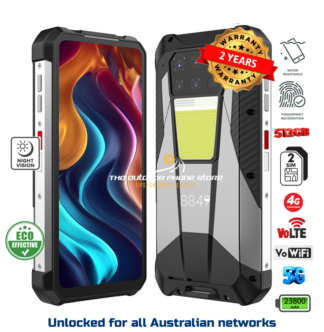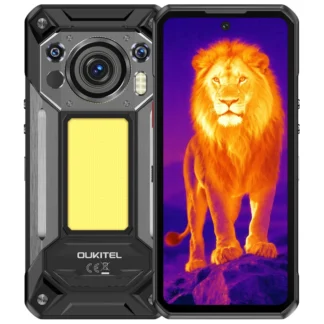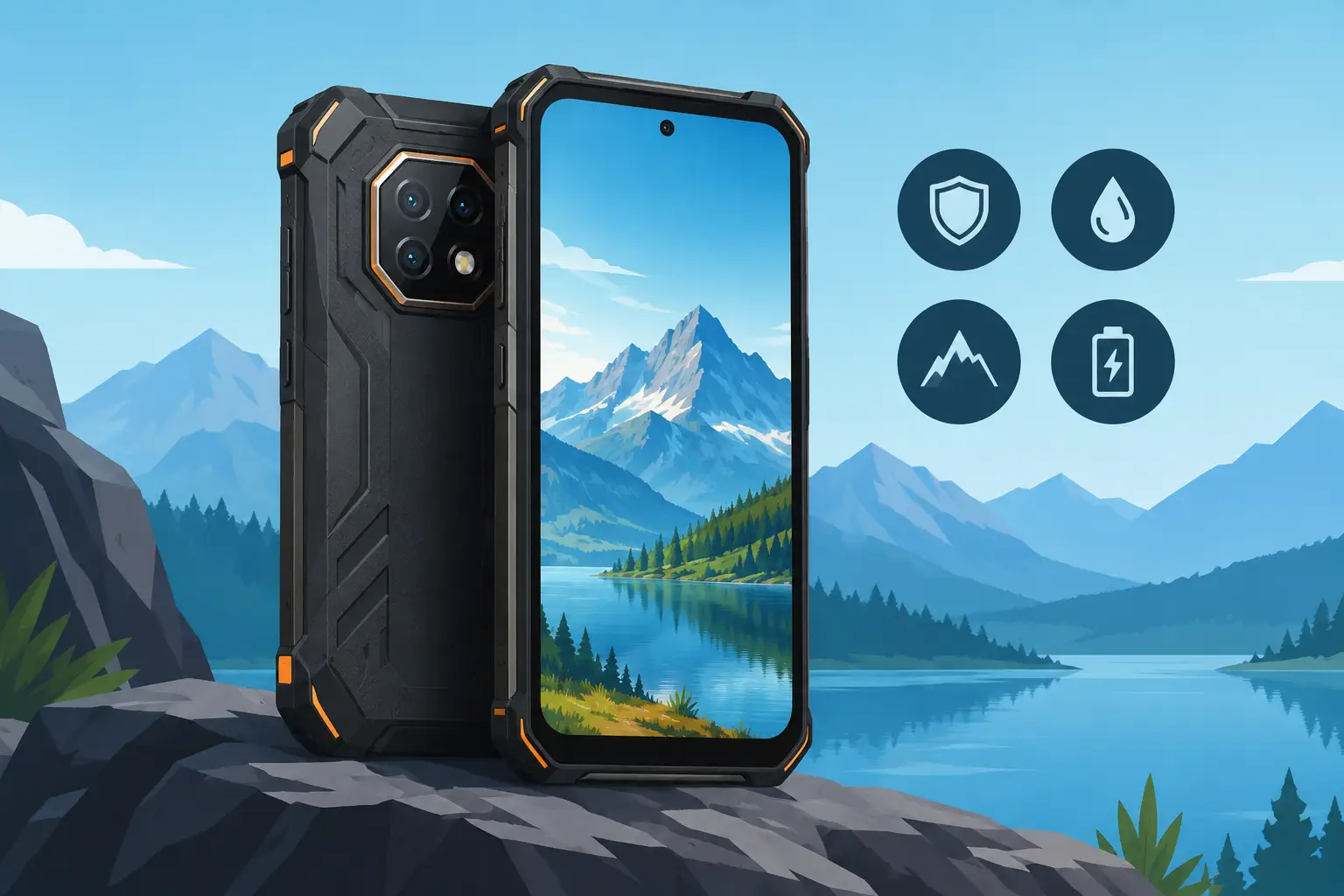
A cracked screen halfway through a remote job is not a minor inconvenience. It can mean lost maps, missed calls, delayed paperwork and a device that is useless until you are back in town. This Oukitel rugged phone review looks at whether the brand delivers what hard-use buyers actually need: a mobile that takes punishment, lasts through long shifts and works properly on Australian networks.
Oukitel has built its name around big batteries, oversized housings and spec sheets that look far more serious than the price tags attached to many mainstream phones. That makes the brand appealing to tradies, farmers, transport operators and anyone tired of wrapping a fragile handset in a case and hoping for the best. But a big battery and an IP rating do not automatically make a phone the right tool for the job. Model selection matters, network compatibility matters, and after-sales support matters when the mobile is part of how you earn a living.
Oukitel rugged phone review: the straight answer
Oukitel can be a strong value choice for buyers who want genuine hard-use features without paying flagship money. Its better rugged models commonly offer serious battery capacity, reinforced corners, waterproof and dust-resistant construction, large screens and useful extras such as night vision cameras, programmable buttons or high-output torches.
The compromise is size. These are not slim pocket phones. A high-capacity Oukitel can feel more like a tool in the pocket than a consumer handset, particularly once its protective frame and battery are taken into account. That is a fair trade for someone working 12-hour days away from a charger. It is less attractive for someone who mainly wants a lightweight everyday phone that can survive the occasional drop.
Oukitel also needs to be judged model by model, not by the logo on the back. The brand makes entry-level handsets, mid-range work phones and feature-heavy devices, and they do not all have the same processor, camera performance, network bands or serviceability. Buying the cheapest version because it says “rugged” is how people end up disappointed.
Where Oukitel does well
Battery life that changes how you work
Battery capacity is one of Oukitel’s biggest advantages. Several models use batteries far beyond the capacity of an ordinary smartphone. In practical terms, that can mean multiple days of normal field use, or a comfortable full shift using GPS, photos, calls and messaging without watching the battery percentage all afternoon.
That matters on stations, mine sites, construction projects and long-haul routes where charging points are limited or shared. It also gives a useful safety margin during outages, camping trips and remote travel. The trade-off is obvious: more battery adds bulk and weight. If your phone lives in a shirt pocket, try to be realistic about what you are willing to carry.
Charging speed deserves a separate look. A massive battery can take a long time to refill if the phone and charger do not support suitably fast charging. Check what charger is supplied, the phone’s charging rating and whether you can charge it from the vehicle setup you actually use.
Protection built for real knocks
A proper rugged phone is more than a thick plastic case. Oukitel’s rugged range is generally built around reinforced chassis designs, covered ports and raised screen edges. Models commonly carry IP68 or IP69K water and dust resistance ratings, alongside MIL-STD-style drop and temperature testing claims.
Those ratings are useful, but they are not permission to be careless. Water resistance can be compromised by damaged seals, loose port covers or a hard impact. Fine dust can still cause trouble if a charging port is left open. A rugged phone should survive the accidents that kill normal mobiles, not be treated as indestructible site equipment.
For buyers working around mud, fertiliser dust, concrete slurry, rain and vibration, the physical design is still a major step up from a standard phone and a thin aftermarket case. The grippy sides and raised bezels are practical features, not cosmetic ones.
Useful specialist features, when they suit the job
Oukitel often packs in features consumer brands reserve for premium models or ignore altogether. Depending on the handset, that may include infrared night vision, thermal imaging, a loud speaker, an SOS function, glove-friendly operation, a custom key or a camping-style light.
Night vision can be handy for checking fences, sheds, stock areas and equipment after dark. Thermal imaging can be useful for inspection work, finding heat loss or identifying a hot component, though it should never replace correctly calibrated professional equipment where safety or compliance is involved.
The key point is to buy features for a job, not for the novelty. A thermal camera adds cost. An enormous camping light adds thickness. If you will not use them, a simpler and lighter Oukitel may be the better phone.
The trade-offs buyers should not ignore
Camera marketing is where rugged phones often need a reality check. Oukitel models can produce perfectly useful site photos, delivery records, video calls and daylight images. Some high-megapixel claims look impressive on paper, but megapixels alone do not determine image quality. Sensor quality, processing and low-light performance still matter.
Do not expect the best Oukitel camera to consistently match the latest premium Apple, Samsung or Google phone in difficult lighting, moving subjects or polished video. For documenting damage, scanning barcodes, photographing plant and sending job updates, it is usually more than adequate. For a professional photographer or someone creating client-facing media every day, it may not be.
Software is another consideration. Oukitel generally runs Android with a fairly practical interface, but buyers should not assume the same long update commitment offered by the largest mainstream brands. If long-term security patch support is your top priority, confirm the current software version and update policy for the exact model before ordering.
Performance also varies. Entry models are fine for calls, email, navigation, work apps and basic photos. They can feel slow with large spreadsheets, heavy multitasking, demanding games or complex mapping tools. A mobile used as a work terminal needs enough RAM, storage and processing power for the apps your team relies on, not merely enough to turn on.
Network compatibility in Australia is non-negotiable
This is the check too many buyers skip. A rugged phone can have a huge battery and a tough body, yet still be a poor purchase if it does not support the right Australian 4G or 5G bands, carrier features and emergency calling requirements.
With network changes and the retirement of older services, imported mobiles have become riskier. Do not rely on a generic listing that says “unlocked” or “global version”. Confirm the exact variant, supported frequency bands and whether it is suitable for your carrier. This is particularly important for Telstra, Optus and Vodafone users who work outside metro areas, where band support can make the difference between service and no service.
Also check that the handset supports VoLTE as required by your network. A phone that appears to receive data may still have calling problems if its network provisioning is not right. For remote workers, that is not a small technical detail. It is a safety issue.
Who should buy an Oukitel?
Oukitel makes sense for a buyer who values endurance and physical protection above thinness and prestige. It is well suited to a ute dashboard, tool bag, machinery cab, farm office or field kit, especially where charging is irregular and a normal phone has already failed once too often.
It can also suit families wanting a durable device for an older teenager, provided the chosen model has the right network support and the size is acceptable. For a worker who only needs calls, messages, navigation and a reliable camera, it may offer more practical value than a delicate flagship handset with an expensive case.
It is not automatically the best fit for everyone. If you need the best low-light photography, the longest guaranteed software support, a very compact phone or a particular enterprise app certification, compare alternatives carefully. Rugged phones are tools. The right tool depends on the work.
What to check before choosing a model
Start with your non-negotiables: carrier compatibility, 4G or 5G need, battery life, camera requirements and whether you need thermal or night vision. Then look at the practical details that do not make flashy product headlines: phone weight, charging power, storage expansion, warranty terms, replacement screen availability and local support.
At Rugged Phones Australia, the focus is on avoiding the cheap, poorly supported variants that create problems later. That is worth considering because a rugged phone is meant to reduce downtime, not become another item in the rubbish drawer after one warranty dispute.
A good Oukitel is not a fashion accessory, and that is exactly the point. Choose the version that matches your carrier and workload, protect the ports, keep the software current and give it a job worthy of that oversized battery.