A cracked screen at the bottom of a trench is annoying. A missed safety call on a remote haul road is something else entirely. The real question in the rugged mobile versus two-way radios debate is not which device is tougher on paper. It is which one will let your people communicate when the job gets noisy, wet, isolated or urgent.
For many Australian worksites, the right answer is not strictly one or the other. A two-way radio remains hard to beat for immediate crew communication. A properly selected rugged mobile gives workers the mapping, photos, forms, calls and messaging that radios cannot. The mistake is buying either device on price alone, then expecting it to solve a problem it was never designed to handle.
Rugged mobile versus two-way radios: the practical difference
Two-way radios are built around one job: push a button and speak to a group. There is no ringing, no screen unlock, no searching for contacts and usually no dependence on a public mobile network. On a busy construction site, in a shed full of machinery or across a farm property, that simplicity matters. A worker can make a short, clear call while wearing gloves, hearing protection or a high-vis vest with the radio clipped on.
A rugged mobile is a working computer that also makes calls. It can capture site photos, run inspection software, use GPS navigation, receive job updates, scan barcodes, handle email and support video calls where coverage allows. It is the better tool when communication needs detail, records or information from outside the immediate work group.
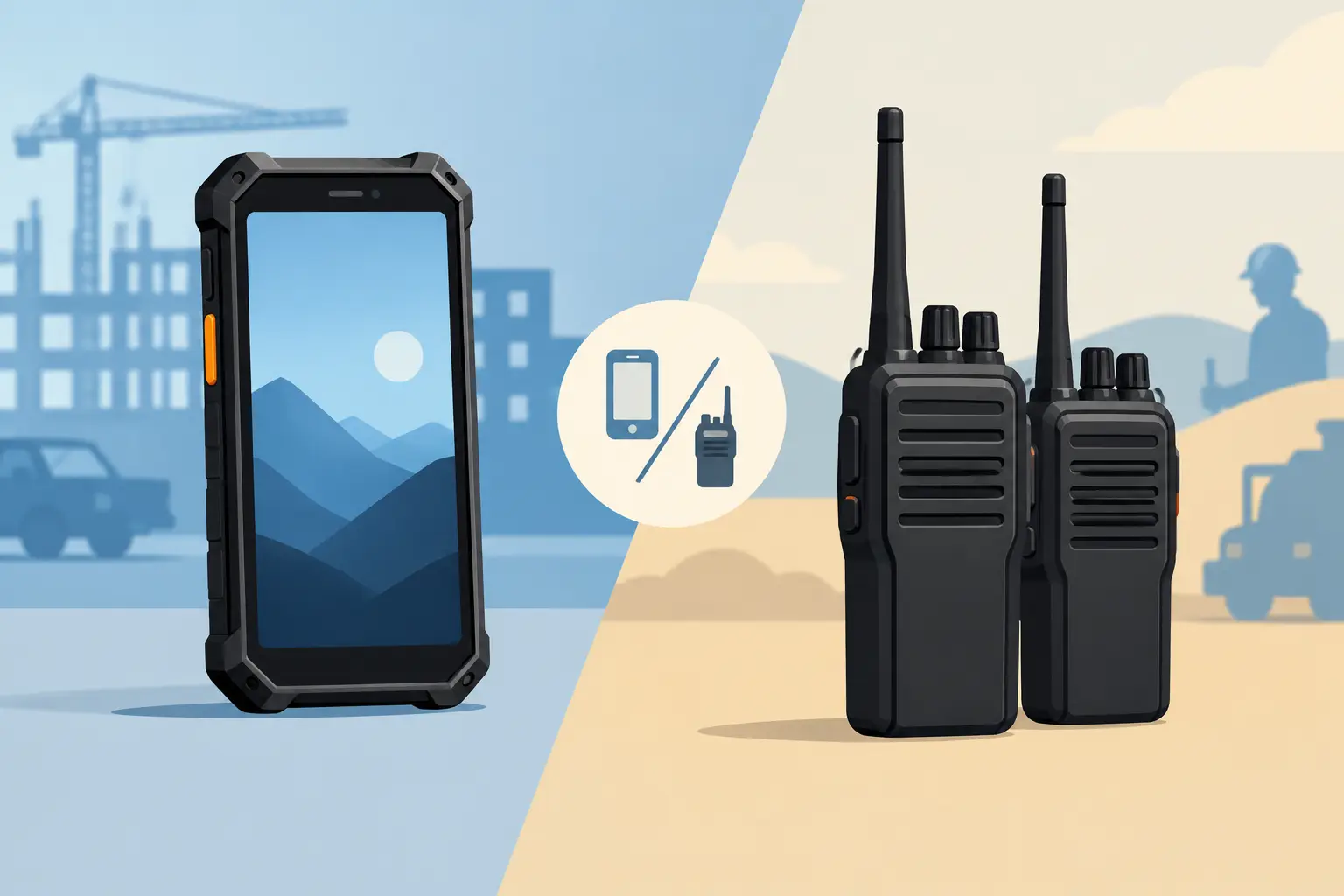
That distinction changes the buying decision. If a spotter needs to warn a plant operator now, a radio is generally the better fit. If a field technician needs to photograph a fault, pull up a service history and call a supplier, a rugged mobile earns its place.
Where two-way radios still win
The strongest case for two-way radios is instant group communication. One transmission can reach everyone on the selected channel, which is ideal for traffic control, loading areas, events, warehouses, site supervisors and crews moving around a defined area. There is less friction at the moment it counts.
Radios can also keep working where mobile reception is weak or non-existent, provided the crew is within radio range or has access to a properly designed repeater system. That makes them valuable on large properties, mine sites, forestry operations and remote work areas. UHF CB radios are common for general Australian use, while commercial operations may use licensed channels for better control and less interference.
Battery management is simpler too. A radio can stay on shift after shift with a spare battery or charging cradle, and most staff can use one with almost no training. The device is purpose-built, which is exactly why it remains relevant.
There are limits. Radio range is not magic. Hills, steel buildings, dense bush, underground areas and distance can all reduce performance. UHF CB channels can be crowded, and open conversations are not private. A basic handheld radio also cannot send a photo of a damaged fitting, share a location pin or create a record that a message was received.
Where a rugged mobile is the better investment
A quality rugged mobile consolidates equipment. Instead of carrying a consumer mobile in a protective case, a camera, a GPS unit and a notebook, a worker can carry one purpose-built device. For transport, farming, field service, utilities and lone-worker roles, that can remove a surprising amount of daily clutter.
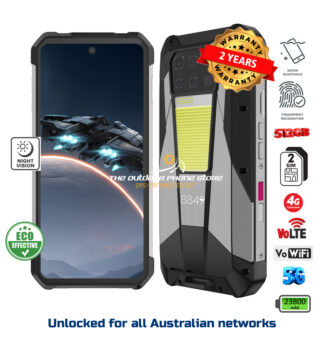
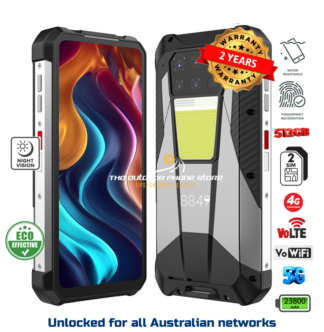
The useful features go well beyond a thick shell. Look for a device with a battery that will last a full shift, a bright display that remains usable outdoors, loud speakers, glove-friendly operation and proper water and dust resistance. Cameras matter when photos are evidence for a report or insurance claim, not just something for the group chat. Some specialist models add thermal imaging, night vision or programmable buttons, which can be genuinely useful in the right trade.
A rugged mobile is also far better for escalation. A worker can start with a normal call, send precise written details, share a photo, use navigation, then contact a manager or emergency service outside the immediate site. With the right app and network coverage, push-to-talk services can provide radio-style group calling from a mobile.
But do not confuse a rugged housing with guaranteed communications. A mobile without Telstra, Optus or Vodafone coverage is still a mobile without coverage. Before buying for regional or remote work, check the network bands supported by the exact model and compare them with the carrier used at the work locations. Imported devices with poor Australian band support are a false economy, no matter how impressive their specification sheet looks.
Safety is not just an IP rating
Both device types are available in hard-wearing versions, but durability claims need context. IP ratings describe resistance to dust and water under specific test conditions. They do not mean a device is immune to every drop, chemical, vibration event or high-pressure washdown. A mobile with a replaceable screen protector and sensible warranty support may be a better working purchase than a cheaper unit that becomes landfill after one bad fall.
The same applies to hazardous locations. Standard rugged mobiles and standard handheld radios are not automatically suitable for explosive atmospheres. If your operation involves flammable gas, dust or vapours, you may need intrinsically safe equipment with the correct certification for that site. Never treat a tough-looking device as approval for a hazardous area.
Emergency planning also deserves more thought than simply issuing hardware. Radios work well for a local emergency call, but only if channels are monitored, staff know the call procedure and the system reaches the people who need to respond. Mobiles offer access to external support, but only when a network is available and the device is charged. For isolated work, satellite communications or an emergency beacon may be the missing layer neither a radio nor a mobile can provide.
The cost question most buyers get wrong
The upfront price is easy to compare and often misleading. A radio fleet may require chargers, spare batteries, earpieces, programming, licences and repeaters. A rugged mobile has ongoing mobile plan costs, data use, accessories and device management to consider. Neither is automatically cheaper once the whole operating setup is counted.
The bigger cost is downtime. If a worker cannot receive the next instruction, cannot document a completed job or cannot call for help, the purchase price quickly becomes irrelevant. Cheap imported mobiles with no practical local support, dubious battery quality or poor network compatibility often cost more in replacement devices and lost time than a properly vetted rugged handset.
For a small trade crew, rugged mobiles may cover nearly everything if they work in reliable mobile coverage and do not need constant group calls. For a busy site with mobile plant, radios should usually remain part of the safety and operations kit. For larger or remote organisations, a mixed fleet is often the sensible answer: radios for immediate local coordination, rugged mobiles for reporting, navigation, client contact and work administration.
Choosing the right setup for your crew
Start with the failure point, not the feature list. Ask where staff work, whether they need to reach a group or an individual, how quickly a message must be delivered, and what happens when public mobile coverage disappears. Then consider the practical details: gloves, noise, rain, vehicle mounts, shift length, charging access and whether staff need photos or job-management apps.
If every worker needs a reliable line to the same crew in seconds, issue radios and set them up properly. If the job depends on documenting work, accessing systems and communicating beyond site boundaries, choose rugged mobiles with Australian network compatibility and support behind them. Rugged Mobiles Australia focuses on devices that are worth putting into hard use, rather than filling a catalogue with low-grade lookalikes.
The best communications gear is the gear people can use without thinking when work turns difficult. Put radios where instant voice contact protects the crew. Put rugged mobiles where information, evidence and connection beyond the gate keep the job moving.