A lot of buyers get hung up on the badge and miss the bigger issue. If you’re comparing an IP68 vs IP69K phone, the real question is not which rating looks tougher on a spec sheet. It is whether the phone is built properly, sealed properly, and proven to survive the kind of work you actually do.
We see this all the time. Someone wants the highest number, assumes that means the best protection, then ends up with a poorly built device that still fails in the field. Water and dust ratings matter, but they are only one part of the story.
IP68 vs IP69K phone ratings explained
Both ratings sit under the IP system, which tells you how well a device resists solids and liquids. The 6 in both IP68 and IP69K means the same thing – complete dust protection. For a work phone, that is the baseline. Dust gets everywhere on farms, construction sites, in workshops, and around mine vehicles. If a phone cannot handle that, it has no business being called rugged.
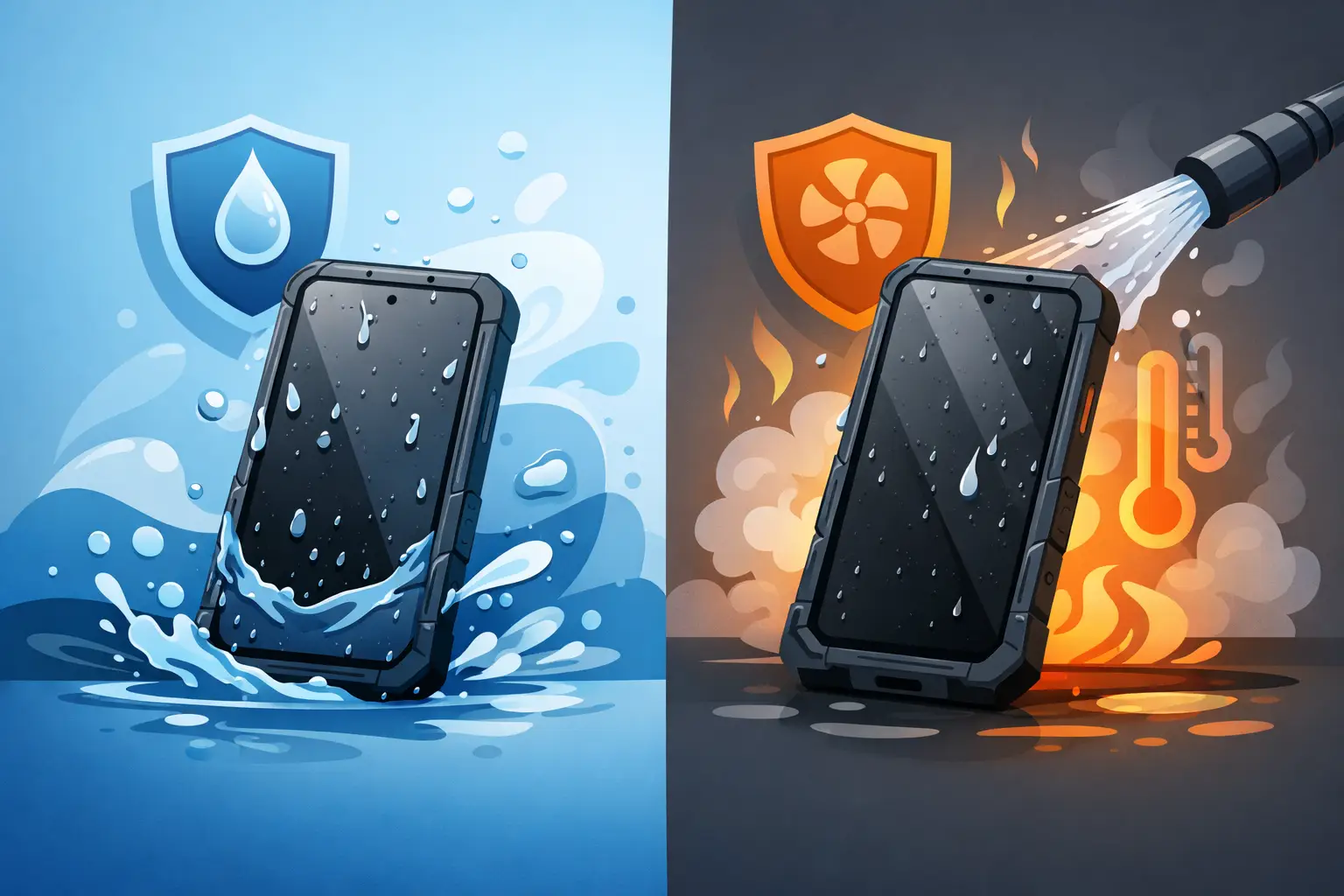
The difference is in the water testing. IP68 usually means the phone can survive being submerged in fresh water deeper than 1 metre for a set time chosen by the manufacturer. Often that is around 1.5 metres for 30 minutes, but the exact depth and duration can vary.
IP69K is different. It is designed for resistance to high-pressure, high-temperature water jets. Think washdown environments, industrial cleaning, and situations where water is forced at the device rather than it simply sitting underwater. That does not automatically mean better underwater performance. It means a different type of water protection.
That distinction matters. A phone dropped in a trough, puddle, creek or bucket is facing one kind of risk. A phone blasted with hot, pressurised water during washdown is facing another.
Why IP69K sounds better than it sometimes is
On paper, IP69K looks like the top badge, and sellers know it. The problem is that plenty of marketing leans on that number without explaining what it is for. If you are a sparky, farmer, mechanic, transport operator or site supervisor, IP69K is only useful if your phone is genuinely exposed to pressure washing or aggressive cleaning routines.
For many people, IP68 is already enough from a water-rating perspective. If your usual risk is rain, mud, accidental drops in water, wet pockets, or rinsing off grime under a tap, a well-built IP68 rugged phone can be more than adequate.
There is also a practical catch. High-pressure water resistance in a lab does not mean you should point a pressure cleaner at your mobile every Friday afternoon and expect no issues forever. Real-world wear changes things. Port covers loosen. Rubber seals age. Impacts weaken housings. A phone that passes once when new is not invincible for life.
This is why we take a fairly hard line on spec-sheet hype. IP69K is useful, but it is not a magic shield, and it should never be the only reason you buy one model over another.
What matters more than IP68 or IP69K alone
Build quality comes first. There is a big difference between a properly engineered rugged handset and a cheap unit that copies the same buzzwords. Adhesives, seal design, frame rigidity, screw points, port protection and assembly quality all affect whether those ratings mean anything after six months in the real world.
Drop protection is just as important. Plenty of phones survive water but die from repeated knocks off a dash, ladder or tray. If you’re working around concrete, steel, tools and machinery, impact resistance often matters more day to day than whether the phone can handle a hot jet wash.
Repairability and support matter too. A phone with decent sealing but no local backup can become an expensive paperweight if the screen cracks or the charging port wears out. That is one reason specialist retailers matter. Not every rugged phone sold online is the same version, the same quality, or backed the same way.
Then there is basic usability. A rugged phone still has to work as a phone. Good reception, proper 4G or 5G support for Australian networks, usable cameras, loud speakers, glove-friendly operation and battery life all count. The toughest shell in the world is not much use if the device misses calls in regional areas or dies before knock-off.
Which rating suits your work?
If you work in agriculture, transport, construction, civil, warehousing or general trades, IP68 will often cover the water risks that actually happen. Wet weather, muddy hands, accidental dunks, dust storms, and rinsing grime off the device are common scenarios. In that context, a well-made IP68 phone with strong drop protection is usually the smarter buy than a mediocre IP69K model.
If you are in food production, processing plants, heavy industry, some manufacturing environments, or anywhere gear gets washed down aggressively, IP69K starts to make more sense. The same goes if the phone is regularly exposed to jets of water around machinery cleaning or sanitation procedures.
For mining and remote field work, it often comes down to the broader build package rather than the top water rating. Dust sealing, battery size, screen toughness, thermal performance, charging reliability and network compatibility can have a bigger impact on uptime than whether the phone carries IP68 alone or both IP68 and IP69K.
The common mistake buyers make
The biggest mistake is treating IP ratings like a ranking chart. They are not. IP69K is not simply IP68 but more. They describe different test conditions.
A second mistake is ignoring the fine print. Water testing is done under controlled conditions with fresh water on a new device. That does not cover saltwater, chemical exposure, soap, solvents, or years of abuse. If you work near fertilisers, diesel, coolant, slurry, concrete dust or corrosive cleaners, the rating only tells part of the story.
A third mistake is buying from generic sellers who chase the cheapest batch. Rugged phones are not all equal just because the shell looks similar. Variants can differ in internals, network support and component quality. That is where poor buying decisions happen.
Should you only buy a phone with both IP68 and IP69K?
Not necessarily. A phone with both ratings can be a strong option, especially if your work crosses between wet, dirty and industrial washdown conditions. But the dual rating only has value if the rest of the device stacks up.
A proper buying decision should weigh the whole package – build quality, factory consistency, warranty support, battery performance, charging method, screen protection, and whether the phone is suitable for your actual environment.
If you are choosing between a proven IP68 rugged phone from a reliable manufacturer and an unknown IP69K model with flashy claims, the safer bet is often the better-built IP68 unit. Numbers do not make a phone dependable. Engineering does.
How to read the spec sheet without getting sold rubbish
Start by asking what kind of water exposure the phone will really face. Submersion, rain and mud point one way. Hot high-pressure cleaning points another.
Then check whether the phone has a credible rugged build beyond the IP line. Look for reinforced corners, proper port sealing, impact standards, battery capacity that suits long shifts, and a design that is not trying to imitate a consumer handset with a rubber case glued on.
After that, consider support. If the device fails, can you get help locally? Can you get accessories, replacement parts, or sensible advice before you buy? A hard-use phone should come from a seller that understands hard-use conditions.
That is the difference between buying a work tool and buying a spec sheet.
The better question than IP68 vs IP69K phone
For most buyers, the better question is this: what is the most dependable phone for my environment? That shifts the focus from marketing shorthand to real-world performance.
At Rugged Phones Australia, we are pretty blunt about this because too many buyers have already been burned. A farm ute, a mine site crib room, a workshop bench and a food-grade washdown area do not place the same demands on a device. The right phone depends on the job, not just the headline rating.
If your work includes frequent immersion risk, heavy dust and rough handling, a high-quality IP68 rugged phone may be exactly what you need. If your gear gets blasted during cleaning cycles, IP69K earns its place. If you face both, look for a model with both ratings from a brand that has actually proven itself.
The smart buy is not the one with the loudest badge. It is the one that keeps working when the weather turns bad, the site gets filthy, and you still need your mobile to do its job.