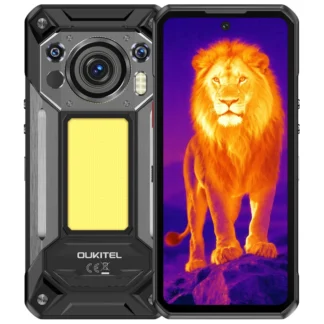
A flat mobile halfway through a shift is more than an annoyance when you are on a site, in a ute, or hours from the nearest charger. This Oukitel battery phone review looks at the real appeal of these large-battery rugged mobiles: fewer charging stops, practical durability and enough power to stay useful through a long day outdoors.
Oukitel has built much of its reputation around phones that reject the slim-and-fragile formula. Many models pair a very large battery with a reinforced body, water and dust resistance, and features aimed at field use rather than café-table looks. That makes sense for farmers, tradies, transport operators and remote workers. But battery size alone is not a buying decision. The right phone needs to suit your coverage area, work apps, charging routine and tolerance for a heavier device in your pocket.
Oukitel battery phone review: the real strengths
The obvious advantage is endurance. A high-capacity battery can comfortably stretch beyond a normal workday where a mainstream mobile may be looking for a cable by mid-afternoon. For people using maps, job-management software, photos, messages and calls on the same device, that reserve matters. It also gives you breathing room when charging is limited to a vehicle, a solar setup or the accommodation at the end of a long shift.
Battery capacity is especially useful in regional Australia, where poor reception can make any mobile work harder. When a phone repeatedly searches for a weak signal, power disappears quickly. A larger battery does not solve a coverage problem, but it reduces the chance that a difficult signal day leaves you with no phone at all.
Oukitel’s battery-focused rugged phones are also generally built around practical toughness. A protected frame, raised screen edges and sealed ports are far better suited to dust, rain, greasy hands and the occasional drop onto a workshop floor than an ordinary glass-backed handset. That does not mean they are indestructible. A phone can meet a water-resistance rating and still fail if a damaged port cover is left open or the device is repeatedly exposed to high-pressure water. Treat the protection as a serious safety margin, not permission to abuse it.
The other benefit is simple: less dependence on power banks. A power bank is still sensible on multi-day trips, but carrying one every day because your phone cannot last until knock-off is poor planning. A large-battery phone puts the capacity inside the device, where it is available when you need it.
The trade-offs people should not ignore
Big batteries add bulk and weight. There is no clever marketing line that changes the physics. An Oukitel battery phone may feel substantial in a shirt pocket, and it can be awkward if you are used to a thin consumer mobile. For many workers, the trade is worthwhile. A heavier phone that remains charged and intact is preferable to a light phone that needs careful handling and a charger by lunch.
Still, think about where the phone lives. If it spends most of its time in a vehicle cradle, tool bag or belt holster, size is rarely a problem. If you carry it in running shorts, a front pocket or a small handbag, check the dimensions and weight before buying. A rugged phone should fit the job, not become another inconvenience on site.
Charging time is another consideration. A massive battery naturally takes longer to fill than a small one, even with fast charging support. The practical approach is to charge overnight, top up in the vehicle when necessary and use a quality charger that matches the phone’s supported charging standard. Cheap, poorly regulated charging gear is a false economy, particularly in hot vehicles and temporary site setups.
Performance also varies across the range. Some Oukitel models are intended for straightforward communication, navigation, photos and everyday work apps. Others offer more processing power, better cameras, 5G or specialised features. Do not assume that a bigger battery automatically means flagship-level speed. If your work relies on large plans, demanding inspection apps, video calls or heavy multitasking, processor and memory deserve as much attention as battery capacity.
Battery claims versus working-day reality
Quoted standby figures can look enormous, but standby is not a work shift. Screen brightness, GPS, mobile signal, camera use, Bluetooth accessories and hot weather all affect battery life. A worker running navigation in bright sun will see a very different result from someone who uses the phone mainly for calls and messages.
The useful question is not, “How many days does it claim?” Ask, “Will it handle my longest normal day with a sensible reserve?” For most buyers, that means allowing for poor coverage, a few calls, photos of completed work, maps and screen-on time. If you do overnight work or remote travel, choose more capacity than you think you need. Battery anxiety is pointless when the phone is meant to be a work tool.
Check Australian network suitability before buying
A rugged mobile is only dependable if it works properly on your carrier. This is where many cheap imports disappoint buyers. Band support, VoLTE compatibility and local network requirements matter, particularly after Australian network changes that have affected older calling arrangements.
Before choosing an Oukitel model, confirm that the specific version supports the bands used by your provider and that it is suitable for Australian VoLTE calling. Do not rely on a generic product listing written for another market. The exact model variant matters. This is particularly important for Telstra-based services and regional users, who often rely on specific frequency bands for better reach outside metropolitan areas.
Also consider dual SIM needs. For workers travelling between regions, a second SIM can be useful for separating work and personal numbers or keeping an alternative network available. It is not a substitute for a satellite communicator in genuinely remote country, but it can be a practical backup where more than one carrier has coverage.
Who should buy an Oukitel battery phone?
These phones make the most sense for people whose mobile is exposed to hard use and irregular charging. Think construction supervisors photographing work, farmers checking paddocks and livestock, delivery drivers running navigation, mechanics working around dust and oil, and campers who want a phone that will not become a daily charging chore.
They can also suit parents who need a durable device for a teenager, provided the model’s size is acceptable and the required apps run properly. Durability is valuable, but it should not come at the cost of a phone that is too heavy or complicated for the person using it.
They are less compelling for someone who prioritises a slim pocket, premium camera processing, wireless charging, or the polished ecosystem of a major mainstream brand. There is nothing wrong with those priorities. They simply point to a different type of phone. Buying a giant-battery rugged device for occasional weekend use can be overkill; buying a delicate lifestyle phone for daily site work can be worse.
What to check before you commit
Start with the battery, but do not stop there. Confirm the phone’s Australian network compatibility, supported charging speed, storage capacity and the version of Android supplied. Check whether it has the practical hardware you use – such as NFC for tap payments, a programmable button, fingerprint unlocking, a lanyard point or a proper accessory ecosystem.
Look closely at the screen as well. Brightness and screen protection matter when you are reading plans outside or checking delivery details in direct sun. Camera specifications should be judged by your actual task. A good enough camera for documenting damage, scanning labels and recording completed work may be more valuable than headline megapixel numbers.
Finally, buy with after-sales support in mind. Rugged phones are often purchased because failure is expensive. A local retailer that understands model variants, network suitability, warranty handling and replacement options is worth more than a suspiciously cheap listing with no one to call when something goes wrong. Rugged Phones Australia takes that selection seriously because a work phone should be dependable long after the parcel arrives.
The best Oukitel battery phone is not necessarily the one with the largest number printed beside its battery. It is the one that stays powered through your real workload, works on your network, survives your environment and can be supported when hard work eventually leaves its mark.