A ute tray at 2 am, a stockyard after dark, a plant room with the lights out – these are not conditions for a standard mobile camera and a hopeful guess. A proper night vision phone comparison needs to look past the headline megapixel number and ask a harder question: can this device show useful detail when there is little or no visible light?
For workers in mining, farming, security, transport and construction, the answer can affect safety, downtime and whether a fault is found before it becomes an expensive call-out. Night vision is a valuable tool on a rugged phone, but it is also one of the easiest features for brands to oversell. Not every camera labelled “night vision” performs the same job.
What night vision on a phone actually means
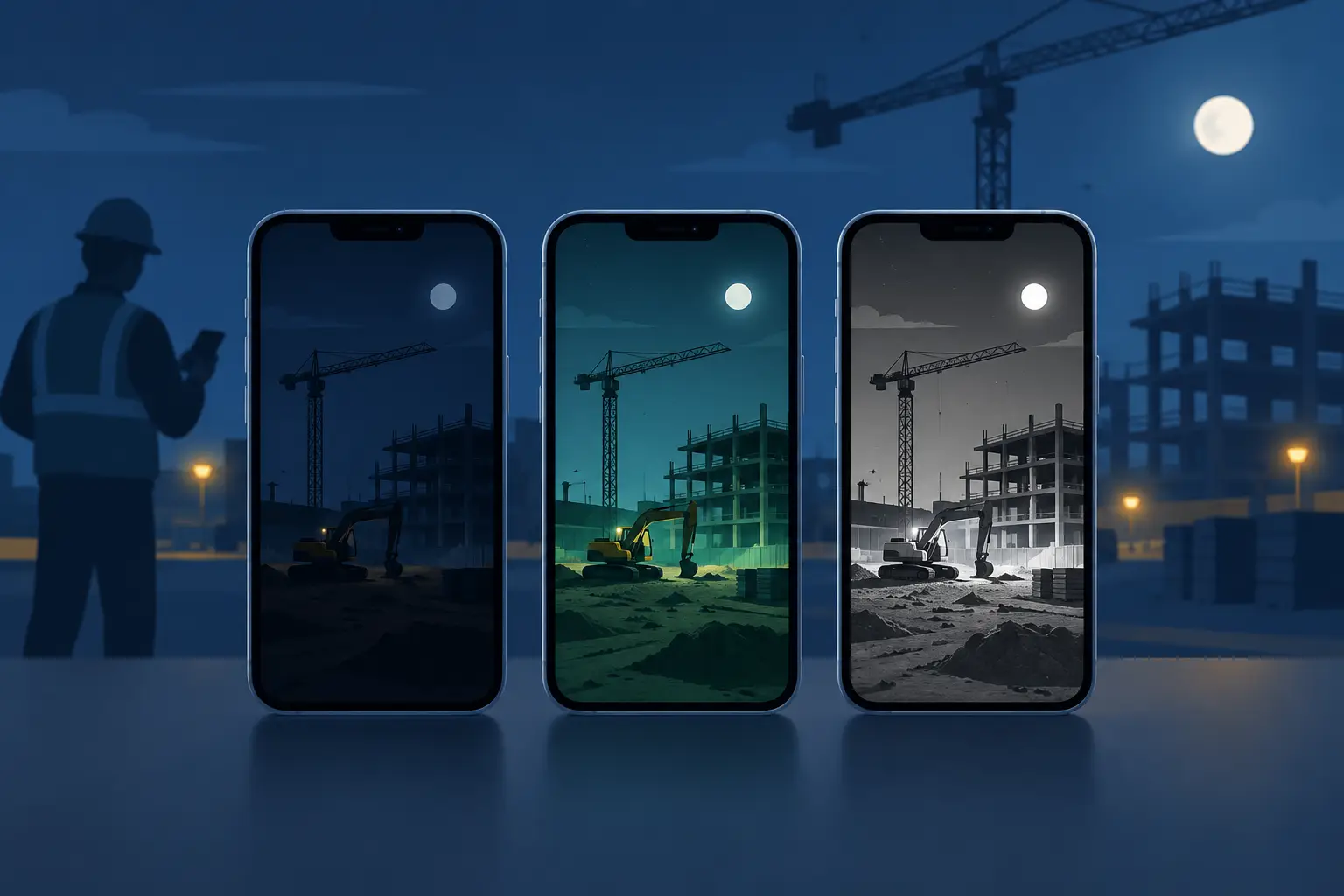
In most rugged mobiles, night vision means an infrared-sensitive camera paired with infrared LEDs. The LEDs throw out light that is invisible to the human eye, while the camera sensor detects the reflected infrared image. The result is usually a black-and-white picture or video in complete darkness.
That is different from a good low-light camera. A conventional camera uses available visible light from the moon, work lights, a headlamp or a streetlight. It may produce a colour image, particularly with modern image processing, but it cannot create detail where there is genuinely no light. Infrared night vision can.
It is also different from thermal imaging. Thermal cameras detect heat differences rather than reflected light. They are useful for spotting hot electrical components, finding a person or animal through light scrub, or checking heat loss. They do not give you the same recognisable scene detail as infrared night vision. If you need to read a label, identify a hose, inspect a latch or see what is moving near a gate, infrared is generally the more practical camera.
Night vision phone comparison: the specifications that matter
A spec sheet can make two night vision phones look almost identical. In the field, one may deliver a clear view of a shed doorway while the other produces a grainy grey blur. These are the areas worth comparing.
Infrared LED strength and usable range
The advertised range is rarely the full story. Some makers quote an optimistic distance in an open, perfectly dark environment with a reflective target. On a dusty track, in light rain or around dark machinery, usable detail can fall away quickly.
Look for a realistic operating range, not just the biggest number. For close inspections around vehicles, equipment, gates and animal pens, a shorter but clean range is often more useful than a claim of seeing hundreds of metres. For security work or checking a distant perimeter, range matters more, but only if the phone can still distinguish shapes rather than merely show movement.
Infrared LEDs also consume power and can create heat during longer recordings. A rugged phone with a large battery has an obvious advantage here, especially when it is being used for navigation, calls and photos through a long shift as well.
Sensor quality beats megapixels
More megapixels do not automatically mean better night vision. Sensor sensitivity, lens quality and image processing have more influence on what you can actually see. A modest-resolution dedicated infrared camera can outperform a higher-resolution unit if its sensor handles low light cleanly and its infrared illumination is properly matched.
Watch for video samples that show real conditions: uneven ground, moving people, dark clothing, reflective surfaces and areas beyond the centre of the frame. A staged image of a bright target a few metres away proves very little. The real test is whether edges hold together and whether you can identify the object that matters.
Focus distance and close-up work
Night vision is not only for looking down a track. Many buyers use it to inspect under a ute, check machinery, look into a ceiling cavity or find a dropped tool. Some infrared cameras are tuned for middle and longer distances and struggle with close-up detail.
If your work is inspection-heavy, consider the camera’s minimum focus distance and whether the phone can switch quickly between its normal, night vision and thermal cameras. A feature that takes several taps to reach or needs a separate app is less likely to be used when gloves are on and the rain has started.
Image controls and recording stability
A useful night vision camera should offer simple controls for the infrared light, video recording and basic exposure behaviour. Automatic settings are convenient, but they can hunt when a reflective sign, headlight or shiny pipe enters the frame.
Stabilisation matters too. Walking inspections and moving vehicles create shake, and infrared footage is less forgiving than daylight video. A rugged device with a secure grip, physical buttons and a screen that remains usable with wet hands can be more valuable than a marginal gain in camera resolution.
Infrared night vision versus thermal: choose the job, not the novelty
There is no universal winner because infrared and thermal solve different problems. A farmer checking fences or sheds after dark will usually get more practical scene detail from infrared night vision. A security worker can use it to identify a vehicle, a gate position or a person’s clothing and movement.
Thermal is the stronger option where heat is the clue. Electrical maintenance, solar inspection, mechanical faults, wildlife spotting and search tasks are typical examples. It can reveal a warm bearing, overheated connection or animal in near-total darkness, and it is less dependent on reflective surfaces.
The trade-off is cost and interpretation. Thermal-equipped mobiles are normally dearer, and hot objects are not always the objects you need to identify. A warm engine may be obvious, but a thermal image will not make serial numbers or warning labels legible. Some field teams benefit most from a phone that has both cameras. Others will be paying for a thermal feature they rarely use.
The rugged-phone checks that camera marketing leaves out
Night vision is only useful if the rest of the mobile survives the work around it. For Australian conditions, start with proper ingress protection, impact resistance, a battery that can last a shift, and a charging arrangement that will not become a weak point after months of dust and vibration.
Network compatibility also deserves a hard look. A camera feature is not much help if the mobile is unreliable on the carrier used around your site or property. Confirm Australian 4G and 5G band support, VoLTE compatibility where required, and whether the device is suitable for the network you actually use in regional areas.
Then consider serviceability. A cheap import with spectacular camera claims can become rubbish the first time it needs a screen, battery assessment or warranty repair. Rugged Phones Australia focuses on vetted devices because factory quality, parts support and local warranty backing matter more than a flashy specification copied across a marketplace listing.
There are practical handling issues as well. A bright screen can ruin your own dark adaptation, so check whether the display can dim properly. Infrared LEDs may attract attention at close range through their faint red glow, depending on the wavelength used. They can also reflect strongly off glass, fog, dust and wet surfaces. That does not make night vision ineffective – it means you need to use it with realistic expectations.
A practical buying decision for night work
Start with the task that happens most often after dark. If you need to inspect equipment, move safely around a site and identify objects at close to medium distances, choose a rugged phone with a dedicated infrared camera, usable illumination and dependable battery life. Do not get distracted by a headline range you will never use.
If your work involves fault finding, livestock, security patrols or search work, decide whether infrared detail, thermal heat detection or both will save the most time. For some operators, a night vision mobile is a powerful everyday tool. For others, a conventional rugged camera phone plus a dedicated thermal device is the better setup.
The right choice is the one that produces usable information in the dark, survives the environment and can be supported when work does not stop. Test the camera against the places you actually work – not just the marketing image – and you will buy a tool rather than another fragile gadget.