A cracked screen is annoying. Missing a hot bearing, overloaded breaker or livestock issue because your mobile camera can’t actually see heat is expensive. That’s where a rugged mobile with a thermal camera stops being a gimmick and starts earning its keep.
For the right buyer, thermal imaging on a tough mobile is one less tool to carry, one less battery to charge and one faster way to check problems on site. But not every thermal mobile is worth touching. Some look good on a spec sheet, then disappoint with weak sensors, poor app support, dodgy network compatibility or build quality that won’t last past a few months in the ute, workshop or paddock.
Why buy a rugged mobile with a thermal camera?
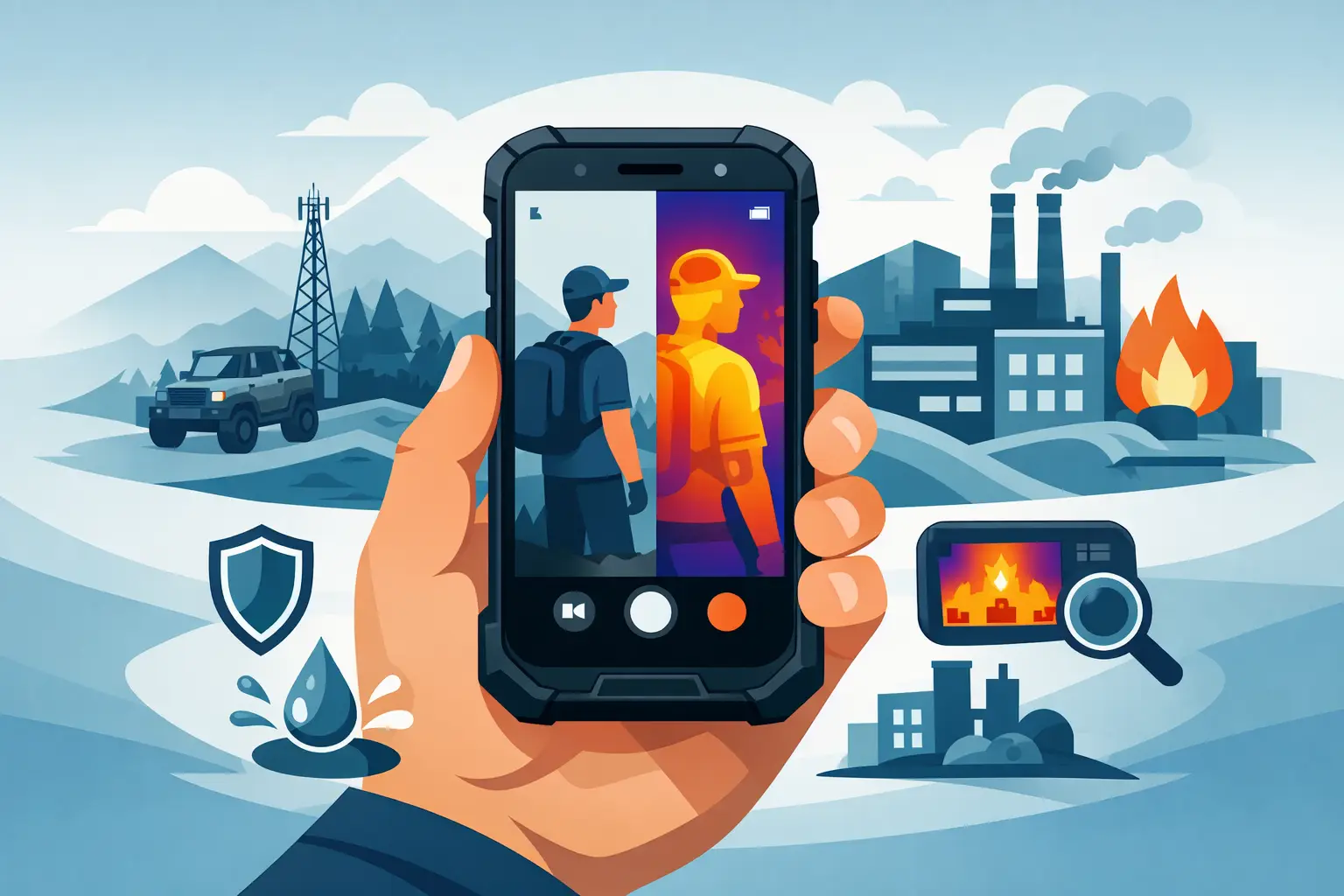
A standard smartphone camera shows what light reflects. A thermal camera shows heat differences. That sounds simple, but in field work it changes what you can find quickly.
Electricians use thermal to spot hot switchboards, overloaded circuits and suspect connections before they become failures. Farmers can use it for checking machinery, water systems and even locating stock at night in some situations. Mechanics and heavy equipment operators use it to find overheating components, blocked cooling issues and abnormal engine bay temperatures. Building and maintenance crews use it to look for insulation gaps, moisture patterns and HVAC faults.
The real win is speed. Instead of pulling out a separate thermal unit for every quick check, you’ve got one device in your pocket that handles calls, photos, job notes, GPS and heat detection. If you work in dust, rain, mud, vibration and constant knocks, combining those functions into a genuinely tough mobile makes more sense than carrying a fragile mainstream handset plus a specialist camera.
That said, thermal is not magic. It won’t replace every inspection tool, and it won’t see through walls because the internet says so. What it does well is reveal surface temperature differences fast enough to help you make better decisions.
What matters in a rugged mobile with a thermal camera
This is where plenty of buyers get caught. They see “thermal camera” in the product title and assume they’re set. They’re not.
Thermal sensor quality matters more than marketing
Not all thermal modules are equal. A low-end sensor may be fine for basic hot-spot detection, but it can struggle when you need clearer detail or more reliable temperature interpretation. Resolution, sensitivity and the way the software processes the image all affect whether the mobile is genuinely useful or just a novelty.
If you only need to identify a clearly hot fuse, entry-level thermal may do the job. If you’re checking machinery, electrical gear or building faults where smaller temperature differences matter, sensor quality becomes much more important. Cheap thermal often gives you a rough heat blob. Better thermal gives you something you can actually work with.
The mobile still has to function properly as a phone
Plenty of buyers focus so hard on thermal that they forget the basics. If the device has weak reception, flaky software, poor battery life or rubbish durability, the thermal camera won’t save it.
A work mobile should have strong battery capacity, reliable charging, decent screen brightness for outdoor use and proper network compatibility for Australian conditions. If you’re in regional or remote areas, that last point is non-negotiable. A thermal mobile that misses bands or performs badly on local networks is a bad buy no matter how impressive the brochure looks.
Build quality is not the same as a big case
A genuine rugged mobile is more than thick rubber corners. Internal design, sealing, port protection, screen strength and overall assembly quality make the difference between a mobile that survives hard use and one that just looks the part.
This is where specialist retailers matter. Two devices can appear similar online, yet one may come from a better factory run or use better component selection. We’ve seen too many generic sellers push flashy models with weak quality control, then disappear when things go wrong.
Who actually needs thermal imaging on a mobile?
Not everyone. If your work never involves heat-related faults, machinery checks, electrical inspections or night-time visibility challenges, paying extra for thermal might be unnecessary.
But for the right jobs, it’s genuinely useful. Trades, mining, farming, transport, security, property maintenance and remote operations can all benefit. The value goes up when quick first-pass inspection matters. You might still use dedicated instruments for formal testing, but the mobile helps you identify issues early and decide where to look closer.
For some users, the biggest advantage is convenience. You’re more likely to use a thermal camera when it’s already in your pocket. A separate tool sitting back in the workshop doesn’t help much when you’re out in the field and need an answer now.
The trade-offs you should know before buying
A rugged mobile with a thermal camera is a specialist device. That means compromise in some areas compared with mainstream consumer mobiles.
The mobile will usually be thicker and heavier. That’s the price of larger batteries, reinforced housing and extra hardware. Camera performance in normal photography may be good, but the focus is practical use, not social media glamour shots. You may also pay more upfront than you would for a standard rugged mobile without thermal.
There’s also a difference between quick thermal checks and certified inspection work. If your job requires formal reporting, calibrated readings or compliance-grade documentation, a mobile-based thermal camera may only be part of the kit. It depends on your industry, your standards and how precise the readings need to be.
None of that makes these devices a poor choice. It just means you should buy one for the right reason. If thermal helps you solve problems faster, avoid downtime or reduce call-backs, the value is obvious. If you’re buying it because it sounds cool, save your money.
Features worth paying for
When comparing models, focus on the features that matter in real work.
Battery life is high on the list. Thermal use, bright screens, GPS and 5G can all chew through power, so a large battery is not optional for serious field use. A bright display also matters more than many people realise. If you can’t read the screen in full sun, the mobile becomes a headache.
A good rugged mobile should offer dependable waterproofing and dust resistance, not just a vague promise. Physical durability matters too, especially if the mobile lives in a cab, tool bag or pocket full of grit and metal shavings. Useful extras can include programmable buttons, glove-friendly touch response, loud speakers and strong torch performance.
Software matters as well. Thermal features live or die by the app experience. If the thermal app is clunky, slow or poorly translated, the whole device becomes harder to trust. A proper work mobile should be straightforward to use under pressure.
Avoid the cheap end of the market
This is the part plenty of sellers won’t say clearly enough. The cheapest thermal rugged mobiles are often false economy.
On paper they may promise huge batteries, extreme durability and advanced imaging. In reality, some are built from inferior component variants, have poor quality control and come with next to no meaningful support. When the screen fails, the charging port loosens or the software turns unstable, you find out what “cheap” really cost you.
That’s why careful product selection matters more than a massive catalogue. A specialist retailer such as Rugged Phones Australia earns its keep by filtering out the rubbish, backing the devices that are actually worth owning and supporting buyers after the sale. For hard-use gear, that matters far more than saving a few dollars at checkout.
How to choose the right model for your work
Start with the job, not the spec sheet. If you mainly want thermal for quick equipment checks, you may not need the most advanced sensor available. If thermal imaging is central to your daily work, step up to a better unit with stronger image quality and software.
Then look at where and how you work. Regional coverage, long battery life, glove use, water exposure and charging habits all matter. A transport operator has different priorities from a sparky, and a farmer has different needs again. There is no single best model for everyone.
The smart move is to buy the mobile that solves your actual problems without loading you up with features you’ll never use. Good advice beats hype every time.
A thermal rugged mobile should make your work easier, not just make the product page look impressive. If it can help you spot faults faster, carry less gear and trust your mobile in rough conditions, it’s doing its job properly. Buy for the work in front of you, and you’ll end up with a tool instead of a toy.