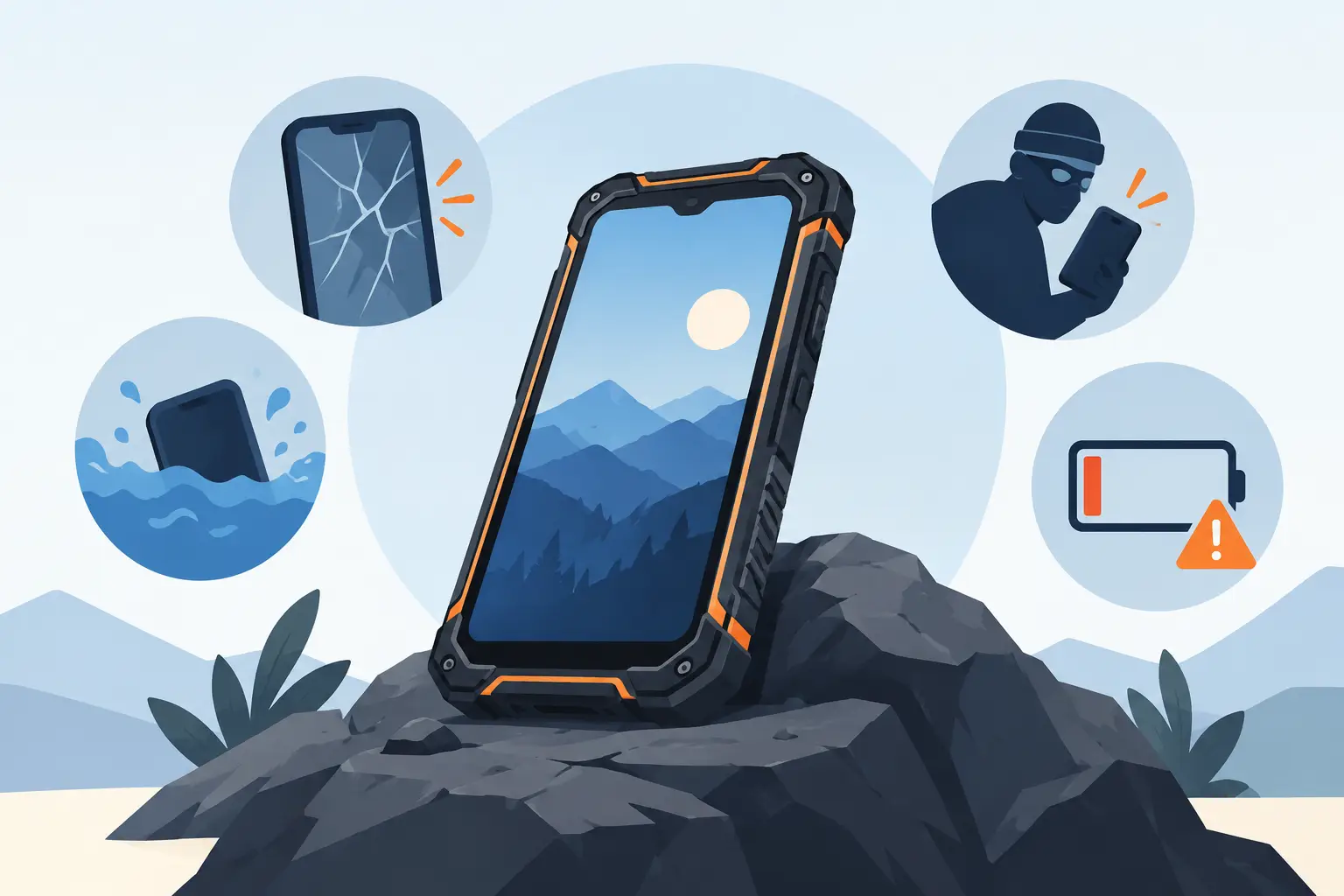
A $200 rugged mobile can look like a smart buy when it promises a huge battery, waterproofing, night vision and a body built like a brick. But cheap rugged phones risks become very real when that device is your communication line on a mine site, in the cab of a ute, out on the farm, or two hours from the nearest town. A low price is not automatically a problem. Buying blind is.
The issue is not whether a phone has chunky corners and an IP rating printed on the box. The issue is whether its internals, network bands, seals, software and after-sales support will still do their job after months of hard use. That is where many bargain listings come unstuck.
Why cheap rugged phones risks cost more at work
A phone failure is rarely just a phone failure. If it cannot hold a call, receive a job update, scan a delivery, run a work app or share a location, it wastes time and can leave a worker isolated. Replacing a cheap device twice is also not much of a bargain, especially if the first failure takes data, photos or access to two-factor authentication with it.
There is a big difference between an affordable rugged phone from a proven manufacturer and a bottom-dollar unit built to hit a marketplace price point. Good value comes from sensible component choices, tested design and support after the sale. Cheapness often comes from cutting the parts you cannot see.
The specification sheet can hide weak hardware
A bargain phone may advertise a massive battery, plenty of RAM and a high-megapixel camera, yet still feel slow or unreliable in daily use. Storage may be slower and lower grade than claimed. The processor can struggle with mapping, push-to-talk, banking or site-management apps. Cameras may have impressive numbers but poor sensors, weak low-light performance and sluggish focusing.
More concerning are cost cuts in charging circuits, USB-C ports, microphones, speakers and antenna design. These are the parts that cop the punishment every day. A loose charging port after a few months is not a cosmetic problem when your phone is flat before a long shift.
Battery claims also need context. A large battery should deliver useful runtime, but capacity alone does not prove quality. Poor battery management, excess heat and low-grade cells can shorten service life. A phone that lasts two days when new but becomes unreliable after a season is not fit for a worker who depends on it.
Cheap rugged phones risks: protection ratings are not the whole story
An IP68 or IP69K rating sounds definitive, but it should be treated as one part of the picture. These ratings are tested under stated conditions. They do not mean a phone will survive every drop into a muddy trough, every pressure wash, every saltwater exposure or every damaged charging flap.
Build quality determines whether that protection remains intact. Weak seals, poorly fitted buttons, thin port covers and inconsistent assembly can turn a good-looking device into a water-damaged one. The same goes for drop resistance. A phone may pass a controlled test, then crack because it lands badly on a sharp rock or a steel tray edge. No phone is indestructible, and anyone claiming otherwise is selling hype.
Ask whether the device is designed to be serviceable. A glued-shut phone with no realistic repair path can become rubbish after a damaged screen or worn battery. In hard-use industries, repair options and parts availability matter as much as the initial protection rating.
Australian network compatibility is non-negotiable
One of the most expensive mistakes is buying a cheap imported phone that is not properly suited to Australian networks. It may connect in town and still perform poorly where coverage is already marginal. Supported frequency bands, carrier features, VoLTE calling and 4G or 5G compatibility all matter.
Do not assume that a phone described as “unlocked” will work well everywhere in Australia. Unlocked only means it is not tied to one provider. It says nothing about whether the model supports the bands and calling functions your carrier relies on, particularly after older network services are switched off.
For remote work, check compatibility before purchase, not after a missed call in the middle of nowhere. If you work between regional sites, ask about the networks you use and the applications the handset must run. A proper specialist should be able to give a straight answer, rather than hoping the listing is close enough.
Software support can be a hidden weak point
Cheap devices often arrive with an older Android version and vague promises of updates. That may be tolerable for a basic spare phone, but it is a poor fit for a mobile that carries work emails, customer contacts, payment apps and sensitive information.
Security patches matter. App compatibility matters. So does the manufacturer’s willingness to fix faults after launch. Some obscure brands disappear from the market quickly, leaving owners with no updates, no replacement parts and no one to contact when a firmware issue stops a key feature working.
Be cautious with phones carrying unfamiliar software overlays or pre-installed apps you do not need. A clean, stable system from a manufacturer with a known support process is worth more than a long list of gimmick features. Thermal cameras, night vision and powerful torches can be genuinely useful, but only when the core phone functions are dependable.
Warranty is where the bargain is tested
A warranty is only useful if it is clear, practical and backed by a seller who will answer the phone. Overseas marketplace sellers can offer impressive wording while making a claim difficult, slow or uneconomic. You may be asked to return a faulty handset internationally at your cost, wait weeks for assessment, or deal with a seller that has vanished by the time a problem appears.
Read what is actually covered. Water damage is often excluded, even on phones sold as waterproof. Accidental damage, screens, charging ports and batteries may have separate conditions. That does not make the warranty worthless, but it means you need to know where you stand before the phone is dropped off a ladder or soaked during a wet week on site.
Local support also has practical value. Rugged Phones Australia focuses on vetted devices and warranty-backed support because a hard-use mobile needs more than a flashy listing and a low checkout price. When the phone is part of your working kit, somebody needs to own the problem if it fails.
How to buy affordable without buying trouble
Set the job first, then set the budget. A delivery driver may need loud speakers, reliable navigation and a strong mount. A farmer may prioritise battery life, coverage compatibility and a screen that works with wet hands. A tradesperson might need drop resistance, fast charging and a camera capable of recording site damage clearly. Someone working in hazardous or highly specialised conditions may need a device with purpose-built features rather than a standard rugged handset.
Before you buy, verify the network bands for your carrier, the Android version, expected security support, warranty process and replacement-screen availability. Check independent feedback for long-term faults, not just unboxing comments. Look closely at the charging port, buttons, speakers and mounting options. These are the details that show up every day.
A cheap phone can make sense as a secondary handset, a basic communications device or a limited-use phone for a student. It is a different decision when you are relying on it for emergency calls, compliance photos, job dispatches or access to remote workers.
The best rugged phone is not necessarily the most expensive one. It is the one that suits your network, survives your work, can be supported locally and does not leave you stranded when conditions turn ordinary consumer gear into scrap.