You do not notice how useless a fragile mobile is until you are knee-deep in a trough, the wind is up, the screen is wet, and the thing decides that one drop onto gravel is the end of its working life. If you are searching for the best phone for farmers Australia, the answer is not the flashiest handset on a plan. It is the one that keeps working in dust, mud, rain, vibration, and patchy regional coverage.
Most mainstream phones are built for offices, utes with phone cradles, and café tables. Farm work is different. A good farming phone needs to survive being tossed on the dash, used with dirty hands, charged whenever you get the chance, and trusted when you are a long way from town. That changes what matters.
What makes the best phone for farmers in Australia?
On paper, every brand promises a lot. In the paddock, most of those promises fall apart fast. Farmers generally need five things more than anything else – strong battery life, genuine toughness, reliable network support, a screen that can be used outdoors, and hardware that is still practical after months of abuse.
Battery life matters because farm days are long and power points are not always nearby. If you leave before sunrise, spend the day shifting stock, checking pumps, moving machinery or heading between properties, a phone that struggles to get to dinner is a liability. Big battery phones are not just convenient. They remove one more failure point from the day.
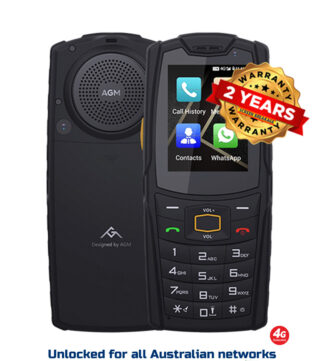
Durability is obvious, but it is worth being specific. A rugged-looking case around a delicate consumer phone is not the same as a purpose-built rugged handset. Proper rugged mobiles are engineered for impact resistance, water ingress, dust exposure and temperature swings. That matters on farms where one day can involve a milking shed, a dusty track, and a storm front rolling through.
Network compatibility is where plenty of buyers get caught. A cheap imported phone can look good online, then perform poorly on Australian networks, especially in regional areas where band support matters more. For farmers, coverage is not a nice extra. It is a safety issue.
The wrong way to choose a farming phone
A lot of people start with brand recognition. That is usually the first mistake. Big consumer brands spend heavily on advertising, camera tricks and lifestyle marketing. None of that tells you how a phone handles bull dust, wet pockets, repeated drops or weak rural signal.
The second mistake is buying on price alone. Cheap rugged phones exist, but plenty of them are rubbish. Poor quality control, weak batteries, dodgy charging ports, inferior screens and no meaningful local support can turn a bargain into a headache. If a mobile fails in the city, it is annoying. If it fails on a property when you rely on it for calls, maps, photos, job coordination or emergency contact, the cost is higher.
The third mistake is chasing gimmicks. Extra lenses, inflated memory claims and bloated spec sheets can distract from the basics. On a farm, the basics are what count. Can you hear it ring over machinery? Can you read the screen in hard sun? Can it last a full day with GPS, calls and messages? Can it survive being knocked off the seat onto hard ground?
Best phone for farmers Australia means matching the phone to the job
There is no single perfect phone for every farm. A broadacre operator, a dairy farmer, and someone managing fencing contractors across remote blocks may all need something slightly different. The right device depends on how you work.
If battery life is your top concern, look for a rugged phone with a genuinely large battery, not a thin consumer handset that relies on power saving tricks. Bigger batteries usually mean a heavier phone, and that is the trade-off. You carry a bit more weight, but you get a mobile that can handle a proper workday and then some.
If you work in wet conditions or around washdown areas, waterproofing and charging port protection matter more than fancy design. Some rugged models also give you glove-friendly touch settings or programmable buttons, which are far more useful on farm than another portrait camera mode.
If your work takes you into remote areas, 5G is not always the deciding factor. In many regional locations, stable 4G with the right Australian band support is more valuable than a 5G label on the box. This is where specialist retailers earn their keep. They know which models are actually suitable here and which ones only look good on an overseas spec sheet.
Features that are genuinely useful on farm
A bright screen is one of the most underrated features. You do not need a cinematic display. You need something readable in full sun when checking maps, weather, livestock records, job notes or photos of equipment. Screens that look brilliant indoors can be frustrating outside.
Loud speakers and clear call quality also matter. Farm work is noisy. Wind, engines, pumps and machinery can make ordinary phones hard to hear. A phone that cuts through that noise is worth more than one with prettier graphics.
Camera quality has its place, but probably not for the reasons marketing departments push. Farmers use cameras for practical tasks – documenting fence damage, recording serial numbers, sending photos of parts, checking stock injuries, or sharing site conditions. You want a camera that is fast, dependable and clear enough for work, not one designed for social media filters.
Torch functions, thermal imaging and night vision can also be useful, depending on the property and the work. These are not must-haves for everyone, but they are not gimmicks either if your day regularly starts before light or runs after dark. The trick is being honest about whether you will use them.
Why rugged phones usually beat mainstream phones for farming
A mainstream flagship in a bulky case can seem like a smart compromise. Sometimes it is. If you mostly work from the cab, stay near chargers, and just need a good camera with light durability, you might get by.
But for proper hard-use farming, purpose-built rugged phones usually win because they are designed from the start for punishment. Thicker housings, reinforced corners, sealed bodies, larger batteries and practical features make more sense in the field than slim bodies and glass backs. They are not trying to be stylish. They are trying to stay alive.
There are trade-offs. Rugged phones are often heavier and bulkier. Some have cameras that are good rather than class-leading. Wireless charging can be hit and miss. Accessories can be less common than they are for big-name consumer phones. For most farm buyers, that is a fair swap if the device is reliable and serviceable.
What to check before you buy
Start with network support for Australia. Do not assume every imported rugged phone is properly suited to local carriers. Check the supported bands carefully and buy from a seller that understands Australian regional use, not just city coverage.
Then look at battery size, ingress protection, drop protection and whether the phone has practical extras like dual SIM, programmable keys or a loud speaker. If you use a phone for navigation, job apps or hotspotting in the paddock, make sure the processor and memory are not bargain-basement either. A tough phone that runs like a dog is still a bad buy.
Repairability and after-sales support matter more than many people realise. If a screen breaks or a battery issue appears down the track, local support beats chasing emails from an overseas marketplace seller who disappears once the sale is done. This is one reason specialist suppliers like Rugged Phones Australia have a place. They do the filtering, cut out the junk, and back the models that are actually worth owning.
So what is the best phone for farmers Australia?
The honest answer is this: the best phone for farmers Australia is the one that fits your property, your coverage area, and the punishment you give it each day. For many buyers, that means a rugged Android phone from a proven heavy-duty brand, with proper Australian compatibility, a large battery, strong waterproofing, and support from a seller who knows the difference between a usable work phone and a cheap import with a tough-looking shell.
If you spend your days in harsh conditions, buy for reliability first and everything else second. A mobile on the farm is not a fashion item. It is a tool, and tools earn their place by still working when the day gets rough. Choose one that is built for that reality, and you will only need to buy it once.