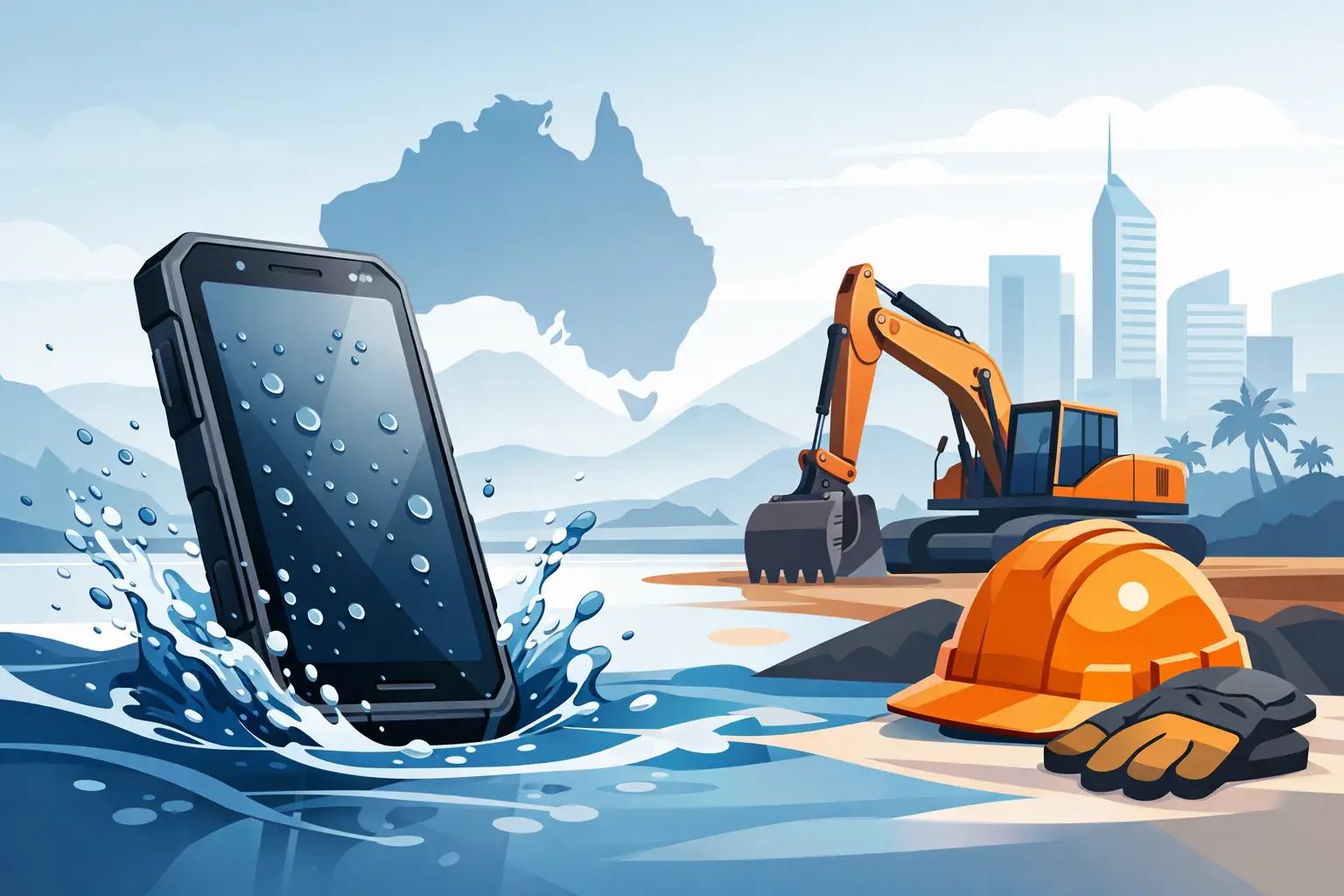
A phone that dies after one drop in the mud or one shift in the rain is not a work phone. It is an expensive weak point. If you are looking for a waterproof work phone Australia buyers can rely on, the real question is not which handset looks toughest in a promo shot. It is which device keeps working when it is covered in dust, rattling around a ute, copping spray, and spending all day away from a charger.
That rules out most mainstream phones straight away. Consumer handsets might claim water resistance, but there is a big difference between surviving a brief splash at a cafe and handling life on a farm, a mine site, in transport, or on a construction crew. Work gear needs a wider margin for error.
What a waterproof work phone in Australia really needs
Most buyers start with IP ratings, and that is fair enough. If a phone has a proper IP68 or IP69K rating, you know it has been tested for dust ingress and water exposure. But that is only one part of the story. A waterproof body is useful. A waterproof body attached to a flimsy frame, weak charging port, or poor battery is still a bad buy.
For Australian work conditions, the phone has to deal with more than water. Dust is constant. Heat matters. Vibration matters. Gloves matter. Network coverage matters even more once you are outside metro areas. A device can be technically waterproof and still be useless on site if the screen is hopeless in bright sun or the battery is flat by mid-arvo.
That is why rugged phones deserve their own category. The better ones are built with reinforced corners, thicker housings, stronger seals, larger batteries, and practical extras like programmable buttons, loud speakers, glove mode, and lanyard support. Those things sound minor until you are using the phone ten times a day with dirty hands in bad weather.
Waterproof work phone Australia buyers should ignore the hype on
Plenty of sellers throw around words like military grade, outdoor ready, or shockproof without giving much detail. That is where buyers get burned. A cheap import with inflated specs and no proper local support can look like a bargain right up until the charging flap breaks, the speaker fills with grit, or the device stops charging three months in.
The biggest mistake is buying on headline specs alone. A giant battery sounds good, but not if the phone is too heavy for daily carry or takes forever to charge. A thermal camera sounds impressive, but if you do not actually need thermal imaging, that money is better spent on a stronger core device with better warranty backing. Extra features only matter if they solve a real work problem.
Another trap is assuming all rugged phones are built to the same standard. They are not. Factory quality varies, internal component quality varies, and software stability varies. On paper, two phones can look almost identical. In real use, one will hold up and the other will become a headache.
How to judge a work phone beyond the IP rating
Start with sealing and structure. A proper work phone should feel solid without relying on gimmicks. Look for a body that is clearly designed for impact protection, not a normal smartphone with a rubber case shape. The frame, corners, charging port design and screen protection all matter together.
Next, look at battery size in context. For long shifts, remote work, transport runs and field use, battery life is not a luxury. It is part of reliability. A 5000mAh battery may be enough for some users, but many hard-use buyers are better off in the 6500mAh to 22000mAh range depending on how much navigation, camera use, hotspotting or app usage they do. The trade-off is weight and bulk. There is no point pretending otherwise. The best battery for a site supervisor is not always the best battery for someone climbing in and out of machinery all day.
Screen usability is another one often missed. A bright screen with decent touch response in gloves is worth more on site than a fashionable display spec. If you cannot answer calls, check plans, or use maps quickly in the sun, the phone is fighting you.
Then there is network support. In Australia, this is a make-or-break issue. A rugged handset is only useful if it plays nicely with local carriers and regional coverage requirements. Imported models with patchy band support are false economy. If you work remotely, network compatibility is not a technical footnote. It is the difference between having service and having none.
Which features are actually worth paying for
If your phone is part of your workday rather than just a contact number, a few features are worth serious attention.
A large battery is near the top of the list, especially for workers who spend long hours away from a charger. Fast charging also matters, because topping up during a crib break is a lot more practical than waiting half the night.
A high-output torch can be genuinely useful. So can a programmable button for push-to-talk, torch access or a critical app. These are work features, not novelty extras.
Night vision and thermal imaging sit in a different category. For general trades, farming, freight and civil work, they are often optional. For inspection work, security, maintenance diagnostics, animal spotting or search tasks, they can be excellent. The point is to buy for the job, not for bragging rights.
A decent camera is also more important than some buyers admit. Work phones are used to document faults, damage, deliveries, installations and compliance issues. You do not need lifestyle-phone marketing nonsense, but you do need a camera that produces usable photos quickly and consistently.
Who needs a fully rugged phone and who does not
Not every worker needs the biggest and toughest handset on the market. If you are mostly indoors, drive between jobs, and just want better protection from drops and weather, a slimmer rugged smartphone may be the smart choice. You still get waterproofing and durability without carrying a brick in your pocket.
If you work in mining, agriculture, construction, transport yards, remote operations, marine environments or dirty workshops, a heavier-duty unit makes more sense. These are the users who benefit from thicker housings, bigger batteries, stronger ingress protection and more aggressive impact protection.
There is also a middle ground for schools, parents and institutions that want durable limited-use devices. In those cases, waterproofing matters, but simplicity, battery life and restricted functionality may matter more.
Why local support matters with a waterproof work phone Australia wide
This is the part many buyers only understand after something goes wrong. A rugged phone is still a working device. Screens can crack, ports can wear, batteries can degrade, and software can misbehave. If you buy from a generic marketplace seller with no real product knowledge and no proper backup, you are on your own.
That is why specialist retail matters. A curated range is usually better than a giant catalogue full of junk. When a seller is selective, it usually means they have already filtered out the weak options, the rubbish factory variants, and the devices that cause warranty grief. That saves buyers from learning the hard way.
Rugged Phones Australia has built its name around that exact point – fewer models, better judgement, and local support for people who actually use these devices in harsh conditions. That approach makes sense because most workers do not want fifty mediocre choices. They want one or two good ones and clear advice on which fits the job.
The smart way to choose
If you need a waterproof work phone, start with your actual environment. Ask how wet, how dusty, how remote, and how dependent you are on battery life. Then work backwards from those conditions.
If you are around water, mud and dust every day, insist on proven IP ratings and a genuinely rugged build. If you are often off-grid, put battery and network compatibility ahead of flashy extras. If documentation is part of your job, do not ignore camera quality. And if downtime costs you money, buy from someone who can support the device after the sale.
The right phone for hard work is not the one with the loudest marketing. It is the one that still works after months of being knocked about, charged in odd places, used with filthy hands, and trusted when reception is patchy and the weather has turned. Buy for that reality, and you will make a better decision the first time.