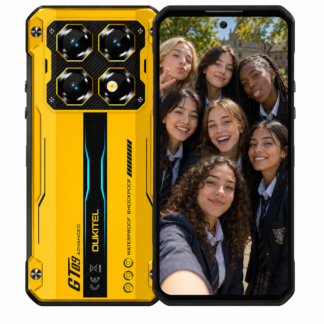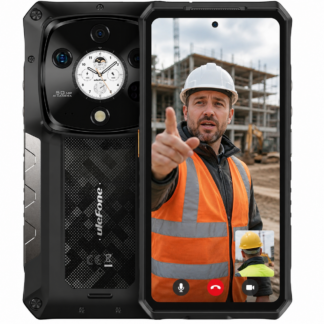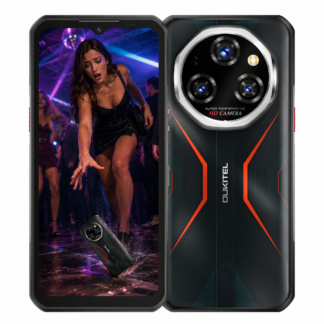
If you work nights, start before sunrise, or spend half your week in paddocks, pits, sheds or site compounds, a rugged phone with night vision stops being a gimmick very quickly. The right one helps you inspect equipment in poor light, check fence lines, spot movement around vehicles, and document jobs without dragging a torch and a second device everywhere. The wrong one gives you murky green images, average battery life, and a bulky handset that still misses the shot.
That is the problem with this category. Plenty of phones advertise night vision, but not all of them are built for real work. Some are decent rugged phones with a novelty camera bolted on. Some have respectable infrared hardware but fall short on network support, repairability, charging reliability or basic day-to-day usability. If you need one for hard use, you need to judge the whole phone, not just the headline feature.
What a rugged phone with night vision actually does
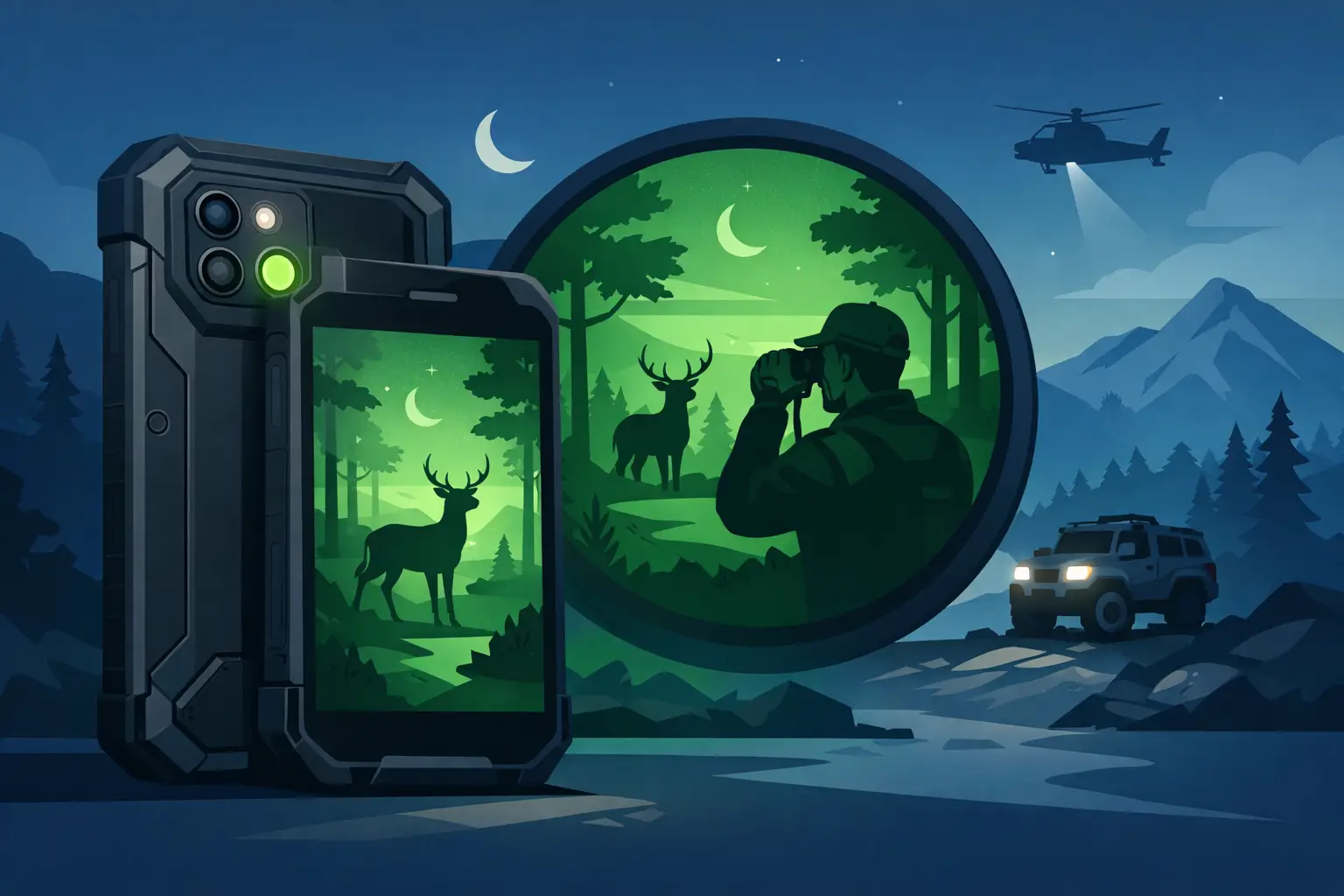
Most night vision phones use infrared illumination and an infrared-sensitive sensor to capture black-and-white images in low light or complete darkness. That matters because standard mobile cameras, even very good ones, rely on available light and software tricks. In a dark machinery shed or on a track at 4 am, software alone does not save the image.
A proper night vision setup on a rugged mobile lets you see subjects your normal camera cannot. It is useful for security checks, checking stock movement, locating gear, inspecting remote gates, and recording incidents where a flash would either blow out the image or spook whatever you are trying to see. It is not military-grade optics, and it is not a substitute for dedicated thermal gear, but in the right scenario it is genuinely useful.
That said, there is a difference between useful and impressive on a spec sheet. Some phones push megapixels hard, but the more relevant questions are how strong the infrared LEDs are, how clean the image stays at distance, and whether the camera app is quick enough to be practical when you are wearing gloves and trying to get the job done.
Where a rugged phone with night vision makes sense
For farmers, it can be handy for checking outbuildings, stock areas, pumps and access points without lighting everything up. In transport and logistics, it helps with trailer checks, depot inspections and low-light loading areas. On mine sites, civil works and construction jobs, it can assist with documenting conditions in poor light, though site policy and device approvals always come first.
It also suits remote workers who want one device instead of a separate torch, camera and fragile mainstream phone. Parents and institutions looking at restricted-use handsets are a different case again. Night vision is less about convenience there and more about supervision or property checks after dark.
The point is simple. If you regularly need visual information in darkness, it earns its place. If you mostly want a tough phone for drops, dust and rain, night vision may be extra cost and bulk you do not need.
What matters most when buying
Night vision gets attention, but field performance comes from the basics being right.
Infrared hardware, not just marketing
Look closely at how the night vision system is built. A higher-resolution infrared camera can help, but infrared LED strength and image processing matter just as much. Some phones look sharp close up and then fall apart at modest distance. Others produce cleaner contrast and more usable detail across a wider range.
Ask yourself what you are actually trying to capture. Reading a serial plate in a dark shed is different from spotting movement near a gate 20 metres away. If your use case is longer distance, mediocre infrared hardware becomes obvious very quickly.
Battery size and power management
Night vision use drains power. So do bright torches, high-refresh screens, 5G radios and GPS tracking. A rugged phone can have a huge battery on paper and still disappoint if the software is sloppy or the charging setup is unreliable.
For real field use, battery endurance matters more than slimness. Most buyers in this category are better served by a thicker device with meaningful battery capacity than a prettier handset that needs charging before knock-off. Fast charging helps, but only if the phone can also last through a shift when power is nowhere near you.
Durability beyond the IP rating
IP68 and IP69K sound good, and they do matter, but they are not the whole story. You also want solid port covers, a frame that can take repeated knocks, a screen that does not crack from a minor fall, and buttons you can use with wet or gloved hands.
This is where rubbish factory variation catches buyers out. Two phones can look similar online, yet differ wildly in assembly quality, charging port life and long-term reliability. Specs do not tell you whether a phone was built to survive the back of a ute, the floor of a loader cab or months of dust and vibration.
Screen usability outdoors
A rugged mobile lives outdoors. If the display washes out in full sun, it will annoy you every day regardless of how clever the camera is at night. Brightness, touch response and glove mode all matter. So does screen protection. A decent panel with poor durability is still a bad buy in this category.
Network support in regional Australia
This one gets ignored until it becomes a problem. Plenty of imported devices look excellent until you realise their band support is patchy or they are not well suited to Australian networks. For remote and regional users, that is not a minor issue. It is the difference between a useful tool and an expensive brick.
A tough phone for Australian field work needs proper network compatibility, not wishful thinking. If you travel between metro and regional areas, check this before getting distracted by camera claims.
Night vision versus thermal imaging
Buyers often lump these together, but they do different jobs. Night vision uses infrared light to show what is there in darkness. Thermal imaging detects heat differences. If you are looking for people, animals, running equipment or hotspots, thermal can be the better tool. If you need a clearer visual record of an object, gate, vehicle or work area in the dark, night vision is often more practical.
Some high-end rugged devices offer thermal, but they cost more and are not necessary for everyone. If your main need is after-dark inspection and documentation, a rugged phone with night vision may be the smarter buy. If fault detection or heat tracking is central to your work, thermal is worth considering instead.
The trade-offs no one should sugar-coat
These phones are thicker, heavier and less polished than mainstream flagship mobiles. Camera quality in daylight can be good, but often not class-leading. Software can be more functional than fancy. Accessories are usually more specialised. And if you buy the wrong model from the wrong seller, warranty support can become a headache very fast.
There is also the simple fact that not every rugged phone with night vision is worth buying. Some are overloaded with marketing features and underdone where it counts – charging reliability, speaker quality, parts support, or long-term durability. That is why curation matters. A short list of proven models is worth more than twenty questionable ones.
Who should buy one, and who should not
If your phone is a tool for inspections, field photos, night checks, remote work or after-hours operations, this category makes sense. If you are forever breaking consumer mobiles, the extra toughness is not overkill. It is cost control.
If, however, you mainly want social apps, premium camera processing and a slim pocket feel, a rugged model will probably frustrate you. These devices are built to survive hard use first. Everything else comes after that.
For buyers who need straight advice, this is where a specialist retailer earns its keep. Rugged Phones Australia, for example, does not need to stock every model under the sun to be useful. Better to cut out the weak options and back the handful that can actually handle Australian conditions.
How to choose without wasting money
Start with your real use case, not the fanciest spec. Think about where you work, how dark it gets, whether you need long-distance visibility, and how often you are away from power. Then weigh durability, battery, network support, charging reliability and warranty behind the camera feature.
If two models look close, the safer bet is usually the one with better build quality and after-sales support, not the one with one extra headline number. In this category, dependable beats flashy every time.
A rugged phone with night vision is at its best when it disappears into the job – ready when you need it, tough enough not to worry about, and practical enough to earn a place in your pocket every day. Buy for that standard, and you will end up with a tool instead of a toy.