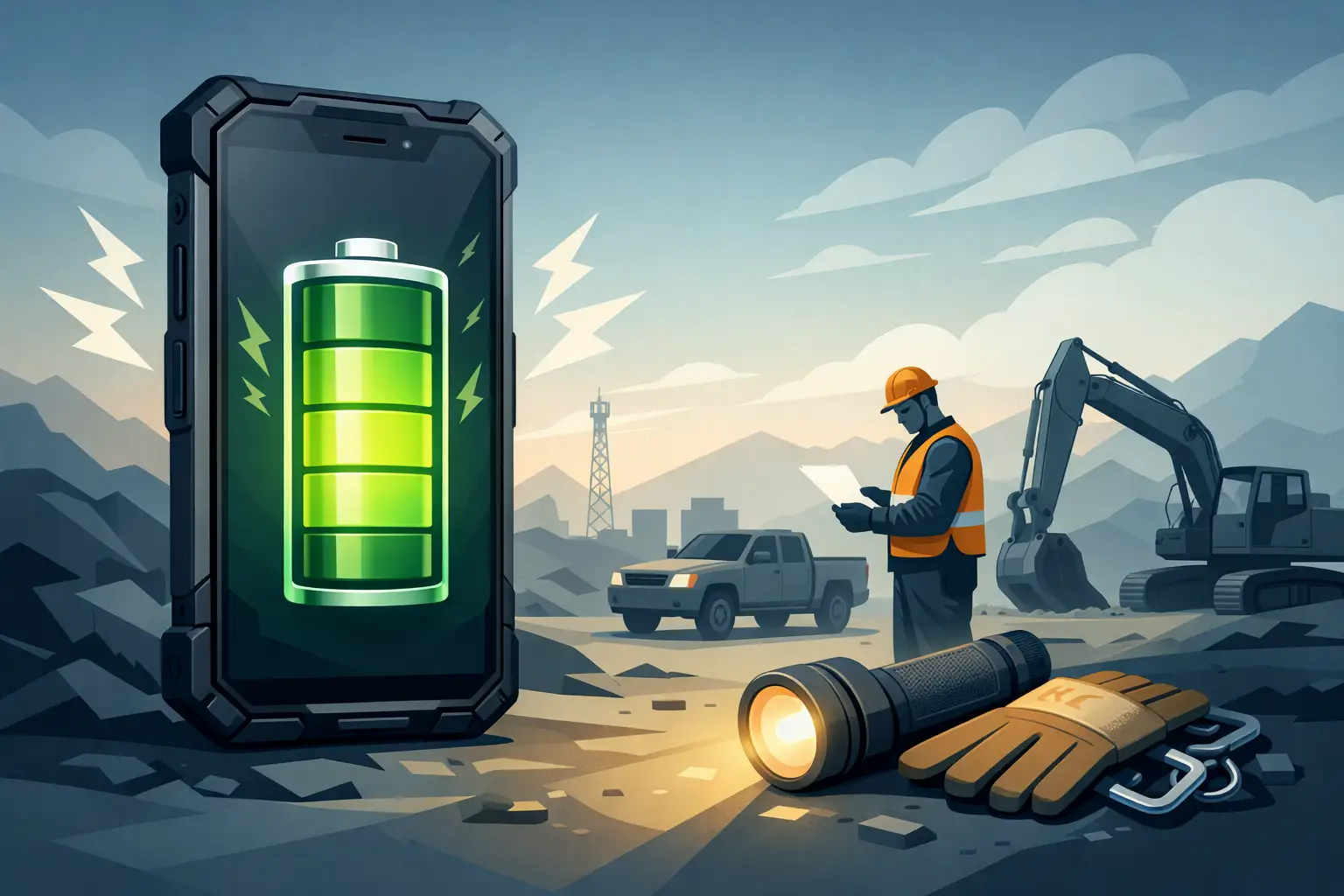
A dead phone halfway through a shift is more than annoying. If you are on a mine site, out on a property, in a ute, or working a long day away from a charger, it can mean missed jobs, lost time, and a safety headache. That is why a long battery rugged phone is not some nice-to-have spec. For plenty of Australian workers, it is the whole point.
The problem is that battery claims are easy to inflate. Plenty of brands throw a giant mAh number on the box and hope nobody asks harder questions. Battery life is not just about size. It is about how the phone is built, how efficient the chip is, how bright the screen runs in full sun, whether 5G is draining it in weak coverage areas, and whether the software is decent or rubbish.
What makes a long battery rugged phone actually good?
Start with the obvious – battery capacity matters. If you want serious runtime, you are generally looking at 10,000mAh and up for the heavy hitters, while 6,000mAh to 8,500mAh can still be excellent if the phone is well balanced. But capacity on its own does not tell you how the mobile will behave in the real world.
A phone with a power-hungry processor, a huge high-refresh screen and poorly tuned software can burn through a big battery faster than a better-optimised unit with a smaller pack. On the flip side, a very large battery can make the handset thicker and heavier than some buyers really want. That is fine in a vehicle cradle or tool bag. It is less fine if the phone lives in your pocket for twelve hours a day.
This is where cheap imports often come unstuck. On paper they look unbeatable. In use, they run hot, charge slowly, lose battery health too quickly, or fail in basic network stability. A proper rugged phone for Australian field use needs more than a headline number. It needs sensible hardware, known factory quality, and support when something goes wrong.
Long battery rugged phone buyers should ignore the hype
The first trap is standby claims. Every seller loves to brag about how many days the phone can sit on a bench doing nothing. That is not how tradies, farmers, field techs or transport operators use a mobile. Real battery performance means screen-on time, GPS use, calls in patchy areas, Bluetooth connected in the cab, photos on site, and maybe a torch or thermal camera getting a workout.
The second trap is charging speed without context. Fast charging is handy, but it does not fix poor battery efficiency. It also does not matter much if the phone is flat by smoko because the device is badly optimised. What you want is strong all-day endurance first, then charging that is practical enough to top up at lunch, in the ute, or back in the depot.
The third trap is pretending every user needs the biggest battery available. They do not. If you are a field worker doing long shifts away from power, oversized battery capacity makes sense. If you want a tougher daily driver that lasts comfortably through two days of normal use, a slightly smaller unit with better ergonomics may be the smarter buy.
Battery life in the bush is different from battery life in town
Australian conditions are hard on electronics. Heat matters. Coverage matters. Dust, vibration and long hours matter. A phone that performs well in metro testing can fall apart once it is spending all day searching for signal across rural roads or remote work sites.
Weak reception is a major battery killer. When the mobile is constantly hunting for towers, power draw rises fast. That is why network compatibility is part of battery performance whether sellers admit it or not. A phone with the wrong band support or flaky modem can drain itself just trying to stay connected.
Then there is temperature. High heat can reduce battery efficiency on the day and battery health over time. Rugged phones built for hard use should be better suited to harsh environments, but no battery enjoys baking on a dash in the sun. If your work keeps you outdoors, battery size should be paired with decent thermal management and practical habits, not blind faith.
The trade-off nobody should pretend away
A serious long battery rugged phone will usually be heavier than a mainstream handset. That is not a design failure. It is the price of a larger battery, stronger housing, extra sealing, and often useful extras like thermal imaging, night vision, louder speakers or glove-friendly controls.
The question is not whether it is heavy. The question is whether the weight earns its keep.
For a miner, surveyor, station worker or transport operator, a larger and heavier phone can be a very fair trade if it means two or three days of dependable use. For someone climbing ladders all day with a phone in the pocket, size starts to matter more. The right answer depends on how you carry it, how often you charge, and whether the mobile is a core work tool or just a backup line.
Features that affect battery more than people realise
Screen choice matters. A brighter display helps outdoors, but high brightness and high refresh rates chew power. If you work in full sun, there is no point buying a dim phone just to save battery, but it helps to know that the screen is one of the biggest drains on the device.
Cameras also matter, especially specialist modules. Thermal imaging, infrared night vision and constant video recording all use extra power. These features can be brilliant on the job, but they need to be treated as work tools with a battery cost attached.
Software matters even more than most buyers expect. Badly tuned apps, aggressive background services, and poor system optimisation can waste battery every day. This is one reason careful model selection matters. We have seen plenty of devices that look tough on a spec sheet and behave like a headache in the field.
Who should buy the biggest battery possible?
If your day regularly starts before sunrise and ends well after dark, and charging opportunities are unreliable, go big. The same applies if you run navigation for hours, rely on hotspot use, work remotely, or need the phone available for safety and coordination even when the shift blows out.
If you are mostly around vehicles, site sheds or office power, a moderate battery in a properly built rugged phone may be the better choice. You will still get stronger endurance than a fragile consumer handset, without carrying a brick for no reason.
Parents and schools looking for limited-use rugged mobiles are a different case again. Here, long battery life is valuable because it reduces hassle and keeps the device available in emergencies, but extreme weight and oversized dimensions may not suit younger users. It depends on the age group and how the phone will be carried.
How to choose without getting burnt
Buy from a specialist that actually curates the range. That means fewer models, not more. Anyone can list hundreds of devices and let the customer sort through the mess. That is not expertise. The better approach is to filter out weak platforms, dodgy factory variants and unproven models before they ever reach the checkout.
Look closely at battery size, but check the rest of the package as well. Network support for Australia, proven chipset efficiency, practical charging, real durability credentials, and after-sales support all matter. A rugged phone is supposed to reduce downtime, not create a new support problem.
Warranty support should not be treated as a footnote. When you are buying a work phone, local backup matters. So does access to parts, accessories and advice from people who understand harsh-use devices rather than reading from a generic script. That is where a specialist retailer like Rugged Phones Australia earns its place.
The best long battery rugged phone is the one that fits your job
There is no single winner for everyone, and any seller who says otherwise is overselling it. Some buyers need a giant battery first and can live with extra bulk. Others need a better-balanced phone that still lasts longer than standard consumer models while staying easier to carry every day.
What should not be negotiable is reliability. If a phone claims monster battery life but falls over on coverage, charges badly, or comes from a questionable supply chain, it is not a bargain. It is just another problem in your pocket.
If your mobile has to survive dust, drops, rain, vibration, patchy reception and long shifts, buy with a bit more discipline. The right rugged phone should last the distance, not just look good on a spec sheet. Get the battery capacity you genuinely need, make sure the device suits Australian conditions, and choose a model that is built to work rather than merely advertised that way. That decision pays for itself the first time your day runs longer than planned and your phone keeps going.