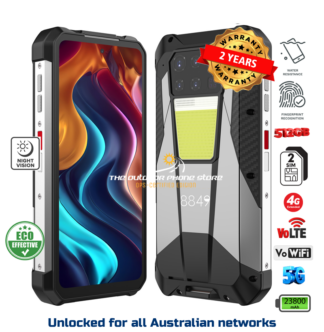
A phone that survives dust, mud, vibration and a drop off the tray is no use if it turns into a paperweight the moment you leave town. That is the real issue with rugged phone remote area coverage. Plenty of devices look tough on a spec sheet, but once you get into mining leases, cattle country, transport corridors or regional worksites, network support matters just as much as IP ratings and battery size.
This is where buyers get caught. They assume any rugged phone with 4G or 5G will work the same everywhere. It will not. Remote coverage is a mix of carrier footprint, supported frequency bands, antenna design, software tuning and plain old physics. If you work beyond the suburbs, you need to look harder than the marketing headline.
What rugged phone remote area coverage really means
Remote area coverage is not just about whether a phone can connect. It is about how reliably it holds signal at the edge of coverage, how well it switches between towers, and whether voice and data remain usable when conditions are poor.
In Australia, regional and remote performance usually comes down to low-band network support. These lower frequencies travel further and penetrate buildings, vehicles and terrain better than higher bands. In practical terms, they are often the difference between one usable bar and no service at all.
That is why a rugged phone built for the wrong market can be a bad buy, even if the hardware itself is physically strong. Some imported models miss key Australian bands, or support them poorly. Others technically list the right bands but are tuned for overseas carriers and deliver average real-world performance here. On paper is one thing. On a remote road is another.
The Australian network reality
Australia is a hard test for mobiles because our distances are big, populations are spread out, and many workers spend time where towers are sparse. A phone that performs fine in metro Sydney can struggle badly once you are hours from a major centre.
Telstra has the broadest regional footprint, so many remote-area users start there for good reason. Optus can be fine in some regional corridors and towns, but there are still plenty of areas where it falls away earlier. Vodafone is generally not the first choice for serious remote work. That is not brand politics. That is field reality.
Even with the right carrier, the phone still has to support the right frequencies properly. Band 28 is a major one for Australian 4G coverage. For many buyers, if a rugged phone does not support Band 28, the conversation is basically over. Other bands matter too, and 5G support may help in some areas, but low-band 4G remains a key part of dependable regional use.
Why specs alone do not tell the full story
This is where a lot of cheap sellers mislead people. They throw up a band list and leave the buyer to assume all is well. A serious buyer should be asking a few tougher questions.
First, is the model actually intended for Australian network use, or is it a generic global variant being pushed into this market? Second, has the device been sourced from a reliable factory version, not a cut-rate build with weaker components? Third, is there local support if the handset behaves badly on Australian networks?
A rugged phone is not just a radio with rubber corners. Antenna quality, modem quality and firmware all affect how it performs in weak coverage. Two phones can claim similar compatibility and still produce very different results in fringe areas. One will hang on long enough to get the call through. The other will drop out, search constantly, and flatten the battery while doing it.
What matters most when buying for remote work
If your work takes you out past reliable town coverage, start with network compatibility before you get excited about thermal cameras or giant batteries. Fancy extras are useless if the core job fails.
Look for proven support for Australian low-band 4G, especially Band 28, and check for sensible support across the main 3G replacement voice and data environment. Voice calling matters here too. With older network technologies retired, proper voice support over current networks is not optional. If a device has patchy calling compatibility, it is not fit for remote work.
Battery size still matters, because poor coverage drains power faster. Phones searching for signal chew through battery far more quickly than phones in strong metro coverage. A large battery gives you margin, but it does not fix poor radio performance. Think of it as backup, not a substitute.
Physical design also plays a role. A bulky rugged phone may survive abuse better, but some very thick designs or compromised internal layouts do not always produce the best antenna performance. There is always a trade-off. The toughest shell in the world means little if reception is ordinary.
Common mistakes buyers make
The first mistake is buying on price alone. Remote workers often lose more money from one failed day of communication than they save on a bargain handset. Cheap imports are full of traps – missing bands, weak modems, poor firmware support, no local warranty, and no one to call when things go wrong.
The second mistake is trusting generic marketplace listings. Many are copied, vague or flat-out wrong. Some list every possible network feature without confirming whether the exact model variant supports it in Australia. That is how people end up with a phone that is technically alive but practically useless.
The third mistake is assuming a mainstream consumer phone will always beat a rugged model for reception. Sometimes it might. Premium mainstream phones can have excellent radios. But they are also fragile, expensive to repair, and often a poor fit for dirty, wet or high-impact environments. The right rugged phone is about balancing survivability, serviceability and network performance, not blindly chasing one spec.
How to judge rugged phone remote area coverage properly
The best approach is blunt and practical. Ask where the phone will be used, which carrier it will run on, and what kind of communication matters most. There is a difference between driving regional highways, working around remote homesteads, and operating on isolated sites with weak tower reach.
If you mainly need reliable calls and messaging in fringe areas, prioritise proven carrier compatibility and low-band support. If you also need mapping, work apps and photo reporting, then data stability becomes more important. If you are working long shifts away from charging, battery and power bank options need to be part of the decision too.
This is also why specialist retailers matter. A proper specialist should be able to tell you which rugged phones are actually worth trusting on Australian networks and which ones are best left in the warehouse. That curation saves buyers from a lot of rubbish. At Rugged Phones Australia, that is the whole point – fewer models, better choices, less guesswork.
Remote coverage has limits, no matter what phone you buy
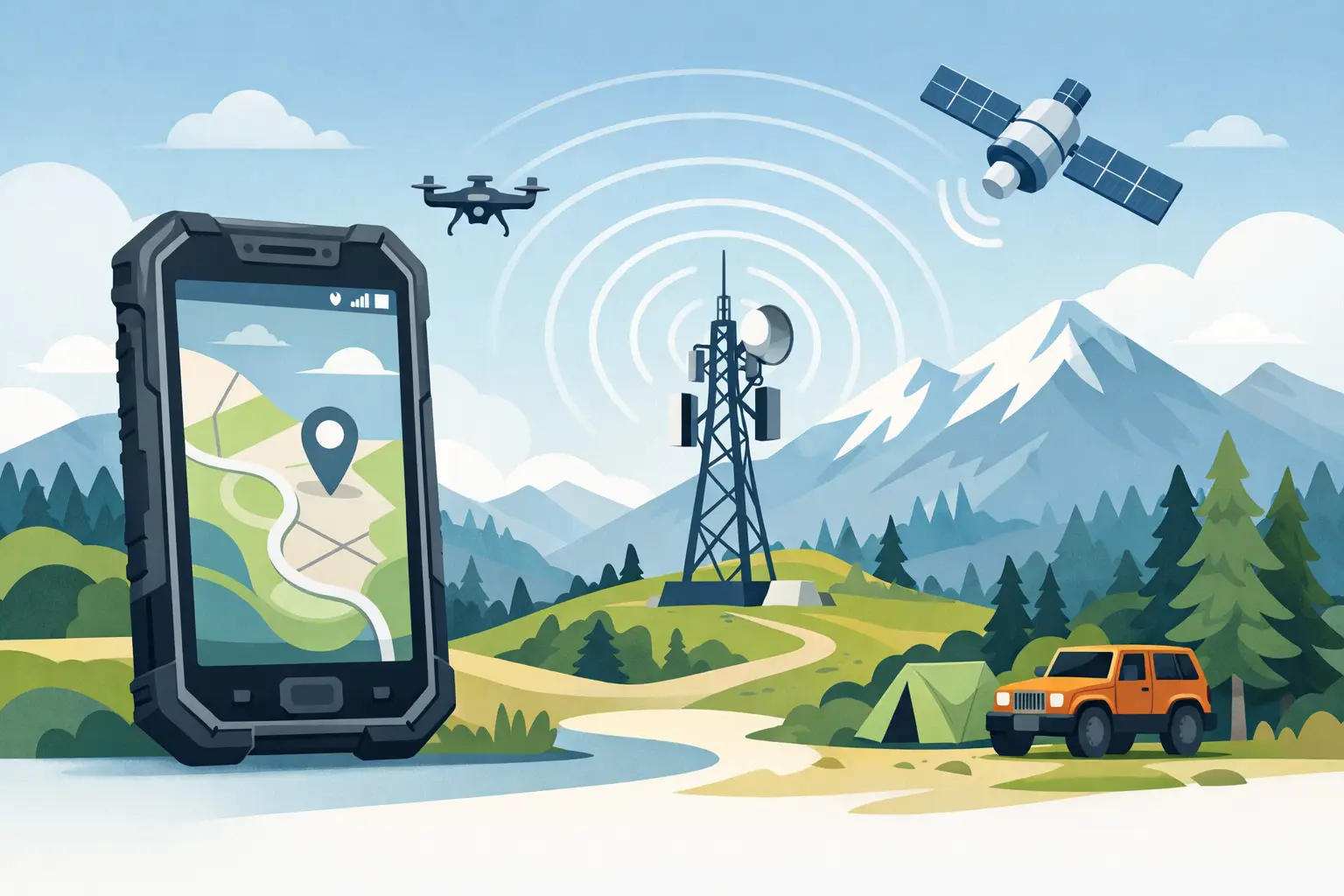
Let’s be clear about one thing. No handset can create coverage where there is none. If you are heading into true black spots, a rugged phone is only one part of the plan. Depending on the job, you may need a vehicle-mounted antenna solution, a signal booster where legal and suitable, UHF backup, a satellite communicator, or a proper satellite phone.
That does not mean the mobile choice is irrelevant. It means you should match the tool to the task. For many workers, the goal is not miracle reception in dead zones. It is stronger, more stable performance at the edge of ordinary coverage, with a device tough enough to survive the work.
The right question to ask before you buy
Do not ask which rugged phone has the biggest battery or the loudest speaker. Ask which rugged phone is properly suited to your carrier and your coverage conditions in Australia. That question cuts through a lot of hype very quickly.
If your work depends on staying reachable, remote area performance should be near the top of the buying checklist, not an afterthought. A good rugged phone earns its keep when the weather turns, the road gets rough, and the nearest town is a long way behind you. Buy for that moment, not for the glossy product photo.