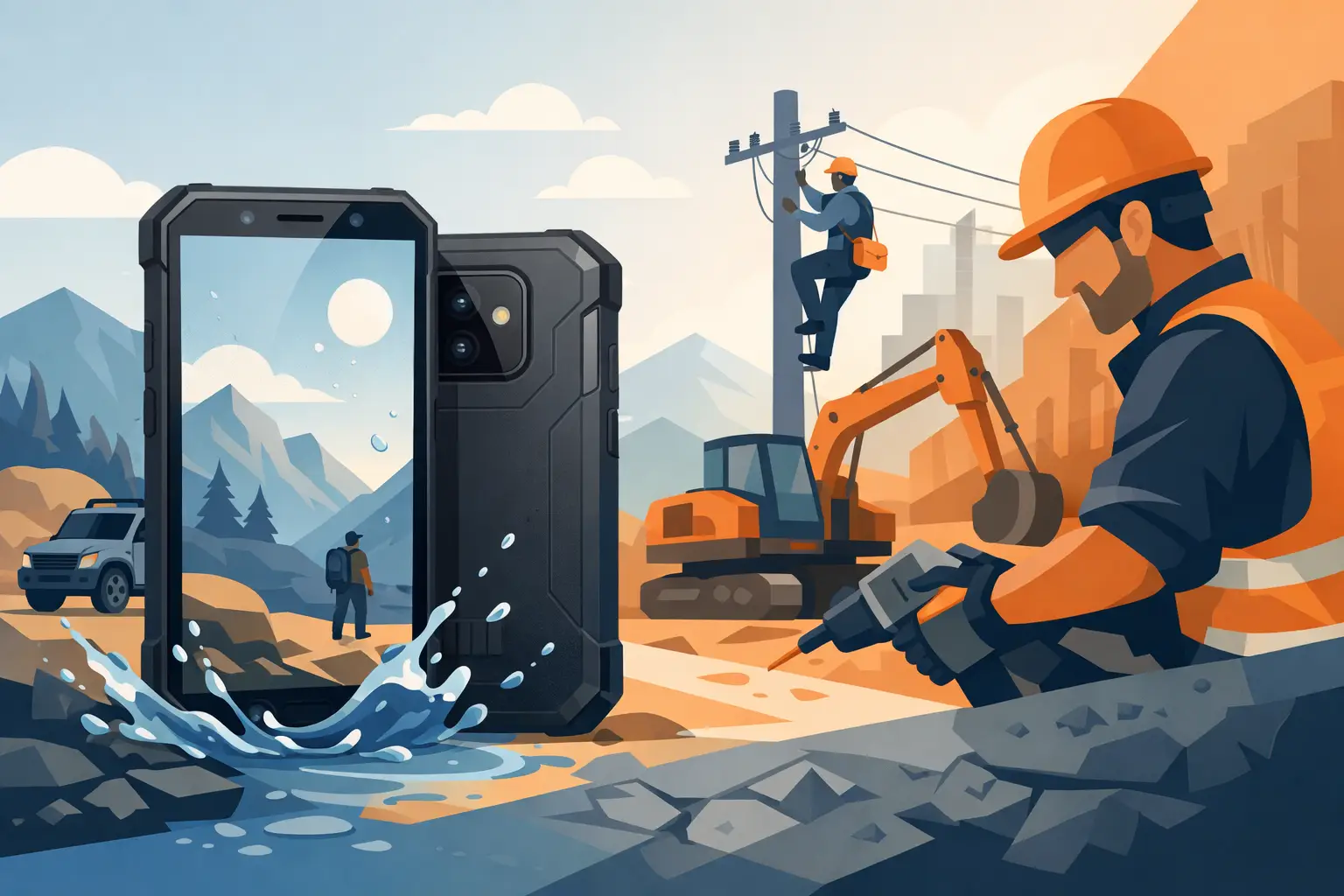
A cracked screen halfway through a shift is more than an inconvenience. On a farm, mine site, construction job or long-haul run, it can mean lost access to maps, work orders, safety contacts and the person who needs to know where you are. AGM phones are designed for people who cannot afford to treat their mobile like a fragile accessory.
That does not mean every tough-looking handset is worth buying. A chunky case and a big battery figure on a product page do not guarantee reliable charging, usable network coverage or a phone that will still perform after months in dust, rain and heat. The right AGM phone depends on the work it has to do, not how aggressive it looks in a photo.
Why AGM phones suit hard-use workplaces
AGM has built its name around purpose-built rugged mobiles rather than trying to compete with thin, fashion-first phones. That focus matters when the device is likely to end up on a concrete floor, in a ute, beside a muddy trough or exposed to fine dust on site.
A proper rugged phone combines several layers of protection. The housing needs to resist impact, the ports need to seal properly, the screen needs usable protection, and the internal components need to tolerate conditions that would quickly finish off an ordinary consumer handset. These are practical requirements, not marketing extras.
Many AGM models also put battery capacity ahead of slimness. That is often the right trade-off for remote work. A phone that lasts through a long day of calls, GPS use, photos and messaging is more useful than one that looks neat in a shirt pocket but needs a power point by mid-afternoon.
There is a trade-off, of course. Rugged phones are usually thicker and heavier than mainstream models. If your phone spends most of its time on a desk or in a jacket pocket, that extra bulk may not be worth it. If it regularly lands in the dirt, gets wet, or is used with gloves on, the extra protection starts making a lot of sense.
What to check before choosing AGM phones
The badge on the back is not the buying decision. Start with the conditions the phone will face and work backwards from there.
Water and dust ratings need context
An IP rating is useful, but it is not a licence to be careless. A high dust rating is valuable around grain, soil, workshops and mine dust. Water resistance matters for rain, wash-down areas and accidental drops into shallow water. It does not necessarily mean the handset should be used underwater every day or exposed to high-pressure cleaning.
Seals, charging-port covers and physical condition still matter. If a port cover is damaged or not fully closed, the protection is compromised. For hard-use buyers, a device that can be inspected, cleaned and serviced sensibly is a better long-term proposition than a cheap phone with impressive-looking numbers and poor build quality.
Battery size is only half the story
A large battery is a major reason people look at AGM phones, especially in regional and remote Australia. But capacity alone does not tell you how the phone will behave. Screen brightness, processor efficiency, mobile signal strength, GPS tracking and camera use all affect runtime.
Weak reception is a common battery killer. When a handset is constantly hunting for a signal, it works harder. For workers travelling through patchy coverage, choose a model with the network bands you need, then treat battery claims as a guide rather than a guarantee. Carrying a quality vehicle charger or power bank remains sensible for multi-day work away from mains power.
Network compatibility is not optional
A rugged mobile is no good if it cannot reliably connect where you work. Before buying, check Australian network compatibility, supported 4G or 5G bands, VoLTE requirements and the provider used by your workplace or family. This is especially important as older network services are retired.
Do not assume an imported model will be right for Australian networks simply because it powers on and shows signal in a suburban location. Network support varies by carrier and region. Buying through a specialist that understands local compatibility can prevent a costly mistake, particularly when the phone is needed for work or safety.
Screen usability beats headline size
A large display is useful for mapping, forms, photos and messages, but a bigger screen also creates a larger surface to protect. For many trades and field workers, the sweet spot is a display that remains readable outdoors, responds reliably and is protected by a properly fitted screen protector.
Gloves, wet hands and dust change how a touchscreen behaves. If you regularly wear work gloves, consider whether you need glove-mode support or whether a model with physical controls would be more practical. The best device is the one you can operate when your hands are cold, dirty or occupied, not the one with the flashiest display indoors.
Match the phone to the job, not the spec sheet
For farming, battery endurance, dust protection and signal compatibility generally come first. A good camera is useful for recording livestock issues, machinery damage or fence repairs, but it does not need to replace a professional camera. GPS and a bright screen are often more valuable day to day.
For construction and trades, impact protection, clear calls and a screen that survives regular handling matter most. Look closely at charging arrangements too. If the phone comes out of a vehicle several times a day, a convenient and dependable charging setup can be more valuable than extreme battery capacity.
Mining, industrial and remote-area workers may need more specialised tools. Thermal imaging can help identify heat issues in equipment, electrical components or buildings, but it adds cost and is not necessary for every buyer. Night vision cameras can assist with security or outdoor inspection work, yet ordinary daylight camera performance and reliable communications should still be the priority.
For transport operators, long battery life, loud audio, navigation performance and mounting options deserve attention. A phone that is hard to hear over road noise, overheats in a windscreen mount or loses charge while navigating is not fit for the task, regardless of its waterproof rating.
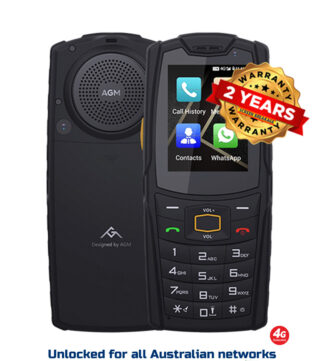
AGM also offers options that suit a very different need: restricted-use phones for students, older users or workplaces where internet access and social media are not wanted. In those cases, the question is not whether the device has every modern app. It is whether it makes calls reliably, is simple to use and removes distractions without creating a support headache.
Avoid the cheap rugged-phone trap
The rugged category has plenty of exaggerated claims. Some low-cost handsets arrive with dubious battery figures, poor cameras, limited local network support and little chance of useful warranty help if something fails. Others are assembled with inferior components, then dressed up with a heavy case to look tough.
That is why price should not be the only filter. A phone that costs less upfront but cannot be repaired, cannot access the network properly or fails after a minor fault is not a bargain. It is downtime.
Before committing, ask practical questions: Is the model suited to Australian carriers? Is local warranty support available? Are replacement screens, cases and chargers obtainable? Does the seller stand behind accidental damage protection where offered? Can someone give a straight answer about what the phone does not do as well as a mainstream flagship?
Rugged Phones Australia takes a narrow-range approach for this reason. There is little value in offering dozens of near-identical devices from questionable factories. A smaller range of worthwhile models, backed by clear advice and local support, is a better outcome when your mobile is part of the job.
A sensible AGM phone setup from day one
Even a hard-use handset benefits from sensible preparation. Fit a quality screen protector, set up a secure PIN or biometric lock, enable device tracking and keep essential contacts available offline. If the phone is used for work, add offline maps and store critical documents where they can be accessed without coverage.
Use the supplied charger or a suitable quality replacement, keep port covers clear of grit, and do not leave any phone baking on a dashboard in extreme heat. Rugged construction gives you a bigger safety margin. It does not defeat physics, damaged cables or neglect.
Choose an AGM phone for the conditions it will actually face on a wet Tuesday, a dusty Friday or a long drive through weak coverage. That is when proper build quality, battery life, network support and after-sales help stop being specifications and start being the difference between getting the job done and being stuck without a working mobile.