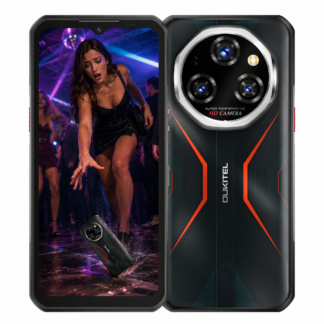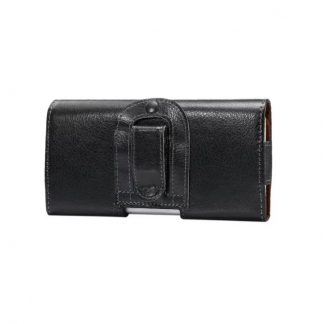
A cracked screen halfway through a shift is annoying. A dead mobile when you are off-grid, trying to coordinate a crew, or dealing with an emergency is a genuine problem. Knowing how to choose rugged smartphone equipment properly means looking past the biggest battery claim and the toughest-looking case. The right phone has to suit the work, connect where you work, and still be supportable when something goes wrong.
A good rugged phone is not simply a mainstream handset in a thick case. It is a purpose-built tool for dust, rain, vibration, drops, gloves, long days and poor reception. But not every device carrying an IP rating or a military-style label is built to the same standard. Here is what separates a worthwhile work phone from a cheap import that becomes expensive rubbish.
Start with the job, not the specification sheet
The best rugged phone for a construction supervisor is not necessarily the best one for a farmer, mine worker or parent buying a restricted-use handset for a student. Start by identifying the conditions that cause your current phone to fail.
For trade and construction work, repeated drops onto concrete, dust, rain and glove-friendly controls may matter most. On a farm or in transport, battery endurance, loud speakers, GPS and reliable reception across regional areas are usually higher priorities. Remote operations may justify specialist tools such as thermal imaging, night vision or a programmable button for a torch, push-to-talk app or SOS function.
Be honest about how much phone you need. A huge battery and thermal camera sound impressive, but they add size, weight and cost. If your device spends most of its life in a ute cradle and you only need calls, navigation, photos and job apps, a well-built 5G rugged smartphone with a practical battery may be the smarter purchase. Buy capability that solves a real problem, not a list of features you will never use.
How to choose rugged smartphone protection ratings
Ratings are useful, but only when you understand what they do and do not prove. Look for both an IP rating and a recognised drop or durability standard.
Water and dust protection
An IP68 rating generally indicates full dust protection and protection against immersion in fresh water under stated test conditions. IP69K adds resistance to high-pressure, high-temperature water jets. That can be valuable in dirty industrial settings or for equipment exposed to regular wash-downs.
Neither rating means the phone is invincible. Seals wear, charging-port covers can be left open, and salt water, chemicals and hot water create risks beyond a standard laboratory test. If you work around marine environments, fertiliser, fuel or corrosive substances, clean the phone according to the manufacturer guidance and do not assume an IP label covers every exposure.
Drop and vibration resistance
MIL-STD-810H is commonly used to indicate testing for drops, vibration and temperature conditions. It is a worthwhile sign, but it is not a blank cheque. Testing methods vary, and a phone dropped squarely onto a sharp rock can break regardless of the logo on the box.
Look at physical design as well: raised screen edges, reinforced corners, protected camera modules, solid buttons and a properly covered USB port. A phone should feel engineered for abuse, not just wrapped in a cosmetic rubber bumper. Screen protection remains sensible, especially where the mobile is constantly sharing a pocket with keys, screws or grit.
Check Australian network compatibility before buying
A tough phone without suitable network support is no tool at all. This is where buyers get caught by grey-market listings and suspiciously cheap imports. They may claim 5G, but support the wrong frequency bands or lack the carrier features needed for dependable calling in Australia.
Confirm the model is intended for Australian networks and supports the bands used by your carrier in the areas where you actually work. This matters more after the 3G network shutdown. Your phone needs suitable 4G or 5G support for data and voice services, including VoLTE where required. Do not assume that because a handset shows signal in the city it will perform well in regional or remote areas.
If coverage is marginal at your property, depot or usual work route, check with your carrier before purchase. A rugged phone cannot manufacture reception where none exists, but the right network compatibility prevents an avoidable problem. Dual SIM can also be worthwhile for people who travel between coverage areas or keep work and personal services separate.
Battery capacity is only half the story
Large batteries are one of the strongest reasons to choose a rugged phone. A 10,000mAh or 20,000mAh battery can be a serious advantage when you are away from a power point for days. Yet capacity alone does not tell you how long the phone will last.
A large, bright display, constant GPS navigation, 5G use, thermal imaging and demanding apps all consume power quickly. Consider your actual workflow. A field worker using maps, photos, job management software and calls all day needs more headroom than someone who mainly checks messages between jobs.
Also consider charging. Fast charging is useful when a phone comes back to the workshop at lunch, while a replaceable battery can be more valuable for long-term serviceability. Check whether the charging port is protected, whether the device supports a reliable vehicle charger, and whether its weight suits a dashboard mount. A massive battery is less helpful if the phone is too heavy for the way you use it.
Do not compromise on the everyday basics
Rugged phones have improved considerably, but some buyers still focus so hard on toughness that they overlook basic usability. The mobile should handle ordinary work without making every task harder.
Choose enough memory and storage for your apps, photos, offline maps and updates. For most working users, 6GB to 8GB of RAM and 128GB of storage is a sensible starting point, though demanding users may need more. MicroSD expansion is useful where you take large volumes of site photos or video.
Screen brightness matters outdoors. A large display is easier to read for plans, forms and maps, but a smaller device may be better in a pocket or on a harness. Check the speaker volume for noisy machinery, the quality of the main camera for recording defects or site conditions, and whether the fingerprint reader works reliably for your routine. If you wear gloves, test the controls or choose a model with a programmable physical button.
Camera specifications deserve the same scepticism as battery claims. A high megapixel figure does not guarantee useful images. What matters on site is fast focus, clear detail in poor light and a durable lens cover. Thermal imaging is genuinely valuable for inspections, heat loss checks and fault finding, but it is a specialist feature worth paying for only when the work justifies it.
Consider repairability, warranty and local support
A phone is only dependable if there is a sensible path when it is damaged or develops a fault. Avoid treating warranty as an afterthought. Cheap online sellers can disappear, make returns difficult, or offer devices with lower-grade components than the advertised version.
Ask whether the supplier provides Australian warranty support, has access to parts and can explain accidental damage or screen replacement options. Find out whether the battery can be replaced, whether the device is glued shut, and whether charging-port or screen repairs are practical. No phone is indestructible. The difference is whether a cracked screen or worn battery ends in a repair or a replacement purchase.
This is why specialist selection matters. Rugged Phones Australia focuses on models that are worth backing in hard-use environments, rather than filling a catalogue with every cheap device available. For a work phone, accountability after the sale has real value.
Match specialist features to genuine field needs
Some rugged phones go well beyond calls and apps. Night vision cameras can assist with security checks, wildlife work and low-light inspections. Thermal cameras can reveal heat patterns in electrical equipment, plumbing and buildings. Extra-loud speakers, FM radio, SOS functions and powerful torches can be useful in remote work.
These are not gimmicks when they solve a clear operational need. They are also not substitutes for proper safety equipment, calibrated professional instruments or emergency communication procedures. Treat them as useful additions to a capable phone, not as magic features.
For families, schools or workplaces that need communication without unrestricted internet and social media access, a durable feature phone or limited-function model may be a better answer than any smartphone. The right device is the one that reduces risk and distraction while still doing the required job.
Before you buy, write down the three ways your current phone lets you down, the network you use, and the longest period you are normally away from charging. That short checklist will cut through the marketing noise and point you towards a rugged mobile that earns its place in your kit.