A cracked screen at the end of a shift is annoying. A dead mobile when you are kilometres from town, coordinating a crew, checking a delivery or calling for help is a proper problem. Knowing how to buy a durable phone means looking past a chunky case and a big battery claim. You need a device that suits the punishment it will actually receive, works on Australian networks and can be supported when something goes wrong.
A rugged phone is not automatically the right phone. Some are heavy, some compromise on camera quality or processing power, and some cheap imports carry impressive-looking specifications with little evidence behind them. The goal is not to buy the toughest-looking slab of plastic. It is to buy a dependable working tool.
Start with the way the phone will be punished
Be honest about the job. A mobile used in a dusty workshop needs different protection from one carried on a cattle station, strapped to a ute dash or used by a survey crew in wet weather. Drops onto concrete, fine dust, rain, vibration, mud, chemical splashes and temperature swings all expose different weaknesses.
For trade and construction work, screen protection, drop resistance and glove-friendly controls may matter most. For farming, a sealed body, loud speaker, GPS reliability and a battery that lasts through a long day are often higher priorities. Remote workers should put network compatibility, battery life and a practical charging plan ahead of novelty features.
This is where many buyers get it wrong. They buy on one dramatic specification, such as an enormous battery or thermal camera, then discover the mobile is too bulky for the pocket, lacks the network bands they need, or is difficult to repair. Choose for your regular conditions first. Buy extra capability only where it earns its place.
Check protection ratings, but read what they mean
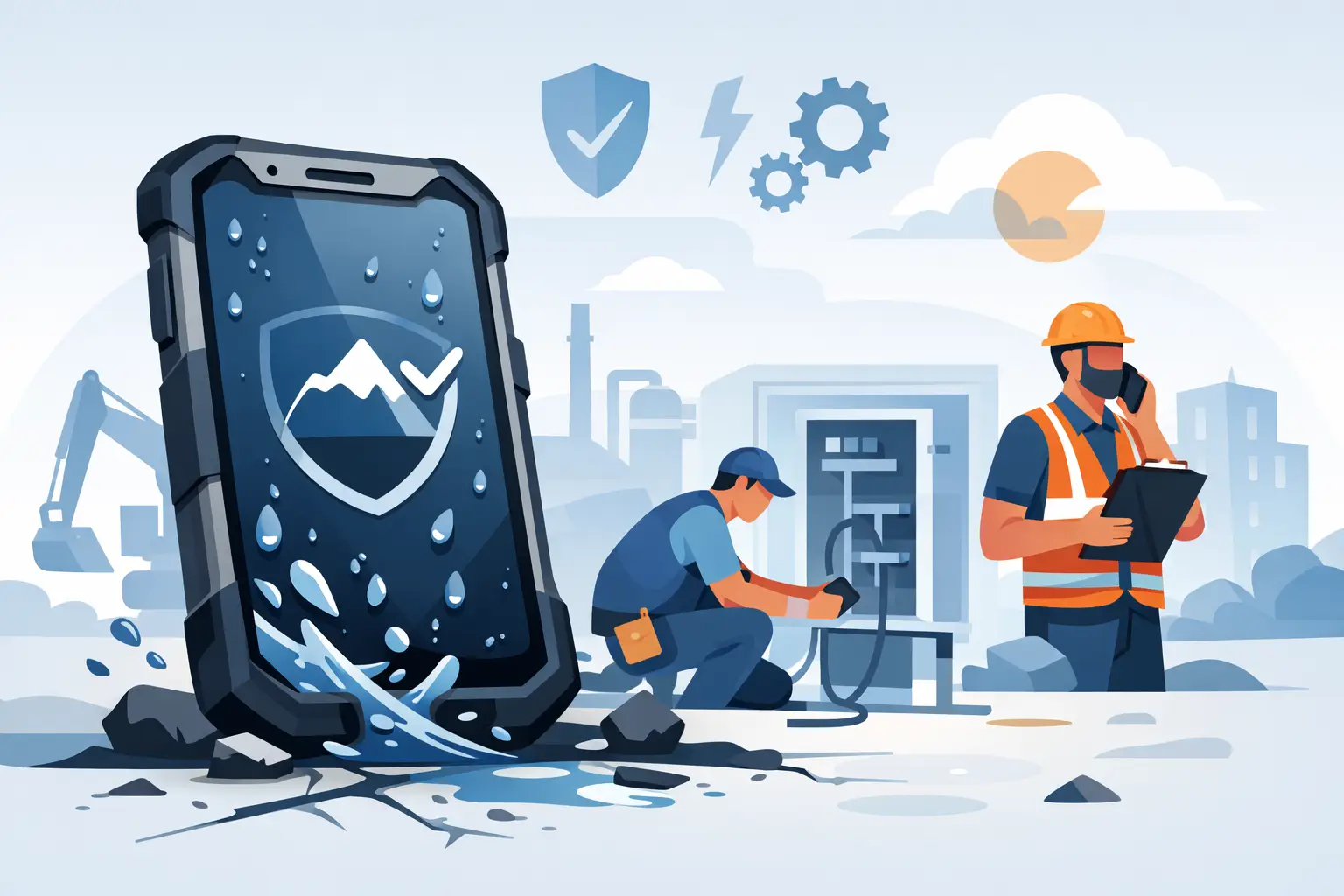
An IP rating is useful, provided you understand its limits. IP68 generally means the phone is dust-tight and has been tested for immersion in fresh water under stated conditions. IP69K adds resistance to high-pressure, high-temperature water jets. These are meaningful protections for rain, dust and wash-down work, but they are not a licence to treat every phone as indestructible.
Salt water, hot water, solvents, damaged port covers and a hard impact can all change the equation. A phone that has been dropped badly may no longer seal as it did when new. If you work around water regularly, rinse off mud and contaminants, dry the charging port before connecting power and inspect seals.
Military-style test claims deserve the same scrutiny. MIL-STD-810H is a testing framework, not a blanket guarantee that a phone will survive every fall, vibration event or temperature extreme. Ask what was tested and how that relates to your work. A credible seller should be able to explain the protection claims without hiding behind jargon.
The screen is still the frontline
A reinforced screen and raised bezel make a real difference, especially when the mobile lands face-down on gravel or concrete. Look for known protective glass, a display recessed below the frame and a properly fitted case if one is available. Screen size is a trade-off. Larger displays are easier for maps, drawings and job photos, but they create a bigger impact area and make one-handed use harder.
Do not assume a rugged phone is immune to screen damage. Glass remains glass. The sensible approach is to reduce the chance of breakage and ensure there is a realistic repair or replacement path if it happens.
Battery capacity is only half the story
A 10,000mAh or 20,000mAh battery sounds unbeatable, and for some workers it is. It can be the difference between finishing a two-day run without power and carrying a power bank. But a huge battery also adds weight, thickness and charge time. For someone on the tools all day with access to vehicle charging, a lighter mobile with reliable all-day life can be the better choice.
Look at charging as a complete system. USB-C is now the practical standard, but check the supplied charger, charging speed and whether the port is protected from dust and moisture. Wireless charging can be convenient, though it is not always necessary on a work phone. If you spend days away from mains power, consider how the phone works with a vehicle charger, solar panel or power bank rather than relying on capacity figures alone.
Battery longevity matters too. Heat is hard on lithium batteries. Leaving any mobile baking on a dashboard is a poor habit, even if it is rated for tough conditions. A device with a serviceable design, sensible thermal management and local support is worth more than a giant battery inside a sealed unit with nowhere to go when it eventually degrades.
Make sure it works where you work
A tough phone that cannot hold a useful signal is not tough enough. Before buying, check Australian 4G and 5G band support, VoLTE compatibility and whether the model is suitable for the carrier you use. Coverage varies sharply between metro areas, regional towns, highways and remote properties, so a mate’s experience on another network is not a complete answer.
For people travelling beyond regular coverage, remember that no ordinary mobile replaces a satellite communications plan. A rugged handset can improve battery life and withstand the weather, but it cannot create reception where there is no tower. Carry the appropriate emergency or satellite device for truly remote work.
Also consider practical connectivity: dual SIM support for separating work and personal numbers, NFC for payments or access systems, Bluetooth reliability for vehicle gear and a strong GPS receiver for navigation. These are not glamour features. They are the functions that stop a phone becoming a liability halfway through a job.
Buy performance for your actual workload
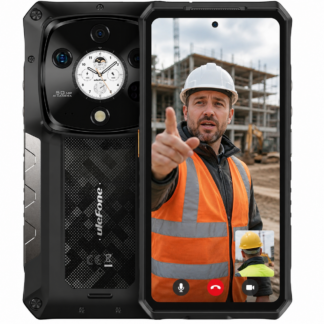
Rugged phones range from simple calling-and-messaging devices to capable Android mobiles with 5G, night vision, thermal imaging and high-resolution cameras. More features are not automatically better. Thermal imaging is valuable for inspections, electrical checks, livestock work and fault finding, but it is wasted money for someone who only needs calls, maps and photos.
For most field users, prioritise enough RAM and storage for the apps, maps, offline files and photos you need. A slow mobile becomes frustrating quickly when you are opening work orders, sharing site images or switching between navigation and communications. Expandable storage can be useful where large photo libraries or offline maps are part of the job.
Camera specifications need a reality check as well. Megapixel numbers do not guarantee clear job photos. Focus speed, low-light performance, image processing and a useful flash matter more than a headline number. If inspection photographs are evidence for clients or compliance, test the camera expectations before making it part of your workflow.
Buttons, sound and torch matter more than they sound
A programmable side button can be genuinely useful for push-to-talk, torch, camera or an emergency app. Physical controls are easier to use with gloves or wet hands than fiddling with a screen. A loud front-facing speaker helps in machinery noise, while a bright torch is useful at a breakdown or in a shed after dark.
These details separate a rugged phone built for work from one that merely wears an armoured shell. Think about the moments when you cannot stop, take off gloves and carefully tap through menus.
How to buy a durable phone without being caught by cheap imports
Price matters, but the cheapest rugged mobile can be expensive once it fails. Be wary of sellers that offer vague warranty terms, no local contact, no clear network information and no explanation of where their devices come from. A low price can reflect inferior components, inconsistent factory quality or no meaningful after-sales support.
Ask direct questions before you buy. Is the model supported in Australia? What does the warranty cover? Is accidental screen damage covered on selected devices? Can replacement parts or accessories be obtained? Is the phone designed in a way that can be serviced, or is it effectively disposable once a battery, screen or charging port fails?
This is why specialist retailers such as Rugged Phones Australia focus on a narrower range rather than listing every supposedly tough device available. Factory selection, component quality and warranty backing are not exciting brochure points, but they decide whether the phone remains useful after the first hard year.
A protective case, screen protector, vehicle mount and spare charging cable may also be worth buying at the start. They are small costs compared with lost time after a preventable failure. Just make sure accessories do not block microphones, wireless charging or the phone’s cooling surfaces.
Make the final choice on the job, not the spec sheet
Put your top two or three models against a normal day. Picture the phone in your pocket, on the dash, under rain gear, connected to your headset and used with dirty hands. Consider who will use it, how often it will be charged and what happens if it is damaged on day 30 rather than day 730.
The best durable phone is rarely the one with the most extreme claim. It is the one with credible protection, the right network support, enough battery and performance for your work, and a support path that does not disappear after checkout. Buy the phone that keeps working when the conditions stop being convenient.