A phone dropped in mud is one problem. A phone blasted with hot, high-pressure water at the wash bay is another. IP69K phones are built for the second job, which is why the rating matters to workers in agriculture, transport, construction, processing plants and any operation where equipment gets properly cleaned rather than gently wiped down.
But do not buy on the badge alone. IP69K is one of the strongest ingress ratings available, yet it does not prove a mobile will survive a fall off a ute tray, work properly on Australian networks, last a full shift, or be worth repairing when something goes wrong. The right rugged phone is the one that handles your actual work, not the one with the longest specification sheet.
What IP69K actually means
The IP code measures protection against ingress – dust and water getting into a device. In IP69K, the 6 means the phone is dust-tight. Fine dust should not enter the enclosure in a quantity that affects operation. That is useful in dry paddocks, workshops, quarry sites, grain handling and construction work, where dust has a way of finding every weak seal, speaker grille and charging port.
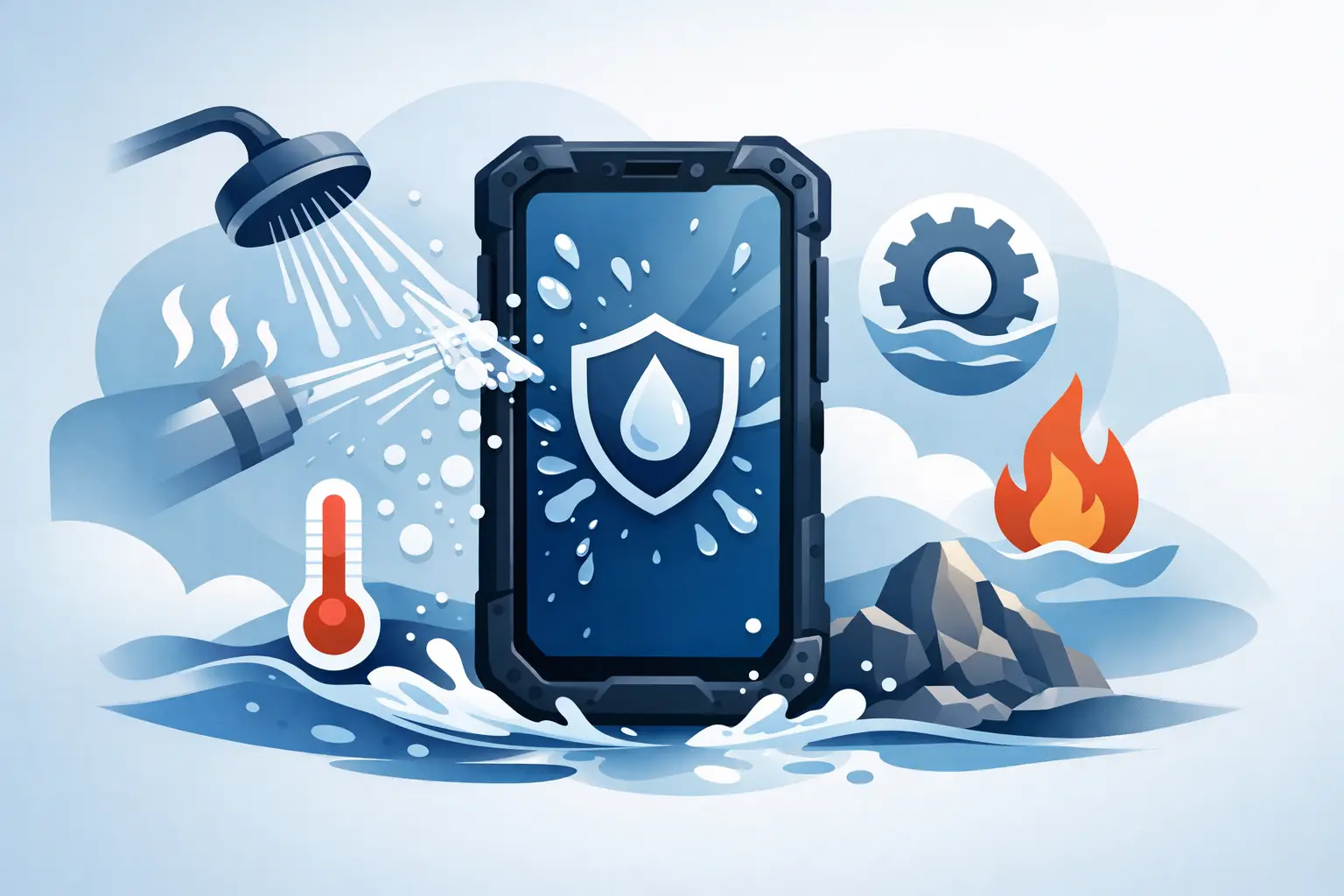
The 9K relates to protection against close-range, high-pressure and high-temperature water jets. Testing is commonly associated with water around 80°C, delivered at roughly 80 to 100 bar from several angles. It is a far more demanding test than being caught in rain or dropping a phone in a puddle.
That makes IP69K particularly relevant for workers who clean down machinery, work around spray, move between wet and dusty areas, or need a phone that can cope with more than an occasional shower. It is a serious rating for hard-use equipment.
IP69K is not simply “more waterproof”
This is where plenty of product listings muddy the water. IP68 and IP69K test different types of exposure. IP68 generally refers to immersion under stated laboratory conditions, usually a specified depth and duration set by the manufacturer. IP69K focuses on high-pressure, hot-water jets.
A well-built device may carry both ratings, and that is useful. Still, neither rating means you can treat a mobile as indestructible. Immersion in a creek, pressure washing at point-blank range, exposure to saltwater, and repeated use with damaged seals are not the same thing as a controlled certification test.
The practical takeaway is simple: IP69K is the rating to look for when washdown resistance matters. If your work includes water crossings, wet-weather fieldwork or a real chance of dropping the phone into water, check the stated immersion rating as well.
Where IP69K phones earn their keep
For a farmer, an IP69K phone can make the difference between finishing a day with a working mobile and discovering moisture behind the camera after hosing mud off the quad bike. For transport operators, it suits depots and wash bays where ordinary consumer phones quickly become a liability. In food production, workshops and industrial sites, the ability to tolerate regular cleaning is equally valuable.
The rating also has a less obvious benefit: it signals that the device has been designed around sealing. Properly protected ports, buttons, cameras and speaker openings require more engineering than a thin consumer handset with a basic splash-resistant rating. That does not guarantee quality, but it is a worthwhile starting point.
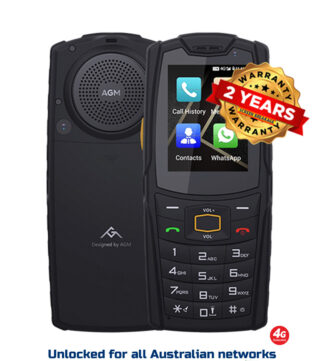
There is a trade-off. A phone designed for serious sealing is usually thicker and heavier. It may have protected charging ports, firmer buttons and a more industrial feel in the hand. If you want the slimmest phone possible for social media and occasional calls, it is probably the wrong category. If you need a tool that can spend a shift in dust, rain, slurry or washdown spray, a few extra millimetres are a sensible compromise.
What an IP69K rating does not tell you
A rugged phone needs more than water resistance. The rating says nothing about several factors that matter just as much in the field.
First, it does not measure impact protection. Look for a credible drop rating and, where relevant, MIL-STD-810H test claims. Even then, read them with common sense. A controlled drop onto a test surface is not identical to landing screen-first on jagged blue metal. A raised screen lip, reinforced corners and sensible case design are often more useful than dramatic marketing language.
Second, IP69K does not tell you whether the battery will get through a long day. Mining crews, remote contractors and farmers often need reliable battery capacity more than a slim profile. A large battery helps, but charging speed, battery management and replaceability or serviceability also matter. A huge battery is no help if the phone becomes too heavy to carry or the charging port fails after a year of dirty work.
Third, it says nothing about network compatibility. Australia’s 3G shutdown has made this non-negotiable. A rugged phone should support the local 4G and 5G bands you need, plus compatible VoLTE calling for your carrier. Band 28 support is particularly useful for regional coverage, but it is not the whole story. Do not assume an imported model will work properly just because it turns on and shows signal.
Finally, the ingress rating does not measure warranty support. A cheap grey import with impressive numbers can become expensive rubbish when a screen, charging assembly or battery needs attention. Quality-controlled sourcing, available parts and local support are part of durability, not extras to consider later.
How to choose IP69K phones for real work
Start with the environment, then choose the features. Someone cleaning heavy equipment needs different priorities from a field supervisor who spends most of the day taking photos, using mapping apps and making calls from weak-signal areas.
For wash bays, workshops and wet operations
Prioritise IP69K alongside a clear IP68 rating, protected ports and physical construction that does not rely on a flimsy flap as its only defence. Check how the phone charges and whether the port is easy to clear if grit builds up. Wireless charging can reduce port wear for some users, although it may not suit every vehicle cradle or work setup.
A bright display is worthwhile when you are moving from a dark shed into full sun. Loud speakers, glove-friendly operation and programmable buttons can be genuinely useful too, especially if the phone is being used as a work tool rather than a pocket camera.
For remote and regional work
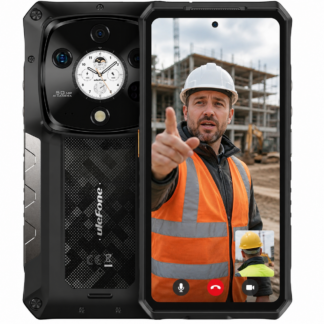
Network support, battery life and GPS performance move to the front of the queue. A thermal camera, night vision camera or powerful torch can be valuable in particular jobs, but only if it solves a problem you actually have. Paying for a feature that never gets used is no smarter than buying a cheap phone that fails in six months.
Think about accessories early. A secure vehicle mount, belt holster, screen protector and charging solution can prevent damage and downtime. The phone may be tough, but it is still better not to launch it across the cab when the ute hits corrugations.
For crews and business buyers
Consistency beats novelty. If several staff need devices, choose a model that is available, supported and straightforward to set up. Consider who will handle repairs, replacement screens and warranty claims before the first phone is issued. Downtime costs more than the small saving on an unsupported handset.
This is why specialist retailers such as Rugged Phones Australia focus on a narrower range rather than listing every rugged-looking model available. Factory quality, parts support and Australian network suitability separate a dependable work phone from an expensive gamble.
Keep the protection working
An IP69K rating is not a lifetime guarantee against water damage. Seals age, port covers tear, screens crack and screws can loosen after repeated impacts. Inspect the charging port and seals regularly, particularly after a drop. If the screen or housing is damaged, assume the original water resistance may be compromised until it has been assessed and repaired.
Avoid blasting the phone from centimetres away with a commercial pressure washer, even if it carries IP69K. The rating is based on a defined test, not every nozzle, chemical, distance and water temperature found on site. Rinse off salt, fertiliser, fuel residue and aggressive chemicals promptly with fresh water, then dry the device before charging.
Do not charge a wet phone. Water inside the port can cause corrosion and, in some cases, trigger protective warnings that stop charging. Let the port dry fully and remove any dirt carefully rather than forcing a cable into it.
The best IP69K phone is not the one that survives a stunt for a product video. It is the one that keeps taking calls, running navigation, capturing evidence and getting through the working week after the dust, rain and washdown have done their best. Buy the rating for the conditions you face, then back it with proven build quality, the right network support and service you can rely on.