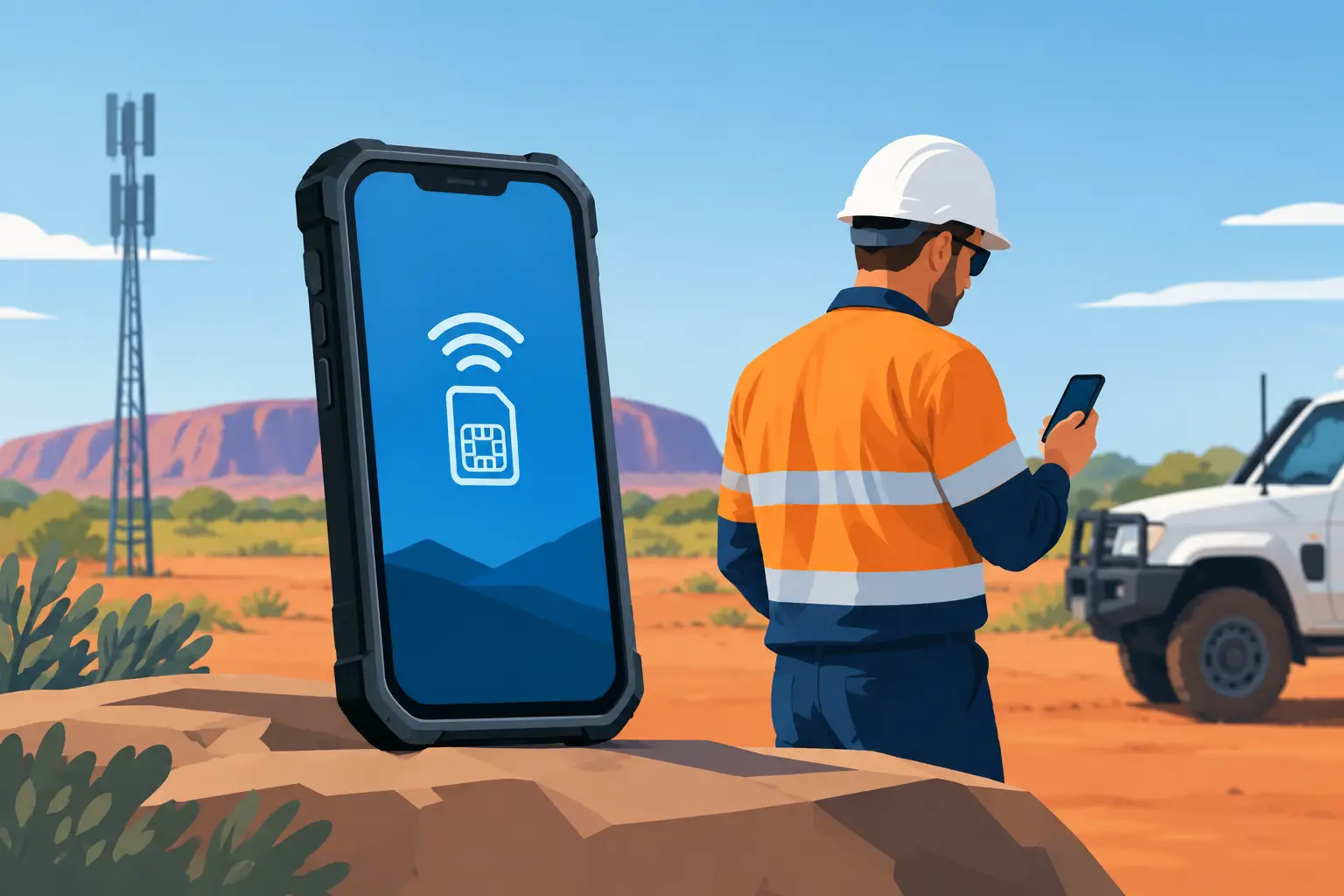
A cracked screen halfway through a shift is bad enough. Finding out your mobile cannot reconnect because a carrier change requires a tiny plastic SIM card is worse. eSIM rugged phones solve a practical problem for workers who move between jobs, carriers and regions, while still needing a device that can handle dust, rain, drops and long days away from a charger.
The catch is that eSIM is not a toughness rating, a coverage guarantee or a reason to buy the first cheap imported handset with an impressive spec sheet. It is one useful feature in a working phone. Get the network support, physical build and service backing right first. Then eSIM becomes a serious advantage.
What eSIM actually changes on a work phone
An eSIM is a digital SIM built into the handset. Instead of removing a physical card, you download a mobile plan to the phone, usually by scanning a QR code or following your carrier’s activation process. That means no fumbling with a SIM tray in the cab, on site or in a wet paddock.
For a contractor, it can make it easier to keep a work number and personal number on one device. For transport operators and remote crews, it can also provide a faster path to switching providers when a different network has better coverage around a particular route or project. Some people use an eSIM for their main Australian service and reserve the physical SIM slot for travel or a temporary work plan.
There is a physical benefit too. Fewer reasons to open a SIM tray means one less opportunity for dust, moisture or a damaged seal to cause trouble. That does not make a phone waterproof by itself. A properly designed rugged handset still needs sound seals, decent port covers and factory quality control. But reducing unnecessary handling is sensible when the device lives in harsh conditions.
eSIM rugged phones need the right Australian network support
This is where online listings often become careless. A phone can technically have eSIM and still be a poor choice for Australia. Before buying, confirm that the exact model supports the mobile bands used by your chosen carrier, has working 4G and 5G compatibility where relevant, and is accepted for voice services on that network.
The 3G network shutdown changed the stakes. A handset needs reliable VoLTE support and appropriate network compatibility to make calls after older networks disappear. Do not assume that seeing “4G” in a specification table is enough. Imported variants can differ, and carrier support can be more complicated than a headline feature list suggests.
Ask about the model, not just the brand
Manufacturers can produce different versions of the same phone for different markets. Band support, firmware and eSIM availability may vary between variants. A generic marketplace listing may not make that clear, particularly when the seller has never tested the device on Australian networks.
Ask whether the exact handset is supplied for Australian use and whether its eSIM function has been checked with local carriers. This is also a good time to confirm whether it supports eSIM plus a physical SIM at the same time, or whether activating one connection disables another. Dual-SIM wording is not always as straightforward as it sounds.
Coverage still comes first
An eSIM lets you change service more easily. It does not create reception where no carrier has infrastructure. If you work across mines, farms, forestry blocks or long regional runs, check coverage maps for the places you actually work, not just your home address.
A phone with excellent band support, dependable antennas and the right carrier plan will beat a fashionable model with an eSIM every time. In fringe areas, battery life also matters because a handset searching for signal works harder and drains faster.
Toughness is more than an IP rating
Rugged phones are bought because ordinary consumer mobiles are not built for the job. A proper working device needs more than a dramatic drop-test video and an IP68 label printed on the box.
Look at how the phone is put together. Recessed displays, reinforced corners and a frame that protects the screen on a face-down drop all matter. So do physical buttons that remain usable with gloves or wet hands, a loud speaker for noisy machinery, and a charging port designed to survive regular use. A big battery is valuable, but it should not come at the cost of a poorly built handset that cannot be repaired or supported.
Water resistance also has limits. IP ratings are tested under controlled conditions, not after months of exposure to grit, detergent, vibration, hot vehicle cabins and repeated charging. Treat port covers and seals with respect. Rinse off salt or chemical residue, dry the device before charging, and replace damaged covers rather than pretending they do not matter.
The same goes for cameras. Thermal imaging, night vision and high-resolution sensors can be genuinely useful for inspections, security work and after-hours jobs. They are not automatically useful for everyone. A farmer who needs a long battery, clear calls and navigation may get better value from a simpler device with proven network performance than from paying for specialist imaging hardware they will never use.
Choose an eSIM setup that suits your work
There is no single best configuration. The right choice depends on how you use your number, where you travel and whether you manage staff devices.
For most sole traders, an eSIM work service paired with a physical personal SIM is practical. It keeps the primary job number active while leaving a slot available for a second network or overseas travel SIM. For people who need two Australian numbers every day, verify that both services can operate as required, including calls, texts and data, rather than relying on vague dual-SIM claims.
For businesses issuing mobiles to crews, eSIM can reduce handling and simplify replacement activations. But it also requires a process. Keep carrier account details secure, document which eSIM profile belongs to which worker, and make sure supervisors know how to transfer a service when a handset is lost, damaged or replaced. A digital SIM is convenient, but it cannot fix poor device management.
Remote workers should also think about failure plans. If the handset is damaged beyond use, can the service be reactivated quickly on a spare phone? Is there a physical SIM option available if a carrier activation cannot be completed at the job site? The best field setup has a backup, especially where a mobile is a safety tool rather than just a way to check emails.
When a physical SIM may still be the better call
eSIM is useful, but it is not compulsory. A physical SIM can be the simpler choice for workers who swap services between devices, use older fleet equipment, or want the ability to move their number immediately after a phone failure. It is also sensible when a preferred carrier does not support eSIM on the plan you need.
Some rugged phones offer excellent durability, battery capacity and Australian network suitability without eSIM. Rejecting them solely because they use a physical SIM can narrow the field unnecessarily. The priority order should be straightforward: reliable Australian calling and data, a device built for the work, a battery that lasts the shift, then the SIM arrangement that makes daily life easier.
Buy the phone, not the specification sheet
Cheap rugged phones can look convincing online. Big batteries, huge camera numbers and dramatic waterproof claims are easy to print. The harder questions are whether the components are consistent, whether the software is properly supported, whether the handset works on local networks, and who helps when something goes wrong.
That is why a curated range matters. A specialist supplier should be willing to explain the trade-offs, identify the right network variant and stand behind the device with meaningful local warranty support. Avoid sellers who cannot tell you which version they are shipping, dismiss compatibility questions, or treat a damaged screen as entirely your problem the moment the parcel arrives.
Choose eSIM because it makes your work setup more flexible, not because it sounds new. A well-supported rugged phone with the right Australian network compatibility will keep earning its place in your pocket long after a flashy bargain handset has become another piece of site rubbish.