A phone that survives one splash at the servo is not rugged. A phone that keeps working after dust, vibration, rain, heat, muddy gloves, and a drop from the cab of a ute onto compacted ground – that is where the conversation starts. If you are asking what makes a phone rugged, the short answer is not branding, rubber corners, or a big IP number printed on the box. It is engineering, build quality, and whether the device is made to keep doing the job when conditions are rough.
Most people only find out the difference after buying the wrong device. On paper, plenty of phones look tough. In the field, some are all marketing and no backbone. A proper rugged phone is designed as a system, not dressed up to look hard.
What makes a phone rugged in real use
The first thing that matters is structural design. A rugged phone usually has a reinforced frame, thicker housing, shock-absorbing materials around impact zones, and a screen assembly that is better protected against flex and direct hits. That does not mean it is indestructible. It means the phone is built to manage impact energy better than a standard handset.
Good rugged devices also protect their weak points. Ports, speakers, microphones, buttons, cameras, and SIM trays are common failure areas. If those parts are poorly sealed or cheaply fitted, water and dust will find a way in. That is why proper rugged engineering goes beyond a rubber shell. The seals, adhesives, internal gaskets, pressure equalisation, and assembly tolerances all matter.
Then there is the screen. Plenty of buyers focus on the glass name and stop there. Strong glass helps, but the screen is only as durable as the way it is mounted and protected by the chassis. A raised bezel can reduce direct contact when dropped face-down. A rigid frame can limit twisting. Better bonding can help stop failures from vibration and repeated knocks. In hard-use environments, screen durability is not one feature – it is the result of several design choices working together.
Ratings matter, but they are not the whole story
IP ratings are useful, but buyers often read too much into them. IP68 and IP69K tell you the phone has been tested for dust ingress and water resistance under specific conditions. That is valuable, especially if you work around rain, slurry, washdown areas, or fine dust. But a rating does not guarantee survival in every real-world situation.
Salt water, chemical exposure, high-pressure jets at the wrong angle, worn seals, impact damage before immersion, and heat cycling can all change the result. The same goes for drop ratings such as MIL-STD references. They indicate testing has been done, but they do not tell you everything about long-term durability, quality control, or how the phone will handle repeated abuse over time.
This is where cheap imports often come unstuck. The spec sheet can look impressive, but consistency is another matter. One batch may be decent, the next may have poorer sealing, weaker adhesives, or lower-grade components. That is why factory quality and sourcing discipline matter as much as the headline ratings.
Materials and construction do the heavy lifting
A rugged phone needs more than thick plastic. The better units use a combination of metal frame reinforcement, impact-resistant polymers, sealed joins, and internal layouts designed to reduce damage when dropped. Weight can be a clue here. Not every heavy phone is tough, but genuinely rugged devices are rarely featherweight because protection takes space and material.
Button design is another giveaway. On a worksite or in the paddock, buttons need to be tactile, sealed, and operable with wet hands or gloves. Flimsy side keys and loose port covers do not last. The charging port is especially important because it gets used hard. If the fit is weak, or the housing flexes around it, problems start early.
Speaker and microphone protection is often overlooked too. A phone can survive the drop and still become half useless if the mic clogs with dust or the speaker distorts after moisture exposure. Rugged design means these daily-use parts are protected, not just the outer shell.
Battery size helps, but battery design matters more
Big batteries are common in rugged phones for good reason. If you are working long shifts, driving remote runs, or spending the day away from a charger, battery life is not a luxury. It is basic practicality. But capacity alone is not what makes a phone rugged.
The battery has to cope with vibration, heat variation, and heavy daily use. The internal layout has to support that larger cell without creating weak points elsewhere. A badly designed high-capacity phone can end up bulky without being dependable. A well-designed one gives you the extra runtime and keeps charging stability, thermal control, and overall durability in check.
That trade-off matters. The largest battery is not always the best choice if it makes the phone too heavy for your work, too slow to charge, or too awkward to carry all day. Rugged is about reliability in use, not maximum numbers for their own sake.
Waterproofing is not the same as jobsite toughness
A lot of standard premium phones are water resistant now, and that has confused the market. Water resistance alone does not make a mobile rugged. Consumer flagships can survive a dunk, but that is not the same thing as surviving drops onto gravel, dust in the charging port, pressure in a tool bag, or vibration from machinery day after day.
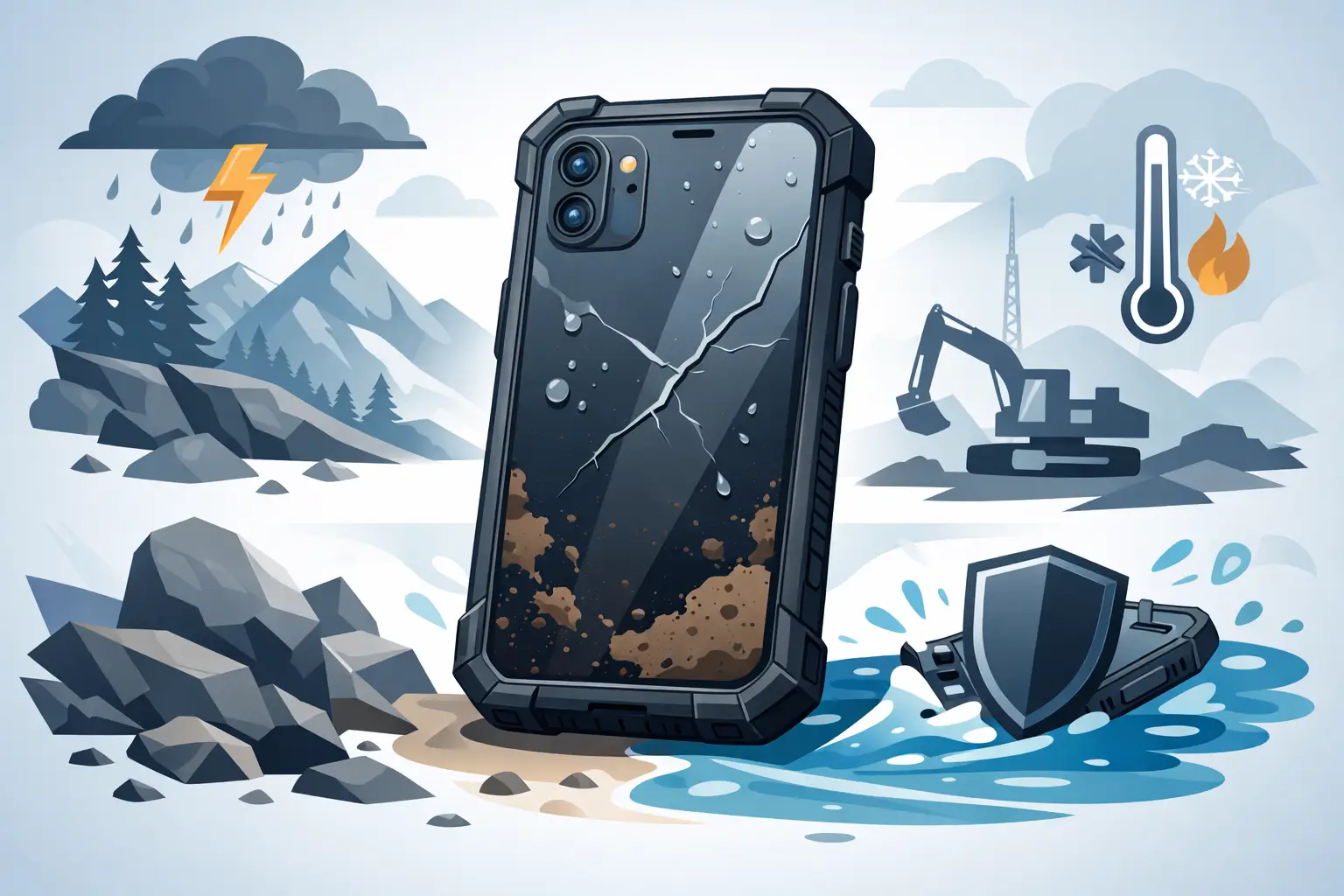
A rugged phone is built for combined stress. It is the overlap of water, dust, shock, temperature swings, and constant handling that separates a work-ready device from a lifestyle phone with decent sealing. If your mobile lives in an office, occasional waterproofing may be enough. If it lives in a ute, on a scaffold, or in a workshop, that is a different standard.
Repairability and parts support count for a lot
One of the most overlooked answers to what makes a phone rugged is serviceability. A phone is not much use in hard environments if one cracked screen or worn charging port turns it into e-waste. Real durability includes the ability to keep the device in service.
That means parts availability, sensible design, and support after the sale. Some phones are glued shut in ways that make routine repair painful or uneconomical. Others are built with service in mind, which matters if you want the device to last more than one accident. Warranty support matters too, because rugged claims are easy to make and harder to back when something goes wrong.
This is one reason specialist sellers matter. At Rugged Phones Australia, the value is not just in selling a tough-looking handset. It is in filtering out the rubbish and focusing on devices with better factory quality, stronger warranty backing, and real-world dependability.
Rugged features should match the job
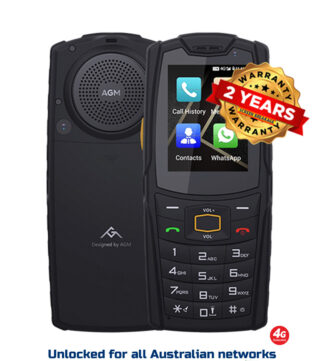
Not every rugged phone suits every buyer. A farmer might care most about battery life, loud speakers, strong reception, and a body that handles dust and drops. A mining or construction worker may need glove-friendly use, dependable sealing, and accessories that hold up in vehicles. A field technician might need thermal imaging or night vision. A parent buying for a student may care less about cameras and more about limited-use functionality and something that is harder to smash.
That is why ruggedness is partly about fit for purpose. The toughest phone on paper can still be the wrong choice if it is oversized, lacks network compatibility, has poor call quality, or skimps on day-to-day usability. The best rugged phone is the one that handles your environment without becoming a pain to live with.
The difference between genuine rugged and fake rugged
You can usually spot the pretenders. They lean heavily on looks, oversized corner bumpers, and inflated claims. They may tick the spec-sheet boxes, but the details are off – poor screen brightness outdoors, dodgy charging behaviour, weak network support, unreliable fingerprint sensors, cameras that fog, and random failures after a few months of hard use.
Genuine rugged phones tend to feel more sorted. The seals fit properly. The ports feel secure. The body is solid without feeling like a toy. The software is stable enough for daily work. The basics are covered: calls, charging, battery life, screen visibility, and reliability under pressure. Fancy extras are welcome, but they should never come at the expense of the fundamentals.
If you want a simple test, ask this: was this phone built to survive real work, or built to sell the idea of toughness online? That question cuts through a lot of nonsense.
A rugged phone should earn the name every day, not just on the box. If the build quality is right, the sealing is genuine, the design protects failure points, and the support behind it is solid, you have a device worth trusting when conditions turn ugly. That is what matters when your mobile is a tool, not a toy.