A cracked screen halfway through a remote job is not a minor inconvenience. It can mean lost photos, missed site calls, no maps, no proof of work and a device that costs more to replace than it ever should have. The top durable phones for work are built for people who use a mobile as a tool, not a fashion accessory.
That does not mean every thick phone with an IP rating is worth buying. Plenty look tough in a listing, then disappoint with weak network support, poor component quality, a battery that fades early or no practical warranty help when something goes wrong. The right choice comes down to the work you do, the conditions you face and whether the phone has been selected for real field use rather than a cheap headline price.
What makes a work phone genuinely durable?
Ruggedness starts with protection, but it does not end there. A proper work phone needs to handle drops onto concrete, dust in the cab, wet weather, vibration in machinery and long shifts away from a charger. Look for an IP68 or IP69K rating for water and dust protection, along with a recognised drop-test standard such as MIL-STD-810H. These ratings are useful filters, but they are not permission to abuse any phone without limits. Water seals wear, ports collect grit and a hard impact can still damage a screen or internal component.
The physical design matters just as much. Raised corners, a recessed screen, a solid frame and properly protected charging ports give a phone a far better chance on a building site or farm. A replaceable charging-port cover may not look exciting, but it can be the difference between a device that lasts years and one that fails after a season of dust and moisture.
There is a trade-off. The bigger the battery and the heavier the protection, the bulkier the phone becomes. For workers wearing gloves or carrying gear, a larger phone can be easier to grip and operate. For someone spending all day climbing ladders or moving between vehicles, weight may matter more. Tough does not have to mean enormous, but anyone promising a slim consumer-phone feel with no compromise is usually selling hype.
Top durable phones for work: choose by the job
There is no single best device for every worker. A mine supervisor, a delivery driver and a station hand may all need a tough phone, but their priorities are different.
Construction, trades and transport
For construction crews, electricians, plumbers, transport operators and warehouse teams, start with a conventional rugged smartphone that has 5G, dependable GPS, strong battery life and enough storage for job photos, drawings, apps and offline maps. A bright display is worth paying for if you regularly work in direct sun. So is a programmable side button that can trigger the torch, push-to-talk function, camera or emergency feature without digging through menus.
Camera performance should be judged sensibly. You do not need lifestyle-phone photography to document a damaged load, meter reading or completed repair. You need a camera that focuses reliably, captures usable detail in mixed light and opens quickly when the job is happening. Night vision can also be genuinely useful for inspecting dark roof spaces, plant rooms, sheds and equipment after hours.
For transport, do not overlook charging. A high-capacity battery is useful, but a phone also needs sensible vehicle charging support and a mount that keeps it secure. If the device lives in a ute, truck or forklift, heat, vibration and constant plugging in will test it more than the occasional drop.
Mining, agriculture and remote work
Remote-area workers should put battery capacity, coverage compatibility and repair support ahead of flashy features. A huge battery can stretch well beyond a standard workday, especially when coverage is patchy and the phone is working harder to hold a signal. That said, a massive battery also adds weight. If you are carrying the phone all day, choose capacity that suits your roster rather than simply chasing the biggest number.
Thermal imaging is one of the few specialist features that can earn its place on the job. It can help identify heat in electrical components, check machinery, find insulation gaps or spot livestock and people in low visibility. It is not a replacement for proper testing equipment or safe work procedures, but for the right operator it can save time and reveal issues a normal camera cannot see.
Network compatibility deserves close attention in Australia. A phone may technically support 4G or 5G yet still provide a poor experience if it lacks the right local bands or voice calling support. With the 3G network shutdown changing what works on Australian networks, do not assume an imported model will be suitable because it has a SIM tray and a big spec sheet. Buy from a specialist that can clearly confirm compatibility for your intended carrier.
Restricted-use and safety-focused roles
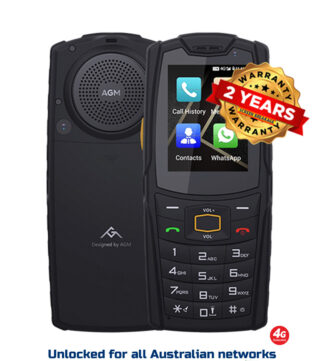
Not every workplace needs a full smartphone. Schools, field teams, security operations and parents may need a device that calls and texts without social media, app distractions or unrestricted internet access. A durable feature phone can be the better tool here. It is simpler to operate, generally lasts longer between charges and reduces the chance that a work device becomes a pocket entertainment centre.
This is also where physical buttons remain valuable. Wet hands, gloves and cold weather can make touchscreens frustrating. A phone with clear tactile controls is not outdated when it gets the call through quickly and survives a drop into the dirt.
Do not buy on ratings and battery numbers alone
Spec sheets are useful, but they can hide the gaps that matter after checkout. Two phones can claim the same water rating while using very different seals, screens, charging ports and internal components. The lowest-priced version is often low-priced for a reason: lower-grade parts, limited quality control, poor software support or no meaningful local warranty pathway.
Ask whether the device is serviceable. A phone that is glued shut and difficult to repair can become disposable once a battery, screen or charging port fails. Screen replacement options, accidental damage cover and a retailer that understands the product are worth more than a small saving at purchase.
Software also matters. A rugged shell cannot compensate for an unreliable operating system, poor app performance or security updates that stop immediately. Check that essential work apps, banking, navigation and messaging tools will run properly. If you rely on a particular scanning app, vehicle system or device-management platform, confirm it before buying, not after it arrives on site.
A practical buying checklist
Before choosing, be clear about the conditions the phone must survive and the jobs it must complete. A worthwhile shortlist should cover these five areas:
- Protection suited to your environment, including dust, water, drops and temperature exposure.
- Australian network compatibility for the carrier you actually use in your work areas.
- Battery life that covers a full shift, plus charging that suits the vehicle, crib room or remote camp.
- A screen bright enough for outdoor use and usable with the gloves or hands you work in.
- Local warranty, repair options and access to real support when the phone needs attention.
Then look at the extras with a hard head. Thermal cameras, night vision, laser rangefinders and oversized batteries can be excellent tools when they solve a real problem. They are dead weight and extra cost when they do not. The aim is not to own the phone with the longest feature list. It is to carry a device that removes friction from your working day.
Why specialist selection beats a crowded marketplace
Generic marketplaces make it easy to compare dozens of near-identical rugged phones, but that is not the same as making a safe purchase. Listings can use impressive terms without explaining local carrier support, replacement parts, software quality or how warranty claims are handled. A bargain becomes expensive quickly when it fails in the field and there is nobody accountable.
Rugged Phones Australia takes a more disciplined approach: stocking heavy-duty devices that are worth putting in workers’ hands, rather than filling a catalogue with questionable variants. That matters when your mobile carries site records, safety contacts, job photos and navigation for places where the nearest shop may be hours away.
Choose the phone for the worst ordinary day it will face, not the best day on the showroom bench. If it can handle dust, rain, a long shift, a rough vehicle ride and the occasional mistake without becoming another job to manage, it is doing what a work phone should.