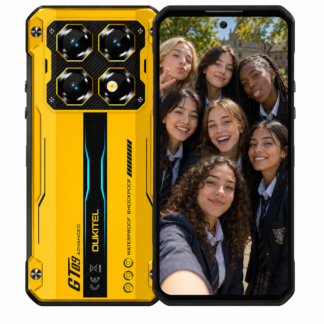
A farm phone earns its keep when you are halfway through a paddock, your hands are wet, the wind is up and the nearest power point is back at the shed. That is how to pick a farm phone properly: not by chasing the biggest camera number or the cheapest online price, but by matching the device to the conditions that regularly destroy ordinary mobiles.
A cracked screen is annoying in town. On a farm, a dead phone can mean missed calls from staff, a delayed delivery, no access to maps or weather, and trouble when something goes wrong. Buy for the job, not for the brochure.
How to pick a farm phone: start with the real work
Before comparing models, be honest about what the phone will face. A phone used mainly in a ute cab has different requirements from one carried through cattle yards, used on a quad bike, exposed to spray, or left in a pocket during a long day of repairs.
Dust, vibration, mud, rain, heat and accidental drops are the obvious threats. Less obvious are greasy fingers, gloves, poor coverage, flat batteries, and a screen that is impossible to read in harsh sunlight. A good farm phone handles the whole package. A cheap “rugged-looking” handset may survive one drop but become a liability when its battery, network support or warranty lets you down.
Think about whether the phone is primarily a communications tool, a navigation device, a camera for documenting stock or machinery issues, or all three. That decision should drive the purchase. There is no point paying for thermal imaging if you need reliable calls and a two-day battery. Equally, a basic device is the wrong choice if you regularly identify hot bearings, inspect fences at night, or send clear photos to suppliers and mechanics.
Do not treat IP ratings as the whole story
Water and dust protection matter, but an IP rating is only one part of a rugged phone. Look for at least IP68 protection for serious farm use, meaning the device is built to resist dust and water immersion. IP69K is a worthwhile extra where high-pressure water and wash-down conditions are common.
Then check drop protection. A proper hard-use handset should state a recognised durability standard, commonly MIL-STD-810H, and have reinforced corners, a raised screen edge and a solid housing. The screen should not sit flush with the frame waiting to meet the first bit of gravel.
Still, no phone is indestructible. Repeated drops onto sharp rock, a direct hit to the display, or a cracked charging port cover can defeat any rating. The sensible approach is to choose a device designed to take knocks, then fit a suitable case or screen protector where one is available. Protection is cheapest before the accident.
Battery size matters, but charging matters too
Long battery life is one of the best reasons to buy a purpose-built farm phone. A large battery reduces the daily scramble for a charger and gives you a better safety margin during long shifts, outages or trips away from the house.
But do not compare milliamp-hour figures in isolation. An enormous battery adds weight and thickness. That can be a good trade-off for someone doing 12-hour days away from the workshop, but excessive bulk is frustrating if the phone lives in a shirt pocket or is used one-handed while moving around machinery.
Look for a capacity that suits your routine, plus fast charging and a common charging connection. USB-C is the practical choice. Wireless charging can be useful in a vehicle mount, but a secure physical USB-C connection is usually more relevant on a working farm. If the phone supports reverse charging, it can also top up a GPS, torch or another mobile in a pinch.
Battery quality is just as important as battery size. Poorly sourced devices can quote impressive capacity while using inferior cells and weak charging systems. That is a false economy when the phone starts losing runtime after a short period or becomes difficult to service.
Coverage and network compatibility come before clever features
A rugged phone is useless if it cannot hold a usable connection where you work. Check that the handset supports the Australian 4G and 5G bands used by your carrier, particularly the lower-frequency bands that can help in regional and rural areas. Do not assume an imported phone will work properly simply because it accepts a SIM card.
Also check for VoLTE support on your chosen network. Voice calling has moved away from older 3G services, and network shutdowns have made compatibility a major issue. A phone that was cheap because it was built for another market can quickly become an expensive paperweight.
Dual SIM is valuable for many farmers. It lets you run a personal number and work number on one handset, or carry services from two networks where coverage varies across the property. It is not magic – if neither network reaches a particular gully, the phone cannot create a signal – but it gives you more options without carrying two devices.
If coverage is genuinely poor, consider the phone as part of a bigger communications plan. A vehicle antenna, signal solution, UHF radio or satellite device may be necessary for remote work. Do not expect any smartphone, rugged or otherwise, to replace equipment built specifically for emergency communications beyond mobile coverage.
Buy a screen you can use outdoors
A large display is useful for mapping, livestock records, weather radar and photos, but it needs enough brightness to remain readable outside. Screen size alone tells you very little. A bright, protected display that works with gloves is more useful than a huge panel that washes out in the sun.
Look for a tough glass specification, raised bezels and glove or wet-touch support if those conditions apply to your work. Physical buttons can also be worth having. A programmable side key can launch the torch, camera, push-to-talk app or emergency function without fumbling through menus with dirty hands.
Do not dismiss weight. A heavily protected phone with a large battery will be noticeably heavier than a mainstream handset. That is often the price of durability, but it should be a deliberate choice. If you take hundreds of photos or use mapping all day, a model that is too heavy or awkward will be left in the ute when you need it most.
Choose cameras for evidence, not social media
For farm work, camera quality is about useful records. You may need clear images of a damaged fence, a machinery part, a sick animal, chemical labels, delivery dockets or a paddock issue. A reliable main camera, decent autofocus and an effective flash are more valuable than a long list of low-quality extra lenses.
Night vision can be genuinely handy for checking sheds, yards, water points or equipment after dark. Thermal imaging is more specialised but can save time in the right hands, including locating heat loss, checking electrical gear or investigating suspected hot components. These features cost more, so buy them only where they solve a repeated problem.
Storage matters if you document work regularly. Choose adequate internal storage and, if possible, expandable storage. A phone full of old photos, videos and offline maps becomes slow and unreliable at exactly the wrong time.
Repairability, warranty and local support are part of the phone
This is where many buyers get caught. A low upfront price means very little if the seller disappears after a fault, cannot supply parts, or expects you to ship the device overseas at your cost. Farm work is hard on equipment. Plan for the fact that accidents happen.
Ask whether screen replacement is available, whether the battery can be serviced, and what the warranty actually covers. Some rugged phones are effectively glued shut, making routine repair difficult or uneconomical. Others are selected and supported with serviceability in mind. That difference matters far more after six months than it does on checkout day.
Rugged Phones Australia focuses on vetted hard-use devices because not every phone with a thick case and a big battery deserves to be called rugged. Factory quality, network suitability and support are not optional extras when the phone is part of your work kit.
The sensible buying decision
The best farm phone is not automatically the toughest, biggest or most expensive model. It is the one that gives you dependable Australian network support, enough battery for your longest normal day, protection suited to your work, and a realistic path to warranty or repair if something goes wrong.
Buy the phone you will still trust after a wet week, a dusty harvest and one bad drop onto the gravel. That is the standard that counts.