A cracked screen at the servo is annoying. A dead mobile when you are waiting on a load change, dealing with a breakdown or trying to confirm a delivery in a patchy coverage area is a work problem. A rugged phone for truck drivers needs to do more than survive a drop from the cab step. It needs dependable battery life, usable reception, clear audio and hardware that keeps working after months of vibration, dust and rough handling.
For truckies, the cheapest tough-looking phone is often the expensive choice. Big battery claims, inflated camera specs and a heavy case do not make a device suitable for transport work. The details that matter are the ones you notice halfway through a long run: whether it charges reliably, whether the screen works in rain, whether the speaker can be heard over road noise, and whether support exists if something goes wrong.
What truck drivers need from a rugged phone
A proper rugged mobile starts with protection, but the rating on the box is only one part of the job. Look for meaningful water and dust protection, along with tested resistance to drops and vibration. An IP68 or IP69K rating is useful for rain, mud, wash-downs and dusty yards, while a recognised drop or military test standard gives more confidence than vague claims of being “shockproof”.
There is a trade-off. Heavier phones with reinforced corners and large batteries are less pleasant in a shirt pocket than a slim consumer handset. In a truck, that is usually a worthwhile compromise. A mobile that can be mounted in the cab, knocked onto the floor and used outside in bad weather has earned its size.
Battery capacity matters, but charging habits matter too. A large battery should get through navigation, calls, messaging and scanning over a long shift without forcing you to hunt for a charger. Still, do not buy purely on the biggest number. Consider charging speed, USB-C port protection and whether the phone can handle regular in-cab charging without a loose connection becoming a daily frustration.
Screen brightness is another make-or-break feature. A large display is handy for dispatch apps, proof-of-delivery photos and maps, but it must remain readable in direct sun. Good touch response with wet or gloved fingers is valuable when you are checking a message in a yard or at a loading dock. Screen protection is equally important, because a tough chassis is no comfort if the glass is the weak point.
Rugged phone for truck drivers: the features worth paying for
Not every driver needs thermal imaging, night vision or an oversized 20,000mAh battery. These features can be genuinely useful for certain jobs, but they add cost and bulk. The right phone depends on the routes you run, the tools you use and how often you are away from reliable power.
Coverage and Australian network compatibility
A rugged phone is useless if it cannot maintain a practical connection on your carrier. Before buying, confirm it supports the Australian 4G and 5G bands used by your provider, as well as VoLTE calling. This is particularly important as older network services are switched off and regional coverage increasingly relies on current network standards.
Do not assume an imported model is suitable because it says “global” or “5G”. Network support varies by model and carrier. Check the actual version being sold, not a generic specification sheet copied from an overseas marketplace. If your work takes you through regional areas, compatibility deserves the same attention as battery size.
Audio that works in a noisy cab
Truck cabs are not quiet offices. A capable loudspeaker, clear earpiece and decent microphone can save repeated calls with dispatch, customers and family. If you regularly use Bluetooth headsets, make sure the phone has reliable Bluetooth performance and is comfortable to operate one-handed while parked.
A programmable side key can also be more useful than it sounds. It can provide quick access to a torch, push-to-talk app, camera or emergency contact without digging through menus. It is a small feature, but practical hardware controls suit working conditions better than fancy software tricks.
Cameras with a job to do
Most drivers do not need social-media camera features. They need photos that clearly record pallet condition, delivery paperwork, site damage, seals, tyre issues or a vehicle defect. A camera that focuses quickly and produces readable images in poor light is more valuable than inflated megapixel numbers.
For night deliveries, warehouses and breakdowns after dark, a strong LED torch is essential. Night vision can be useful for inspecting trailers, yards or equipment without relying on a second light, though it is not a must-have for every driver.
Storage, speed and practical apps
Navigation, fleet software, messaging, electronic work diaries and delivery apps all take space and processing power. Avoid entry-level devices with too little memory or storage simply because they have a rugged shell. Slow loading, apps closing in the background and constant storage warnings are productivity killers.
Choose enough RAM and internal storage for the way you work, particularly if you keep maps offline or take a lot of delivery photos. Expandable storage can be useful, but reliable internal storage remains the priority. A rugged phone should make the workday easier, not become another piece of equipment that needs nursing along.
Watch for the cheap-phone traps
The rugged phone market has plenty of devices that look convincing in photos and disappoint in service. A massive battery, a long feature list and a low price can hide poor component quality, weak antennas or a device that cannot be properly repaired.
Be wary of phones with unclear warranty terms, no local support, limited information about Australian network use or specifications that cannot be verified. Also consider how the device is built. A phone that is effectively glued shut may be cheap to manufacture, but it is not necessarily a sensible long-term work tool if a battery, screen or charging port requires attention.
A specialist retailer should be able to explain what a model is good at, where its limitations are, and what support is available after the sale. That is more valuable than being handed a catalogue full of near-identical models with confusing names. Rugged Phones Australia takes this approach by focusing on devices worth using in hard conditions rather than chasing every low-cost release.
Choose the right size for the job
A compact rugged handset suits local drivers who need calls, navigation and basic job apps without carrying a brick in their pocket. It is easier to use on foot at customer sites and simpler to mount securely in a cab.
A larger model makes sense for long-haul work, frequent navigation and jobs involving lots of forms, photos or scanning. The bigger screen is easier on the eyes, and the larger battery can reduce charging anxiety on multi-day runs. The downside is weight, mounting options and one-handed use.
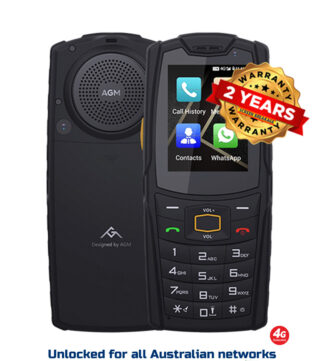
For drivers who only need calling, texts and a few work functions, a durable feature phone may be the better answer. It removes distraction and generally offers exceptional battery life. But it will not replace a smartphone if your employer requires modern fleet, navigation or proof-of-delivery apps.
A sensible pre-purchase check
Before committing, check these four points against your actual workday:
- Confirm Australian carrier compatibility, including 4G, 5G where needed and VoLTE calling.
- Decide whether you need a pocket-friendly phone or a larger unit for maps, forms and longer shifts.
- Check battery capacity alongside charging speed, port protection and mounting or charging accessories.
- Read the warranty and damage-cover conditions, including who will help if the screen or charging port fails.
It is also worth thinking about where the phone lives during a shift. A proper cab mount, quality charging lead and protective screen solution can prevent the kind of damage that even a tough device should not be expected to absorb every day.
The best rugged phone is not the one with the loudest specifications. It is the one that still has charge, signal and a working screen when the run has gone long, the weather has turned and you need to get the job finished.