A cracked screen at the start of a swing is annoying. A flat battery, no coverage, or a phone that cannot be used safely in a restricted area is a bigger problem. Knowing how to choose a mining phone means looking past oversized battery claims and dramatic drop-test videos. The right device must suit your site, your carrier, your crew’s work and the way the phone will be supported after it takes a hit.
A mining phone is not simply a consumer mobile in a thick case. For workers moving between dusty pits, wet processing areas, workshops, haul roads and remote camps, it needs to be a dependable work tool first. That changes what matters.
Start with your mine site’s safety rules
Before comparing any handset, check what your employer and site safety team will permit. This is non-negotiable. Some areas may restrict camera use, personal devices, Bluetooth or Wi-Fi. Underground operations and areas with potentially explosive gases, vapours or dust may require intrinsically safe equipment with specific certification.
Do not assume an IP68-rated rugged phone is intrinsically safe. Water and dust resistance are not the same as approval for hazardous zones. A standard rugged Android phone may be suitable for general surface work, crib rooms, vehicles and accommodation, but it is not automatically suitable for a classified hazardous area. Ask for the exact site requirement and certification standard before buying.
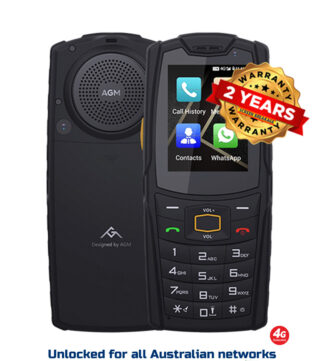
This is also the point to decide whether you need a full smartphone at all. A worker who only needs calls, texts and emergency contact may be better served by a durable feature phone. Fewer apps, less distraction and longer standby time can be a genuine advantage on some sites.
Check Australian network compatibility first
A phone can be tough as nails and still be useless if it does not work properly on your carrier. With the 3G network shutdown affecting Australian users, 4G calling capability is now essential. The device needs proper support for your provider’s 4G and 5G bands, plus VoLTE compatibility for reliable voice calls.
Do not rely on a listing that simply says “4G” or “5G”. Check the supported frequency bands against the carrier used at your mine, camp and home. Telstra, Optus and Vodafone use different networks and regional coverage varies widely. A phone that works fine in Perth or Brisbane may perform poorly near a remote operation if it lacks the right bands.
For remote work, antenna performance matters as much as the network logo on the box. A well-built rugged phone with solid reception, dual SIM capability and dependable GPS is usually more useful than a cheap model loaded with headline specifications. If your role involves travelling between sites, dual SIM can let you keep your personal number while using a work carrier with better local coverage.
Do not buy grey-market network guesswork
Many low-cost imports are sold with vague band information, questionable firmware and no meaningful local support. That is a poor bet when your phone is part of your safety and communication setup. Buy a model specified for Australian use and sold by a retailer that understands local networks, warranty obligations and the consequences of getting it wrong.
Choose durability ratings that match the actual job
Mining conditions are hard on phones, but not every worker needs the same level of protection. A plant operator might deal with dust, vibration and occasional drops. A fitter working outdoors may face rain, grease, metal filings and repeated handling with gloves. A geologist might need long days away from a charger, accurate GPS and a camera that can document samples or site conditions.
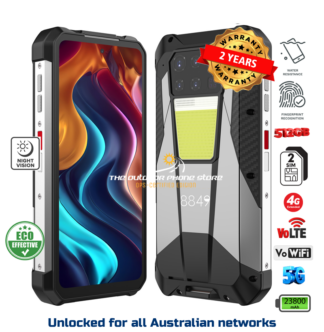
Look for an IP rating of at least IP68 where water and fine dust are part of the job. IP69K is useful where high-pressure water exposure is realistic, although it should not be treated as permission to blast the phone with a pressure washer for fun. Check the manufacturer’s stated conditions, because water-resistance claims often apply only to fresh water, a set depth and a limited time.
A MIL-STD-810H claim can be a useful indicator, but it is not a magic stamp. Ask what has actually been tested: drops, vibration, temperature changes, humidity or shock. More importantly, inspect the physical design. Raised screen edges, reinforced corners, firm port covers and a properly secured rear panel matter in daily use.
Avoid phones that look rugged but are difficult or impossible to repair. A heavily glued construction may be fine until the screen breaks or the charging port fails. Serviceability is not glamorous, but it affects downtime and total cost. A device that can be assessed, repaired and supported locally is worth more than a disposable bargain.
Battery life: look beyond the biggest number
A massive battery is appealing on a 12-hour shift, especially when you are using maps, photos, messaging and Bluetooth accessories. But capacity alone does not tell the full story. A very large handset can be awkward in a pocket, tiring to carry and slow to recharge. It may also be a poor fit for workers who spend most of the day in a vehicle with charging available.
For most mining use, aim for a phone that will comfortably cover a full shift with a realistic margin. Battery efficiency, charging speed and operating temperature all matter. Cold mornings, hot cabs and poor signal areas can drain power faster than expected because the phone works harder to stay connected.
USB-C charging is the practical standard, but check whether the port is protected and whether charging accessories are easy to replace. Wireless charging can reduce wear on a physical port, though it is not essential for every worker. If you rely on a phone for navigation or field records, carry a quality power bank as backup rather than betting everything on one battery claim.
Buy the screen and controls for gloved hands
A sharp display is nice. A display you can read in full sun and operate with dirty or gloved hands is better. Look for a bright screen, decent size, responsive touch settings and tough glass with a raised bezel. A screen protector is still sensible, even on a rugged handset. It is cheaper to replace a protector than a screen.
Physical controls deserve attention. A programmable side key can be set for push-to-talk, torch, camera or an emergency app. That is genuinely useful when menus are hard to navigate in gloves. A loud front-facing or high-output speaker also matters around machinery, wind and vehicle noise.
Consider the phone’s weight honestly. The heaviest, biggest-battery model may survive anything, but it can be uncomfortable on a belt or in workwear. If you need one-handed use while climbing in and out of a ute or carrying gear, a moderately sized rugged phone may be the better choice.
Pay for cameras and specialist tools only when they earn their keep
A high-resolution camera is valuable for recording defects, damage, measurements, inspections and site progress. However, megapixels are not the whole story. Fast focus, a usable flash and clear photos in poor light often matter more than an inflated camera number.
Thermal imaging can be worthwhile for maintenance teams investigating overheating bearings, electrical issues or insulation gaps. Night vision may help security, wildlife work or low-light inspections. These are useful specialist tools, not features every miner should pay extra for. Buy them when they solve a repeated work problem, not because they look impressive on a specification sheet.
Storage is another practical consideration. If you take plenty of photos, use offline maps or store work documents, 128GB is a sensible starting point. Expandable storage can help, provided the phone keeps its water and dust protection properly sealed.
Warranty and local support are part of the phone
A rugged phone is purchased to avoid downtime, not just to survive a drop on day one. Check the warranty terms before checkout. Does the seller provide Australian support? Is accidental damage cover available? Can the screen, battery or charging port be repaired? Will you be dealing with someone who understands the model, or an offshore marketplace seller once the payment clears?
This is where cheap can become expensive. A lower-priced phone with no usable warranty, no parts and no one to call is not a work-phone bargain. It is a spare phone waiting to become rubbish. Rugged Phones Australia focuses on vetted models because factory quality, component choice and after-sales support are every bit as important as the advertised IP rating.
How to choose a mining phone without overbuying
Match the device to the work rather than buying the biggest specification sheet. For general surface mining, prioritise Australian network support, an IP68 rating, strong battery life, a bright screen and a warranty you can use. For field teams, add GPS accuracy, storage and camera quality. For maintenance, assess whether thermal imaging or a programmable key will save real time. For hazardous areas, stop and confirm the required intrinsic-safety approval before considering any standard rugged mobile.
The best mining phone is the one that stays connected, survives your normal shift and can be supported when something eventually goes wrong. That is a far better standard than buying the loudest-looking handset on the internet.