A phone usually dies on site in a pretty predictable way. It gets dropped off a ladder, cooked on the dash, drowned in slurry, jammed in a dusty pocket, or smashed when someone forgets it on the tray. That is why the best rugged phone for tradies is not the one with the flashiest spec sheet. It is the one that keeps working when your job does not stop for broken glass and dead batteries.
Most tradies do not need a lifestyle phone wrapped in a bulky case. They need a tool. That means strong build quality, proper battery life, decent reception, a screen that can be used outdoors, and enough performance to run maps, job apps, photos, messages and calls without carrying on like it is under pressure. The trick is that not every rugged phone gets this right. Plenty look tough in the photos and fall apart where it counts.
What makes the best rugged phone for tradies?
Real-world toughness starts with the basics. A rugged phone should survive drops, dust, water and vibration, but that is only half the job. It also needs to be built from decent components, assembled properly, and backed by support that means something when the phone eventually takes a hit.
This is where buyers get caught. Two phones can claim the same IP rating and drop test standard, yet one will last and the other will become a warranty argument. Factory quality matters. So does whether the device is serviceable, whether spare parts are available, and whether the seller actually knows the product instead of shifting boxes.
For tradies, the best rugged phone is usually the one that balances six things well: toughness, battery, network compatibility, usability, camera practicality and after-sales support. Miss one of those and the phone becomes annoying fast.
Tough is not just about a thick shell
A lot of cheap rugged phones rely on bulk to look convincing. Thick corners and aggressive styling do not automatically mean durable internals. The better units are designed to take repeated punishment without the ports loosening, the buttons failing or the screen lifting over time.
If you work in construction, roofing, civil, farming or transport, dust sealing matters as much as water resistance. Fine dust gets everywhere. It works into charging ports, speaker grilles and SIM trays. A phone that handles a quick dunk but struggles with months of grit is not genuinely site-ready.
Battery life matters more than bragging rights
A tradie phone should comfortably get through a full day with calls, photos, Bluetooth, mobile data and navigation running. Preferably more. Big batteries are one of the biggest advantages rugged phones have over mainstream handsets, but battery size alone is not the whole story.
A badly optimised device with a huge battery can still be frustrating. What you want is dependable all-day life with enough reserve that you are not panic-charging in the ute between jobs. If you work long shifts, remote properties or regional routes, that reserve matters more than a slightly sharper display.
Best rugged phone for tradies – what to prioritise
The right phone depends on your trade. An electrician doing metro callouts has different needs to a diesel mechanic in the Pilbara or a farmer covering large paddocks with patchy reception. There is no single perfect model for every buyer, but there is a right way to narrow it down.
If your work is heavy on photos, defect reports and quoting, prioritise a phone with a reliable main camera, quick processing and enough storage. You do not need marketing nonsense about studio-quality imaging, but you do need photos that are clear, fast to capture and usable in poor light.
If your day revolves around calls, maps and team messaging, then reception, battery and screen visibility move to the front. A phone that lasts two days and holds signal properly is worth more than one with extra novelty features you will never touch.
If you work around machinery, in mines, on farms or in remote operations, support becomes a bigger deal than most buyers realise. Even a tough phone can get damaged. When it does, local backup and clear warranty support are worth paying for. Cheap imports look good until something goes wrong.
5G is useful, but not at the expense of reliability
A lot of buyers now ask for 5G first. Fair enough. It helps with faster uploads, hotspotting and future-proofing. But it should not trump compatibility and stability. A solid 4G or 5G rugged phone with proper Australian network support is what matters, not a half-baked model with questionable band support and a sketchy software build.
Tradies are often working on the fringe of metro areas or well outside them. In those conditions, a phone that behaves properly on Australian networks beats a spec-sheet hero every time.
Thermal and night vision are useful for some trades
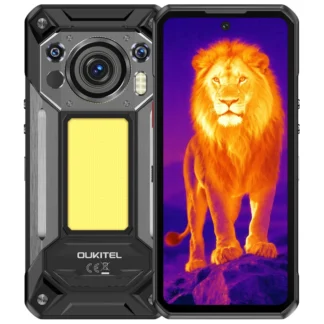
These features are not gimmicks if they match your work. Thermal imaging can be genuinely handy for sparkies, building inspectors, HVAC techs and maintenance crews checking hot spots, insulation gaps or overheating equipment. Night vision can also be useful for security work, farms and low-light inspections.
But if you are a carpenter, plumber or general builder who mainly needs calls, photos, emails and navigation, those features should come after the fundamentals. Buy for your actual job, not because a feature sounds impressive.
Where most tradies waste money
The biggest mistake is buying twice. First comes the cheap rugged phone from a generic seller with inflated claims, then comes the replacement when it starts missing charge, loses network stability or develops hardware faults. That is not saving money. That is paying a tax for bad buying.
The second mistake is choosing a mainstream consumer phone and hoping a heavy-duty case will turn it into a site phone. Cases help, but they do not fix poor battery life, vulnerable charging ports, fragile screens or overheating in rough conditions. If your phone is part of your workday, it makes more sense to buy the right tool in the first place.
The third mistake is overbuying. Not every tradie needs the biggest battery, the most sensors or the highest-spec camera. Bigger and heavier is not always better if the phone spends all day in your pocket. The best choice is the one you will actually carry and use without it becoming a nuisance.
How to choose without getting sucked in by hype
Start with your non-negotiables. Battery life, network compatibility and durability should be at the top. Then think about the way you actually use your phone at work. Are you running job management apps all day? Taking photos constantly? Working in wet areas? Spending long stretches away from power? That usage pattern should drive the decision.
Next, look at the quality of support behind the device. This part gets ignored until it matters. Warranty terms, accidental damage options, screen replacement support and local knowledge are not extras. They are part of the value. A rugged phone is supposed to reduce downtime, not create more of it.
That is why specialist sellers matter in this category. A curated range is better than a giant pile of random models. If someone is willing to stock everything, they are usually not filtering out the junk. At Rugged Phones Australia, that curation-first approach is exactly the point – fewer models, better choices, less rubbish.
The sweet spot for most tradies
For most buyers, the sweet spot is a rugged Android phone with strong Australian network support, a battery that comfortably exceeds a day, a bright screen, NFC if you use tap-and-pay, and a camera good enough for quotes and records. Add solid warranty backing and you are in the right territory.
You may want dual SIM if you separate work and personal numbers, or if you use different carriers depending on where you travel. You may also want a programmable button for torch, push-to-talk or camera access. These small practical features can be more useful than headline specs.
What you probably do not need is the absolute biggest and heaviest unit on the market unless your environment is genuinely brutal. There is always a trade-off between extreme durability and everyday comfort. Some phones are built like a brick, which is great until you are climbing in and out of a cab all day with it digging into your leg.
The right phone should disappear into the job
That is the standard worth aiming for. The best rugged phone for tradies is not one you think about constantly. It charges when it should, lasts when it should, takes the hit, holds signal, and gets on with the job. No drama, no excuses.
If you are replacing a broken mainstream phone every year, or gambling on cheap imports that look good until they fail, it is worth stepping back and buying on purpose. Tough phones are not all equal, and the right one pays for itself in uptime, less frustration and one less weak link in your day.
Buy for the work you actually do, not the marketing line on the box. That is usually where the smart decision starts.