A proper feature phone review should not start with nostalgia. It should start with the moment your touchscreen mobile runs flat in the ute, cracks on concrete, or becomes a distraction when you need a reliable call home from a remote site.
For plenty of Australian workers, a feature phone is not a step backwards. It is a deliberate tool choice. A good one gives you clear calls, physical keys, days of battery life and fewer things to break. A bad one is just a cheap import with a loud speaker claim, questionable network support and no useful warranty when it fails.
This is what separates a worthwhile feature phone from rubbish.
What a feature phone is actually good for
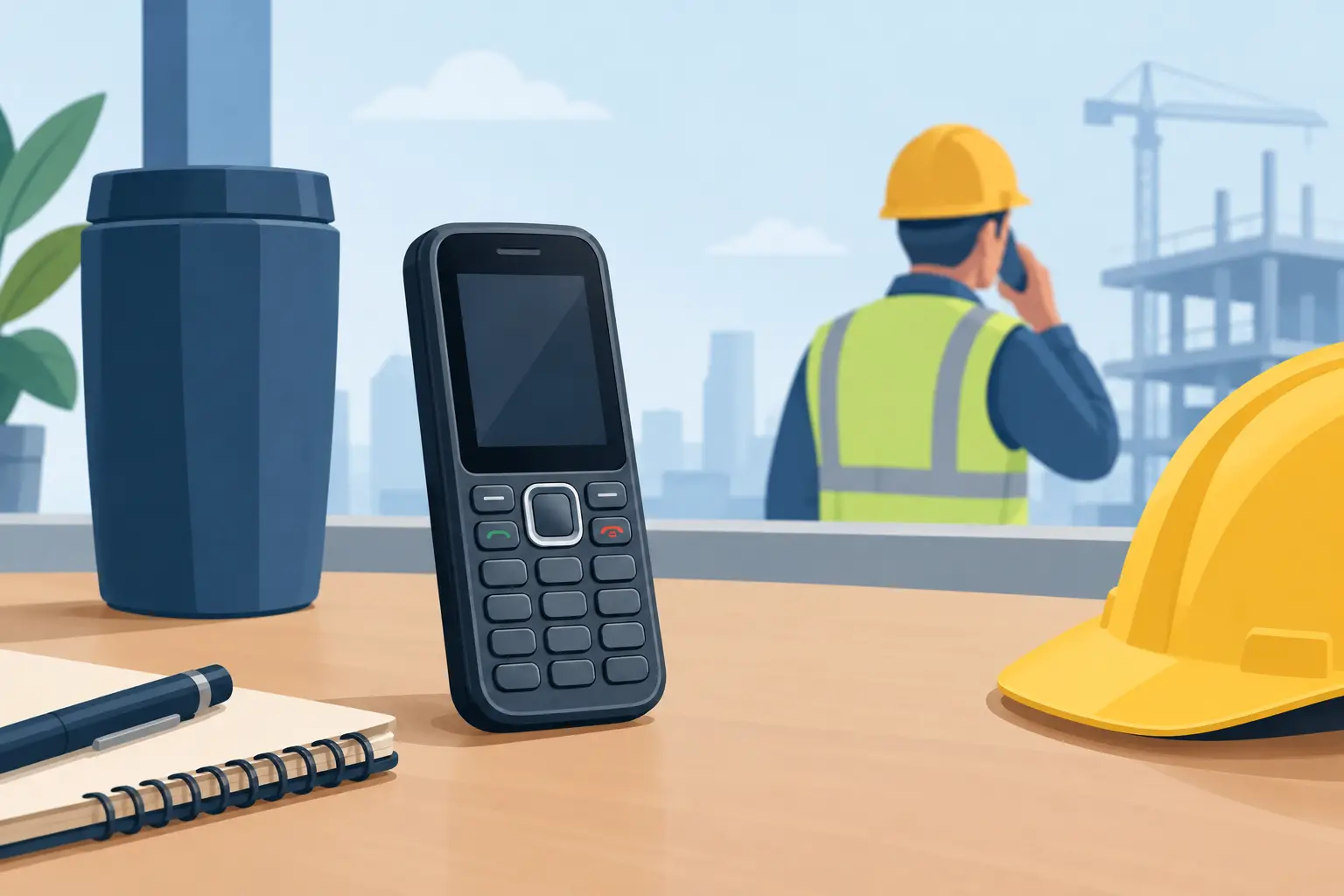
A feature phone sits between an old basic mobile and a modern smartphone. It usually has a physical keypad, a smaller screen, calling and SMS, plus practical extras such as a torch, camera, Bluetooth, FM radio, dual SIM support or a basic web browser. Some newer models run stripped-back operating systems with selected apps, while others are intentionally internet-free.
That last point matters. A phone with no social media, app store or unrestricted browser can be the right fit for a student, a worker who needs to stay contactable without constant notifications, or a business issuing simple work handsets. Less software also generally means less battery drain and less to go wrong.
But a feature phone is not automatically better for every job. If you need field mapping, job-management apps, Teams, thermal imaging, barcode scanning or high-quality photo records, buy a rugged smartphone. Trying to make a keypad phone do smartphone work is a false economy. The right question is simpler: do you need a communications tool, or a pocket computer?
Feature phone review: the checks that matter in Australia
The spec sheet can be misleading, particularly on low-cost devices sold through generic marketplaces. A giant battery figure means very little if the mobile cannot make a dependable call on the network you use. Start with network compatibility, then assess the physical design.
4G and VoLTE are not optional
Australia’s 3G shutdown changed the buying rules. A feature phone must support the relevant 4G frequency bands and, critically, be properly compatible with VoLTE calling on your carrier. A phone can display 4G for data yet still be unsuitable for voice calls or emergency calling if its configuration is wrong.
Do not assume that an overseas model will work simply because it is advertised as 4G. Confirm the exact model variant, supported bands and carrier suitability before spending money. This is especially important in regional areas, where the available coverage can be very different from what you see in a capital city.
For farming, transport and remote work, reception matters more than a long list of minor features. A handset with stable support for your preferred network is worth far more than one with a bigger screen or an inflated battery claim.
Battery life needs context
Feature phones can genuinely last several days, sometimes longer, because their screens are small and their operating systems are light. That is their biggest advantage. You can leave the charger at home for a weekend away, keep one in the glovebox, or use it as a backup work handset without nursing the battery every afternoon.
Still, advertised standby time is not real-world use. Weak signal, frequent calling, Bluetooth accessories, a powerful torch and a constantly active mobile network all draw power. Battery capacity is useful, but it is not the whole story. Look for sensible charging hardware, a replaceable battery where available, and a design that will not leave you stranded because a fragile USB port has failed.
Physical keys are a work feature
A proper keypad is easier to use with gloves, wet hands or cold fingers than a glass slab. It is also easier to dial without looking, which matters when you are checking in from a noisy yard or walking between jobs.
Key feel is not a cosmetic detail. Buttons should be well spaced, have a firm press and use legible markings. Avoid tiny flush keys that look tidy in product photos but are frustrating after a week on site. A dedicated torch button, programmable shortcut key and raised call/end buttons are practical additions, not gimmicks.
Tough claims need evidence
If a feature phone will live in a workshop, on a farm or in a work vehicle, look beyond phrases such as “rugged style” or “military design”. Ask what has actually been tested. An IP rating tells you about dust and water resistance under defined conditions. It does not guarantee the phone will survive repeated drops, chemical exposure, heat inside a vehicle or a hard impact on uneven ground.
A reinforced shell, protected corners and port covers can help. So can a compact size that is less likely to lever itself apart when dropped. But durability also comes down to build quality. Poor seals, thin plastic, loose batteries and weak charging ports are common failure points on cheap feature phones.
One serious safety warning: a water-resistant or rugged mobile is not automatically approved for hazardous areas. Mines, fuel facilities and sites with flammable gas or dust may require intrinsically safe certified equipment. Never treat an IP rating as an explosion-protection rating.
The trade-offs nobody should hide
Feature phones are deliberately limited, and that is often the appeal. The limitations still need to suit the person using one.
Cameras are normally basic. They can record a quick reference photo but should not be relied on for detailed defect evidence, machinery documentation or low-light work. Screens are smaller, web browsing is slower, and map use is limited or absent. Typing a long message on T9-style keys is also not for everyone.
Some users will miss contact syncing, two-factor authentication apps and modern messaging platforms. Others will be relieved to be rid of them. For a parent buying a restricted phone, that simplicity can be exactly the point. For an on-call supervisor who must open PDFs, receive photos and access a rostering platform, it will quickly become a problem.
Sound quality deserves attention too. A loudspeaker rating is not enough. You need clear earpiece audio, a ringtone that can cut through machinery noise, vibration you can feel through workwear and a microphone that does not turn every call into a battle against wind noise.
A sensible buying checklist
Before choosing a feature phone, get clear on the job it has to do. The following checks prevent most expensive mistakes:
- Confirm 4G, VoLTE and carrier compatibility for the Australian network you actually use.
- Decide whether internet access is useful, unnecessary or a problem you want removed.
- Check whether the keypad, speaker, torch and buttons can be used in gloves and noisy conditions.
- Match the claimed water and dust protection to real exposure, without confusing it with hazardous-area certification.
- Buy from a seller that can provide local support, a clear warranty and replacement accessories if needed.
That final point is often ignored until something goes wrong. A low price is not a bargain if the handset arrives with the wrong network settings, the battery fails early or there is nobody in Australia prepared to help. Specialist retailers such as Rugged Phones Australia focus on models that are worth supporting, rather than filling a catalogue with lookalike imports.
Who should choose a feature phone?
Feature phones make strong sense as a primary device for workers who mostly call and text, as a backup phone for remote travel, or as a controlled handset for students and vulnerable users. They are also useful for businesses that want staff contactability without handing out unrestricted smartphones.
They are less suitable for workers who need live navigation, digital forms, email attachments, safety applications or camera-heavy reporting. In those cases, a rugged smartphone with dependable battery life is the better tool, even if it costs more upfront.
The best feature phone is not the one with the most dramatic claims on the box. It is the one that registers properly on your network, feels usable after a long shift, survives the environment it is going into and still has support behind it. Buy for the conditions, not the novelty, and you will end up with a mobile that earns its place in your kit.