A phone that spends half its life on a dash mount, in a tool bag, or rattling around a ute does not need to be pretty. It needs to keep working. That is the real question behind the best rugged phones 2026 conversation – not which model has the flashiest ad, but which devices will still be usable after dust, rain, vibration, drops and long days away from a charger.
This year, the gap between a proper rugged phone and a dressed-up consumer handset is wider than ever. Plenty of brands still throw around words like military grade and waterproof, then sell devices with weak charging ports, poor repairability, average antennas, or batteries that look good on paper and disappoint in the field. If you work in construction, transport, agriculture, mining or remote operations, you cannot afford that sort of nonsense.
What actually makes the best rugged phones 2026
A worthwhile rugged phone starts with the basics: strong sealing, decent drop protection, real battery capacity and reliable network support for Australia. That sounds obvious, yet this is where many cheap imports fall apart. The spec sheet says IP68 and a massive battery, but the screen is dim in full sun, the microphone struggles in wind, or the phone drops back to poor reception when you leave metro areas.
The best devices in 2026 are not just harder to break. They are better matched to hard-use jobs. That means gloves-friendly screens, loud speakers, programmable buttons, practical camera systems, stable GPS and charging systems that hold up after months of dust and vibration. For some users, thermal imaging or night vision is genuinely useful. For others, it is dead weight that adds cost and bulk.
There is no single winner for everyone. A farm manager, a drill crew supervisor and a school looking for limited-use handsets are solving different problems. The right phone depends on how you work, where you work and what you can live without.
The 10 best rugged phones 2026 buyers should look for
At the top end, the strongest options tend to come from the same handful of brands that have spent years building purpose-made hardware rather than rebadging generic phones. Ulefone remains one of the safer bets for buyers who want a serious work phone with broad feature depth. Its better models usually get the balance right between toughness, battery life, usable cameras and accessories.
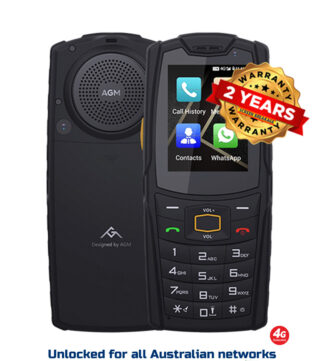
AGM still makes sense for buyers who want simple, dependable gear and, in some cases, tightly controlled functionality. That is especially relevant for schools, parents and workplaces that want a phone without the usual internet and social media distractions. It is a niche, but a real one.
Oukitel continues to appeal to people who care most about battery size and endurance. That comes with trade-offs. A giant battery can be brilliant on long shifts or remote travel, but it also means more weight in the pocket and a bulkier handset on the dash.
Blackview has improved in areas that matter, especially where buyers want a broad feature set without stepping into silly money. Even so, model selection matters. Some devices look good until you examine support, band compatibility or long-term reliability more closely.
Unihertz sits in its own lane. If you need something compact, unusual or highly specific, it can be a smart fit. But these are not universal recommendations for every hard-use worker. Small form factor phones are convenient, though not always ideal for mapping, job apps or gloved use.
If we are talking about the best rugged phones 2026 in practical terms, the strongest candidates usually fall into these use cases: all-round workhorses, battery-first devices, camera and inspection tools, compact specialists, and restricted-use phones. That is a better way to shop than chasing a vague top ten list with no context.
Best for tradies and field crews
For tradies, civil crews and transport operators, the sweet spot is a phone that is tough without becoming ridiculous. Around the upper-mid battery range is often enough. You want something that can handle calls, photos, navigation, job management apps and Bluetooth accessories all day, with a screen bright enough to read outdoors.
This buyer should favour dependable charging, strong reception and a body that can survive repeated knocks. Thermal imaging sounds tempting, but unless you actually inspect switchboards, insulation, engines or heat loss, your money is usually better spent on a cleaner all-rounder.
Best for mining, remote work and long rotations
In remote work, battery and signal stability matter more than fashionable features. Phones used in mining support roles, station work or remote service runs need endurance first and entertainment second. A larger battery, stronger GPS performance and accessories such as mounts or lanyard options matter more than slim design.
The compromise is obvious. Big battery rugged phones are heavier, and some are genuinely brick-like. If the phone lives in a vehicle cradle or backpack, that may not matter. If it sits in your pocket all day while climbing in and out of machinery, it definitely does.
Best for inspection, security and technical roles
Night vision and thermal cameras have moved from gimmick territory into genuinely useful tools on the right device. Security teams, inspectors, maintenance crews and some rural users can get real value from them. The catch is that not all sensor implementations are equal, and not every thermal phone is worth the premium.
A good inspection phone still has to be a good phone. If thermal is excellent but the display, battery management or network performance is ordinary, it is a poor buy for work. Specialty features should support the job, not distract from the basics.
Best for students or limited-use setups
There is also a growing demand for phones that do less, not more. For schools, families and some workplaces, a durable handset with calling, texts and essential tools can be a better solution than a full-fat smartphone. AGM has been especially relevant here because some of its models suit buyers trying to avoid open access to social media and constant distractions.
That will not suit everyone, and it is not meant to. But for the right user, a restricted-use rugged phone can solve a very specific problem cleanly.
Specs that matter and specs that are mostly marketing
Battery capacity matters, but battery optimisation matters too. A huge battery paired with poor software can still disappoint. Likewise, fast charging is useful, though not if the port and sealing are poorly executed.
IP ratings and drop claims matter, but they are not magic. Water resistance can be compromised by abuse, poor maintenance or damaged seals. A rugged phone should be treated as hard-wearing equipment, not as something indestructible.
Display brightness is often underrated. If you work outdoors, a dim screen becomes a daily headache. The same goes for speaker volume and microphone quality. A work phone that is hard to hear on-site or struggles with calls in wind has failed one of its core jobs.
Processor speed matters less than many buyers think. For most work users, stable performance is more important than benchmark bragging rights. Unless you are pushing heavy imaging, advanced mapping or specialised apps, you do not need a phone built like a gaming device.
Repairability matters more than flashy design. A phone that is impossible to service, glued shut in all the wrong places, or backed by weak support can become an expensive mistake. That is one reason specialist retailers who curate properly still matter. Anyone can import a box of cheap handsets. Sorting the good from the rubbish is the real value.
How to choose between the best rugged phones 2026
Start with your actual workday. If the phone is your primary camera, navigation tool and communications device, buy for reliability across all three. If you are mostly on calls and messages and need long battery life, lean towards endurance over extras. If your role includes inspections, security work or technical maintenance, then thermal or night vision may justify the added bulk and price.
Also be realistic about size. Plenty of buyers say they want the biggest battery available, then hate carrying the thing after a week. Others buy compact and regret the smaller screen when they start using site drawings, job apps or maps. There is no clever shortcut here. It depends on how you carry it and how often you look at it.
Network compatibility for Australia should be checked carefully, especially as network changes continue to catch out buyers of poorly matched imports. This is where local advice earns its keep. A cheap phone is not cheap if reception is patchy where you actually work.
Warranty support should also be part of the buying decision, not an afterthought. Hard-use devices live harder lives. Good support, sensible accessories and proper backup matter. That is exactly why specialist sellers such as Rugged Phones Australia focus on a tighter range instead of flooding the catalogue with every model under the sun.
The best rugged phone for 2026 is the one that keeps doing its job when the weather turns, the shift runs long and the shiny mainstream handset would already be in pieces. Buy for your conditions, not for the ad copy. Your phone should earn its spot in your pocket every day.