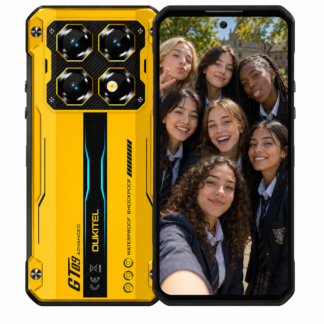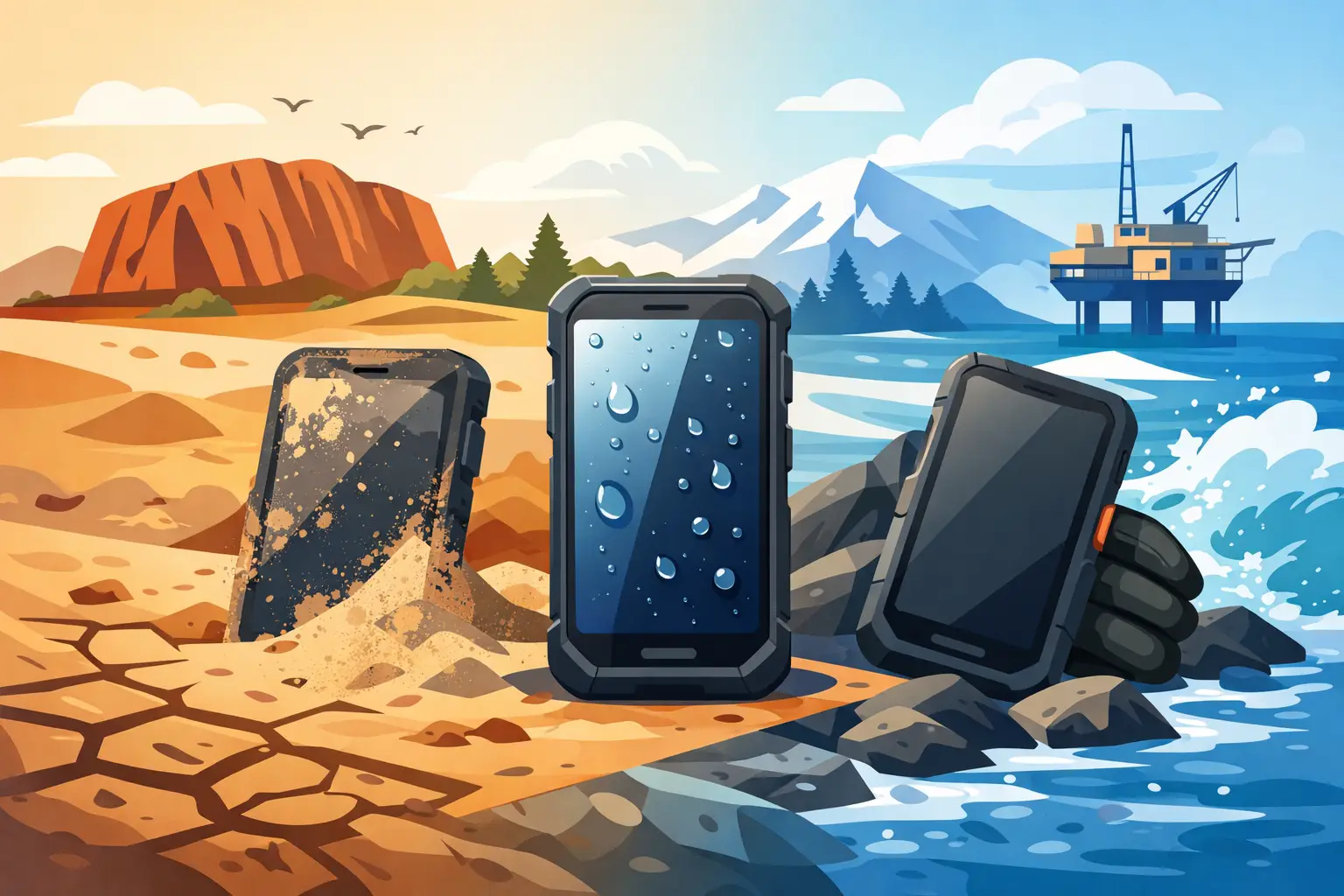
A cracked screen at the end of a shift is annoying. A dead mobile when you are kilometres from the nearest town, trying to coordinate a crew, find a gate or call for help is a different problem altogether. The best phones for harsh environments are not simply ordinary smartphones in chunky cases. They are purpose-built tools chosen for the way you actually work.
For mining, farming, transport, construction and remote operations, the right device needs to handle dust, rain, vibration, drops and long days without becoming another weak point in the kit. That does not mean every buyer needs the heaviest phone with every headline feature. It means buying for the conditions, not the marketing.
What makes a phone fit for hard use?
Start with protection ratings, but do not stop there. An IP68 or IP69K rating is a useful baseline for a work phone. It indicates serious resistance to dust and water, while IP69K models are designed to tolerate high-pressure, high-temperature water jets. That matters if your phone lives around mud, wash-down areas, wet weather or fine dust.
A rugged phone should also have a proper drop rating, ideally tested to a recognised military standard such as MIL-STD-810H. The label is not a magic guarantee. Test methods differ, and a phone can still be damaged by a bad landing on sharp rock or concrete. But a reinforced frame, raised screen edges, corner protection and secure port covers give it a far better chance than a slim consumer handset.
The construction details matter more than glossy claims. Look for tactile physical buttons that work with gloves, a screen that remains usable when wet, and ports that are protected without being impossible to access. A phone that survives a fall but has a loose charging port six months later is not a good work phone.
Best phones for harsh environments: choose by job
There is no single best rugged phone for every site. The best choice depends on whether your biggest issue is battery life, communications, visibility, imaging or controlled access for staff and students.
For long shifts and remote travelling
A large-battery rugged smartphone is usually the sensible choice for farmers, field technicians, drivers and crews who spend days away from reliable charging. The useful measure is not the largest battery figure on a product page. It is whether the phone can run navigation, calls, messages, photos and occasional hotspot use through a full working day without anxiety.
Big batteries bring a trade-off: weight and thickness. A handset with a very large battery may be excellent in a ute, tractor or site bag, but less comfortable in a shirt pocket. If you carry the phone all day on foot, a balanced model with a replaceable power bank may be the more practical setup.
Fast charging is worth having, particularly where a short break or drive between jobs is the only charging opportunity. Check the supplied charger and cable as well. Cheap accessories are a common failure point, and a rugged phone is only useful if you can reliably charge it.
For low light, inspections and security
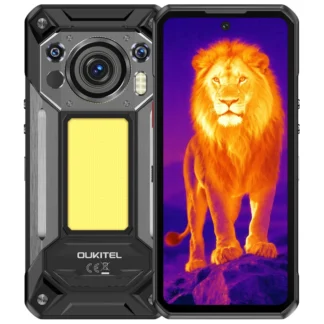
Night vision is not a gimmick when it solves a real problem. Infrared-capable rugged phones can help inspect stock yards after dark, check machinery spaces, monitor a perimeter or move safely around a site without relying on a bright visible torch. The results are generally best at close to moderate range, not across a paddock.
Thermal imaging serves a different purpose. It can help identify heat patterns in electrical equipment, locate hot bearings, spot insulation issues or assess machinery. It is a valuable screening tool, not a substitute for qualified electrical, mechanical or safety inspection. Thermal cameras have resolution limits, and readings can be affected by reflective surfaces, distance and environmental conditions.
If these features will be used weekly, buy a device designed around them. If they will be used once a year, do not pay for hardware that will sit idle. A strong standard camera, reliable torch and good battery may be the better spend.
For straightforward communication without distractions
Not every harsh-environment phone needs to be a full Android smartphone. A durable feature phone can be the right answer for schools, lone workers, older users or workplaces that need calls and texts without social media, apps and constant distractions.
The advantage is simple: less to manage, less battery drain and fewer ways for the device to become a problem. The compromise is equally clear. You lose access to many work apps, maps, email and advanced camera tools. Buy this category when limited communication is the objective, not because it is cheaper.
Do not ignore Australian network support
A tough phone with poor local band support is a paperweight with a good warranty. Before buying, confirm that the model supports the Australian 4G and 5G bands used by your provider, along with VoLTE compatibility for voice calls. This is especially important as older network services are retired.
Regional coverage is another reality check. No handset can create signal where there is no network. A quality rugged phone with appropriate bands, however, gives you a better starting point than a grey-market device built for another region. For truly remote work, plan separately for satellite communication, vehicle antennas or other emergency systems where required.
Also consider dual SIM capability. It can be useful for workers who move between coverage areas or need to keep a personal and work number on one handset. It is not automatically better, though. If the job requires a dedicated work device with tight controls, one SIM and a clear policy may be the safer arrangement.
The specifications that are easy to overvalue
Marketing departments love giant numbers. More megapixels, more RAM, more battery capacity and more cameras all sound convincing. They are not meaningless, but they do not tell the full story.
A camera needs dependable autofocus, useful image processing and a protected lens cover. Storage needs to be sufficient for offline maps, job photos and video, not merely adequate on day one. RAM helps when running multiple apps, but a stable operating system and decent processor often matter more than a huge number on a specification sheet.
Screen size needs the same scrutiny. A large display is excellent for plans, forms and maps, but it increases the device footprint and can make one-handed use harder. Brightness is often more important than resolution for anyone working in full Australian sun. If you cannot read the screen beside a trench, on a roof or in an open paddock, the extra pixels will not help.
Warranty, repairability and who stands behind it
Hard-use buyers should be suspicious of bargain rugged phones sold with vague support and no meaningful local backup. The upfront saving disappears quickly when a screen breaks, a battery fails or the device cannot be repaired.
Ask practical questions before purchase. Is there an Australian warranty pathway? Are screen replacement and accidental-damage options available? Can the phone be serviced, or is it effectively disposable? Is the seller choosing devices from reliable factories, or simply listing every cheap model available?
This is where specialist selection matters. Rugged Phones Australia focuses on devices that are worth putting into hard-working hands, rather than flooding the catalogue with lookalike models and hoping the customer sorts out the bad ones. That approach costs more effort upfront, but it protects buyers from false economy.
A sensible buying checklist
Before choosing, match the phone to the environment and the task. A good decision usually comes down to four questions:
- Will it face regular water, dust, drops, vibration or extreme temperatures?
- Does the worker need full smartphone apps, or only dependable calls and texts?
- Is battery endurance, thermal imaging, night vision or a bright display the feature that genuinely changes the job?
- Does the model support your network and come with serviceable local warranty support?
Do not buy the biggest, heaviest rugged phone by default. Buy the one that removes the most risk from the workday. A well-chosen device should disappear into the job: it takes calls in the rain, runs maps when reception allows, captures evidence when needed and keeps going after the sort of knock that would finish an ordinary handset.