A phone dropped onto quarry gravel, soaked in a ute tray or covered in fine red dust does not care about marketing claims. Phone durability standards give you a useful starting point, but they do not tell the whole story. For workers in mining, farming, transport, construction and remote operations, the detail behind the rating matters just as much as the rating itself.
A device can carry an impressive-looking IP68 label and still be a poor choice for hard daily use. It may have weak port covers, a slippery housing, an exposed camera cluster or limited local warranty support. The right rugged phone is not simply one that passed a lab test once. It is one built to keep working after the knocks, contamination and charging cycles that happen on a real job.
Phone durability standards are a baseline, not a promise
Standards exist to create a common testing language. They allow a manufacturer to state that a device resisted dust, survived water immersion or endured selected environmental tests under controlled conditions. That is valuable. It helps separate a purpose-built work phone from an ordinary consumer mobile wearing a thick case.
The problem starts when a rating is treated as a blank cheque. Test conditions have limits: a set water depth, a set duration, a particular drop surface, a new handset with seals in perfect condition. Your phone may instead hit a steel step, land corner-first, sit in a hot vehicle, get washed with dirty water or be charged hundreds of times in a dusty shed.
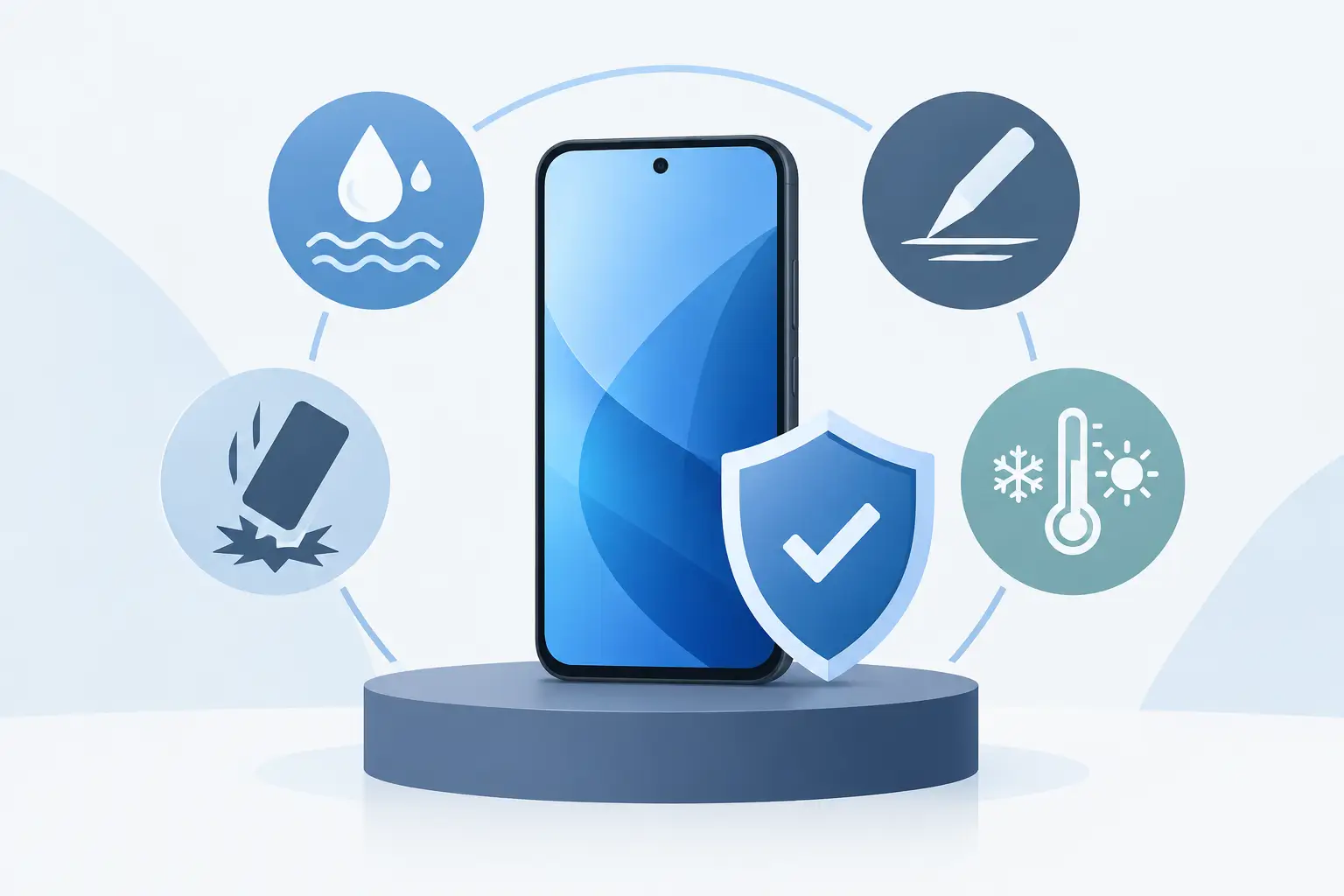
That is why experienced buyers should read ratings as evidence, then look at the whole build. Housing design, button quality, screen protection, port construction, battery design and the supplier’s support all determine whether that evidence translates into dependable ownership.
IP ratings: dust and water, explained properly
An IP rating is the figure most buyers recognise. IP stands for Ingress Protection. The first digit relates to solids such as dust, while the second relates to water. The higher the number, the greater the protection tested under that standard.
What IP68 usually means
IP68 generally means the phone has been tested as dust-tight and able to withstand immersion in water. The catch is that IP68 does not set one universal water depth or time. Those conditions are nominated by the manufacturer, provided they exceed the minimum requirements of the standard.
Before assuming an IP68 phone can handle any wet job, check the stated immersion conditions. One model may be rated for 1.5 metres for 30 minutes, while another is tested more aggressively. Neither rating means you should make a habit of taking the handset underwater, especially in saltwater, muddy dams, chemical runoff or hot water.
Water resistance also depends on seals remaining intact. A damaged charging-port cover, a cracked screen or a poorly fitted repair can compromise protection. This is one reason serviceability and proper parts matter. A bargain device is not a bargain if a minor repair leaves its environmental protection questionable.
Why IP69K gets attention
IP69K is designed around resistance to high-pressure, high-temperature water jets. It is relevant for applications where equipment is regularly washed down, such as agriculture, food processing, workshops and industrial fleets.
It is a strong rating, but it still needs common sense. A phone with IP69K is not invincible against every pressure washer angle, worn seal or chemical cleaner. More importantly, high-pressure water resistance does not automatically prove the phone has excellent drop protection, a bright display or reliable Australian network support. Each capability must stand on its own.
MIL-STD-810H: useful, but ask what was tested
MIL-STD-810H is regularly used in rugged-device specifications. It is a United States military test-method standard covering a wide range of environmental conditions, including drops, vibration, temperature, humidity, shock and altitude.
The key word is range. MIL-STD-810H does not mean every phone bearing the label completed every available test, or that every manufacturer used identical conditions. A brand may test a handset for a specified drop sequence but not for vibration, freezing rain, solar exposure or blowing dust. The claim can be legitimate while still being incomplete.
For a worker choosing a phone, the better question is: which methods were performed, and how do they relate to the work?
A transport operator may care about vibration resistance, a farmer may care about mud and rain, and a mine worker may need a handset that tolerates dust, repeated drops and temperature swings. If the information only says “military grade” with no test detail, treat it as a marketing phrase rather than proof.
Drop-test figures need context
A stated drop height is useful, but the test surface matters enormously. Dropping onto smooth plywood is not the same as dropping onto concrete, broken rock or workshop grating. So does orientation. A flat-back drop is easier to survive than a corner strike, where force concentrates at the weakest point.
Look for a phone with reinforced corners, a raised screen lip and a housing that directs impact away from the display. Screen glass matters, but glass alone is not the answer. A tough screen fitted flush to a thin frame can still take a hard hit. Good rugged design gives it space and structure to survive.
The failures standards do not always reveal
A spec sheet is rarely going to tell you how a phone feels after six months in a tool belt or how well the USB-C port handles daily charging in a dusty cab. Those are the weak points that turn a supposedly rugged handset into downtime.
Pay attention to practical details. Physical buttons should be firm enough to operate with gloves and protected from accidental presses. Port covers should close securely without becoming fiddly. The camera area should not protrude so far that it takes every impact. A textured shell is preferable to a smooth, glossy back when hands are wet, dirty or gloved.
Battery capacity also belongs in a durability conversation. A massive battery is no help if it creates a phone too heavy to carry safely or too slow to recharge when you have a short break. Conversely, a modest battery may be fine for a supervisor with vehicle charging but unsuitable for a worker away from power all day. Choose the capacity around the job, not the biggest number on the box.
Temperature claims deserve the same scrutiny. Batteries naturally lose performance in cold conditions, and extreme heat shortens battery life. A phone tested for a wide operating range has an advantage, but leaving any lithium-powered device on a dashboard in Australian summer heat is still poor practice.
Build quality and support are part of durability
Two devices can share the same IP and MIL-STD claims yet deliver very different results over time. The difference often comes down to factory quality control, component selection and whether the seller stands behind the product when something goes wrong.
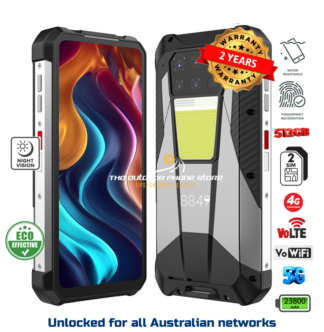
That is where specialist selection matters. Rugged Phones Australia focuses on models worth carrying in hard-use environments, rather than filling a catalogue with cheap imports that look tough in photos. A proper local warranty, access to advice and available accessories are not extras. They reduce the risk of being left without a working phone when your job depends on one.
Also consider repairability before you buy. Some handsets are effectively glued shut and uneconomical to restore after damage. Others have a clearer path for screen replacement or warranty assessment. No phone is immune to abuse, so the sensible purchase is one that can be supported after an accident rather than discarded as e-waste.
How to assess a rugged phone before committing
Start with the hazards the phone will actually face. If dust is constant, prioritise a verified dust rating and protected ports. If water exposure is routine, examine the specific immersion conditions and whether high-pressure resistance is relevant. If drops are the main threat, focus on corner protection, screen recess and credible drop-test details.
Then check the working essentials: Australian network compatibility, display brightness in full sun, battery performance, glove-friendly controls and charging options. A rugged phone that cannot hold signal in your area or cannot be read outside is not fit for purpose, regardless of how many tests it passed.
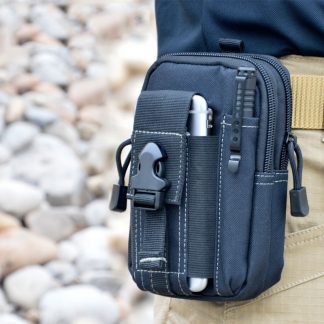
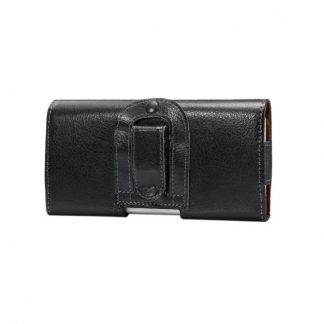
Finally, buy the protection that suits the phone and the work. A good case, screen protector, belt holster or vehicle mount can prevent the kind of damage no certification was designed to cover. These accessories are not a sign that the device is weak. They are sensible protection for equipment used every day.
The best phone is not the one with the longest string of letters and numbers on its box. It is the one with proven protection for your conditions, practical features for your shift and support that still exists after the first hard knock.